Browse

Log in / Register
 Share

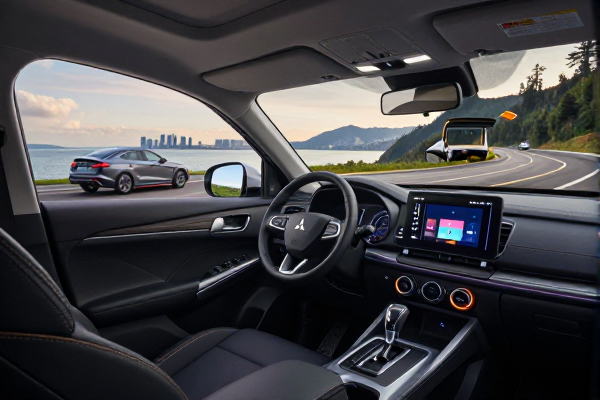
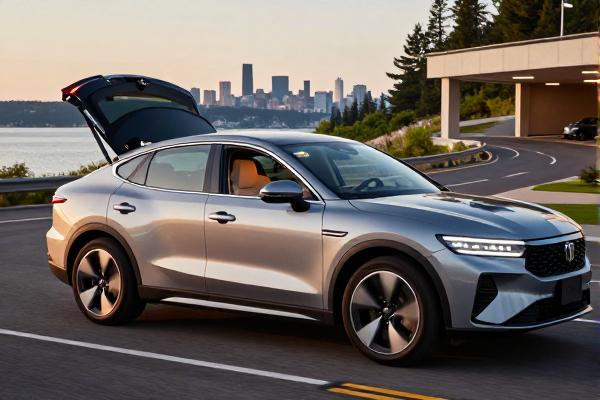
March 10, 2026 — Mitsubishi is back in the American electric-vehicle game, and its comeback vehicle carries a sticker that's hard to ignore. The 2027 Eclipse Sportback starts at $48,998 before destination fees, which is roughly $832 more than the Nissan Leaf it's built on. Federal incentives of up to $5,000 could bring the effective price down to about $43,998 for eligible buyers, making the math a little more interesting.
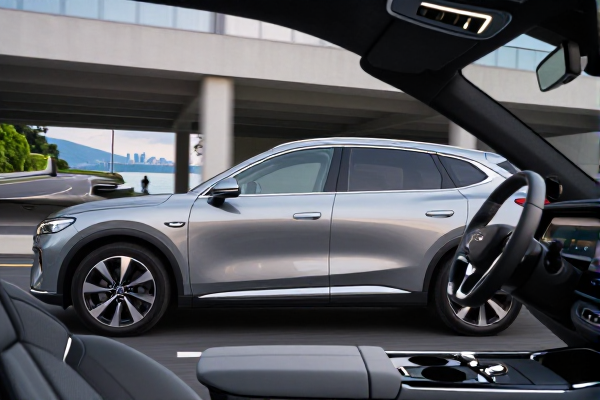
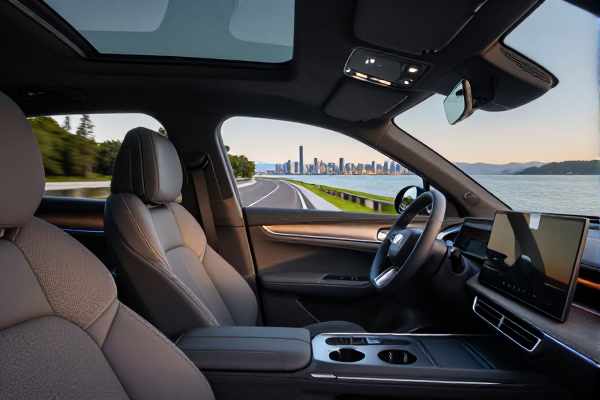
The Eclipse Sportback is not a ground-up EV. It's a lightly redesigned version of the Nissan Leaf, sharing that model's platform, battery hardware, and overall layout. What Mitsubishi has changed is the skin, the interior presentation, and the warranty package — plus, of course, the nameplate.
The base trim is priced at $48,998, excluding non-negotiable fees like delivery. The lineup tops out with the Technology package, which pushes the MSRP to $54,098. That's a $5,100 step up, and it signals more than just a few convenience add-ons.
The most direct comparison is the 2027 Nissan Leaf, which starts at $37,966 in its short-range form with the smallest battery. That version is a budget-oriented option aimed at buyers who want an EV without stretching into the $40,000-plus territory.
But the Leaf that matches the Eclipse Sportback mechanically is the long-range model with the 75 kWh battery pack. That one starts at $48,166. So a shopper walking into a Nissan showroom can get essentially the same battery and powertrain for $832 less than what Mitsubishi is charging.
The difference comes down to what Mitsubishi has done with the design, how long the warranty runs, and whether those things are worth the premium. For some buyers, they will be. For others, the Leaf remains the obvious value pick.
The Eclipse Sportback's base price puts it in an interesting spot. At $48,998, it's eligible for up to $5,000 in federal incentives under the Electric Vehicle Affordability Program (EVAP) — but only until the end of the year, and only for buyers who meet the program's eligibility requirements.
That changes the picture. An eligible buyer could pay the equivalent of roughly $43,998 for the base model, which undercuts the long-range Leaf's starting price of $48,166. In other words, the incentive could flip the value comparison in Mitsubishi's favor.
The Technology package changes the calculus. At $54,098, it pushes the MSRP past the EVAP cap, so buyers who want the loaded version would have to give up the credit. That's a real trade-off, and it's one shoppers will need to weigh carefully.
The Eclipse Sportback launches with a single powertrain: a 75 kWh battery pack good for an estimated 282 miles (454 km) of range. That's competitive but not at the top of the segment, where several rivals now push beyond the 300-mile mark.
Charging is where the package makes a meaningful step forward. The vehicle comes with an SAE J1772 port for AC charging and a North American Charging System (NACS) port for DC fast charging. That means owners can plug into Tesla Superchargers without an adapter, which is a major convenience compared to the CHAdeMO connector that the Leaf has long relied on. CHAdeMO stations have become increasingly hard to find as the industry has consolidated around NACS.
If there's one area where Mitsubishi clearly outperforms Nissan, it's coverage. The Eclipse Sportback carries a 10-year or 100,000-mile warranty on the electric motor and battery, a five-year or 62,000-mile new-vehicle limited warranty, and five years of roadside assistance.
By comparison, Nissan's battery warranty on the Leaf runs eight years or 100,000 miles. So the Mitsubishi offers two extra years of protection on the single most expensive component in the car. For buyers who plan to keep their EV for the long haul, that alone could justify the higher sticker price.
The Eclipse Sportback is the opening act of Mitsubishi Momentum 2030, the brand's plan to unveil one new or fully updated vehicle every year between 2026 and 2030. The strategy is aimed squarely at rebuilding Mitsubishi's presence in North America, where the brand has struggled to maintain relevance over the past decade.
Electrification is a major pillar of that push, but it's not the only one. Mitsubishi is also working to expand its dealer network to support higher sales volumes and make its vehicles easier to buy and service. The company is betting that a steady cadence of fresh metal, starting with the Eclipse Sportback, will get shoppers back into its showrooms.
The obvious question is why Mitsubishi expects people to pay more for a car that shares its core hardware with a cheaper Nissan. The answer appears to be a combination of factors: a redesigned body and interior, a significantly longer battery warranty, NACS charging compatibility, and access to the federal incentive at the base price level.
There's also a business logic at work. By leaning on the Renault-Nissan-Mitsubishi Alliance and adapting an existing product, Mitsubishi gets back into the EV market without the massive engineering investment that a bespoke electric vehicle would require. It's a low-risk way to test demand and rebuild momentum.
The downside is perception. An $832 premium for a rebadged model is a tough sell in a market where buyers have become increasingly price-conscious, especially with Tesla, Hyundai, Kia, and Ford competing aggressively. Mitsubishi's pitch has to rest on design, warranty, and the promise of what comes next.
The 2027 Eclipse Sportback isn't trying to be the fastest, longest-range, or most advanced EV on the road. It's a pragmatic, capital-efficient way for Mitsubishi to get back into the conversation — and it has succeeded in doing exactly that.
The real test comes over the next few years, as Mitsubishi rolls out more models under the Momentum 2030 plan. If the Eclipse Sportback is the starting point, the brand still has a long way to go. But for now, Mitsubishi finally has an EV in U.S. showrooms again, and that's a story worth following.