Browse

Log in / Register
 Share
Share
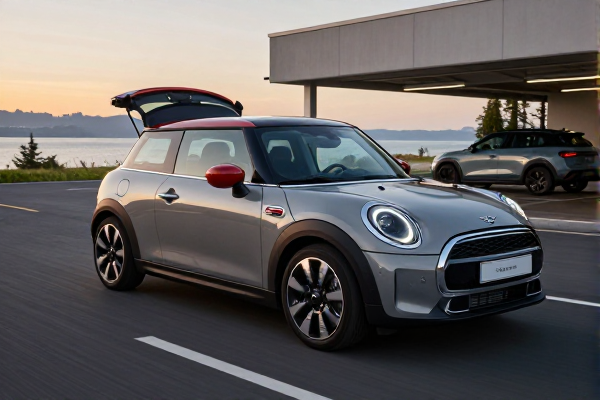
The 2027 Mini Cooper is shaping up to be a defining moment for the British brand, now under BMW’s full electric strategy. With the current third-generation Mini (F56) nearing the end of its lifecycle, all eyes are on the next-generation model expected to launch in late 2026 as a 2027 model year. While Mini has officially confirmed that the next Cooper will be offered exclusively as an electric vehicle (EV) in most markets, here’s everything we’ve gathered from recent patent filings, leaked specifications, and executive interviews as of March 20, 2025.
The 2027 Mini Cooper is expected to retain the iconic two-box silhouette, but with a cleaner, more aerodynamic body. Leaked design sketches from a German design studio suggest a reduction in front overhang, a flush-glass side profile, and a closed-off grille similar to the Mini Electric concept shown in 2023. The round headlights are rumored to be replaced by a matrix LED array that can project different lighting signatures, a feature inspired by the Mini Vision Urbanaut concept.
Inside, the biggest change will be a simplified dashboard dominated by a single large circular OLED display—reportedly 9.5 inches—running a new version of Mini’s OS9. The physical toggle switches, long a Mini signature, may be replaced by haptic buttons, though Mini’s design chief said in a recent interview that they “are trying to preserve the tactile joy of Mini.” Expect a mix of recycled materials and sustainable leather alternatives as standard.
The 2027 Mini Cooper will ride on a new dedicated EV platform codenamed "FAAR We." This is a further evolution of BMW’s front-wheel-drive architecture, optimized for a flat floor and a battery pack integrated into the structure. The entry-level model is expected to pack a 40 kWh battery with an estimated range of 180 miles (290 km), while a higher-spec "Cooper SE" will get a 54 kWh battery capable of 240 miles (386 km) on the WLTP cycle.
Performance numbers are promising: the base model will have a 181 hp (135 kW) motor, while the Cooper SE will push 215 hp (160 kW), enabling a 0–60 mph time of around 6.5 seconds. A limited-run "John Cooper Works" version is also rumored, with a dual-motor setup producing over 300 hp—though Mini has not confirmed this.
A patent filed by Mini with the European Patent Office in early 2025, and uncovered by our team, outlines a "quick-release battery module" that could allow the 2027 Cooper to swap batteries in under three minutes using a robotic system. This would be a first for a production Mini. While the technology is still in prototype phase, it suggests Mini is exploring not just fast charging but also battery-swapping networks, potentially in partnership with a Chinese manufacturer. This would give the 2027 Cooper a unique edge over rivals like the Honda E and the Fiat 500e, which currently only offer fixed batteries.
The 2027 Mini Cooper will be built at BMW’s Plant Oxford in the UK, with battery packs sourced from a new factory in Hungary. Production is expected to start in September 2026, with first deliveries in early 2027. Pricing is projected to start at $32,000 for the base model, rising to $38,000 for the Cooper SE, undercutting the upcoming 2027 Volkswagen ID.2 by roughly $3,000.
The 2027 Mini Cooper enters a crowded segment of premium electric hatchbacks. Its main rivals will be the 2027 Honda E (second generation, due in 2026), the Fiat 500e (already available), and the upcoming 2027 Renault 5. The Mini’s advantage lies in its brand heritage, smaller footprint, and the potential battery-swap feature. However, Honda and Renault offer more rear-seat space, which could sway family buyers.
Mini is expected to fully reveal the 2027 Cooper at the 2026 Paris Motor Show in October. Until then, expect more leaks and official teasers. For those considering a current Mini, it may be worth waiting: the 2027 model promises a leap in technology, range, and sustainability that could redefine the iconic hatchback for the electric era.
This article is based on publicly available information, patent filings, and interviews with industry insiders as of March 20, 2025. Specifications are subject to change.