Browse

Log in / Register
 Share


May 10, 2026
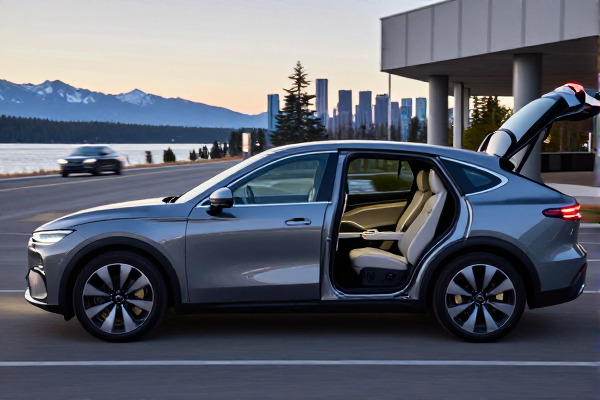
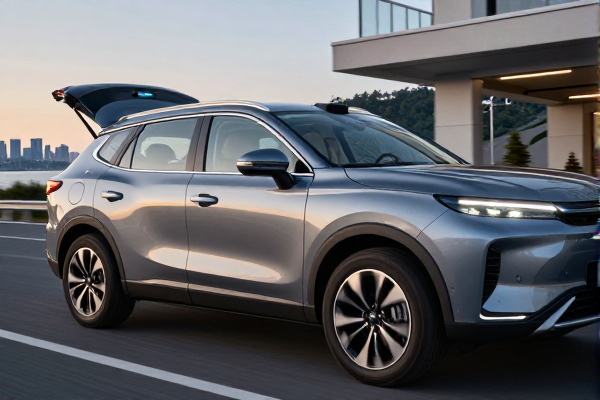
NEW YORK — Hyundai has unveiled the fifth-generation Tucson, calling it the boldest SUV in the brand’s history. The compact five-seater was revealed with the Manhattan skyline as its backdrop, and it arrives with a heavily electrified lineup, a redesigned cabin, and a new rugged XRT Pro package for North America.
Hyundai confirmed that the 2027 Tucson will be sold with internal-combustion, hybrid, and plug-in hybrid powertrains around the world. Specifications for the hybrid were the first to be detailed. It pairs a 1.6-liter turbocharged gasoline engine with a six-speed automatic transmission and an electric motor. Combined output is 174 kW, or about 233 horsepower, and 380 Nm, which is roughly 280 pound-feet of torque. The system will be available with front-wheel drive or all-wheel drive.
A 1.49 kWh battery supports the electrified drivetrain. Hyundai is targeting fuel consumption between 5.6 and 6.2 L/100km, which translates to about 38-42 mpg on the U.S. cycle, depending on wheel size, tires, and drive configuration. The company also targeted a 0-100 km/h, or 0-62 mph, time of under nine seconds. A complementary E-Traction system is designed to optimize torque delivery during cornering, helping the hybrid maintain grip with less traction loss.
Pure-electric driving range for the hybrid has not been released. Hyundai also has not published full details for the plug-in hybrid version yet, beyond confirming that it will form part of the global range.
The redesigned Tucson has grown in every direction. It is 60mm longer, 40mm wider, and 20mm taller than the previous generation. The long-wheelbase body extends the wheelbase to 2785mm, a 30mm increase. A short-wheelbase version will be reserved mainly for European markets, while the long-wheelbase body will be used in other key launch markets. The door opening angle has also been widened from 73 degrees to 83 degrees, making it easier for families to load children and cargo.
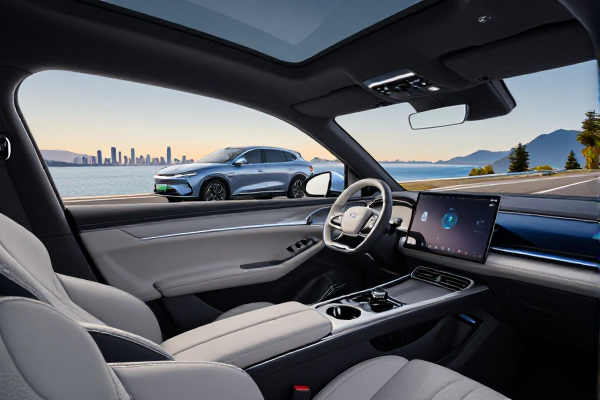
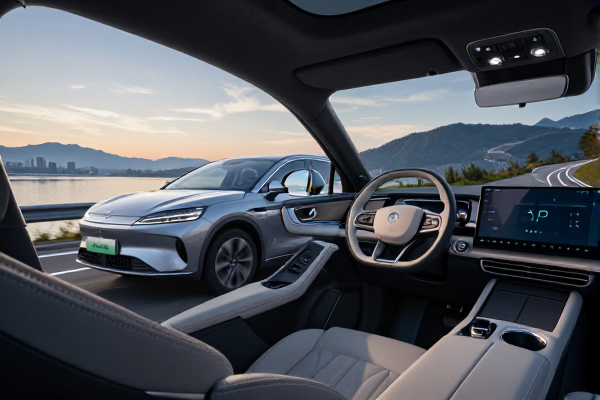
Inside, the new Tucson takes a minimalist approach. Hyundai says the cabin was designed to create a low-stress, premium environment with controls prioritized for ergonomics. A pair of 9.9-inch displays sits above the steering wheel, one for driving information and one for vehicle status. The layout resembles Peugeot’s iCockpit concept, with the goal of keeping the driver’s visual field clear and reducing distraction.
The central multimedia screen measures 12.9 inches or 17 inches, depending on trim level. Below the screen, Hyundai has kept a row of tactile buttons for frequently used functions such as ventilation, temperature, and audio. The shift-by-wire gear selector has been moved to the steering column, freeing up space in the center console.
Hyundai’s latest Pleos Connect multimedia platform will power the system, and a Gleo AI voice assistant provides natural-language control for vehicle functions. Over-the-air updates are expected for the multimedia system and other vehicle features. Other notable equipment includes LED exterior lighting, 20-inch alloy wheels, dual wireless charging pads, multi-zone climate control, and a Stay Mode that allows the cabin to keep running on battery power with the engine off.
Hyundai is expanding the Tucson range with two new off-road-inspired models: XRT and XRT Pro. North America will receive the XRT Pro for the time being. It features a wider front-end treatment, extended black cladding around the wheel arches and lower body, skid plates, and a dedicated off-road wheel-and-tire package. Australia will get the standard XRT, which follows a similar visual theme but is positioned below the Pro.
Hyundai also confirmed that a “sports-inspired” Tucson variant will debut at the 2026 Paris Motor Show on October 12.
Hyundai has not finalized U.S. equipment lists or pricing for the 2027 Tucson. Features expected for North American buyers include over-the-air updates, LED exterior lighting, 20-inch wheels, dual wireless charging pads, multi-zone climate control, and Stay Mode. In Australia, the new Tucson will launch from mid-2027 as a hybrid-only lineup, another sign that Hyundai is pushing electrification to the center of this segment.
The Tucson competes in one of the most crowded corners of the American vehicle market. Its main rivals include the Toyota RAV4, Honda CR-V, Nissan Rogue, Subaru Forester, and Ford Escape. With the fifth-generation model, Hyundai is answering that pressure with stronger hybrid efficiency, a larger cabin, more physical controls, and an off-road-inspired XRT Pro appearance package that gives the Tucson a distinct visual identity in showrooms.
Hyundai Motor Company President and CEO José Muñoz said the new Tucson is “the best one we have ever built.” He also said the model opens “the most ambitious product offensive in our history,” with Hyundai planning more than 100 new and refreshed vehicles globally by 2030.
U.S. pricing and on-sale timing have not been announced. The 2027 Tucson is expected to reach showrooms as a 2027 model.