Browse

Log in / Register
 Share


SEOUL, June 12, 2026 — Hyundai's Korean configurator has gone live with the 2027 Tucson's entry trim, and the list of standard gear reads like a mid-level package in most markets. The "H-Pick" base model carries a 12.9-inch touchscreen, heated front seats, a surround-view camera, and Hyundai's full driver-assistance stack, all for around $22,800. For U.S. buyers, the listing is equal parts preview and tease: it shows where the refreshed Tucson is headed, while Hyundai notes this exact trim is Korea-only for the time being.
The compact crossover segment is the most competitive corner of the auto industry, and base models are often the weakest point in a lineup. Hyundai appears to be trying something different. Here are five standout features on the cheapest 2027 Tucson you can configure in Korea, plus what they mean beyond Korea's borders.
1. 17-inch alloy wheels that make real-world sense
The H-Pick rolls on 17-inch alloys with taller-sidewall tires. That's not the flashy choice, and that's the point. The extra sidewall cushions potholes, rough pavement, and gravel better than the low-profile rubber on bigger rims, and replacement tires are cheaper when the time comes. It's a spec that says Hyundai understands how most people actually drive.
2. The design doesn't disappear on the base car
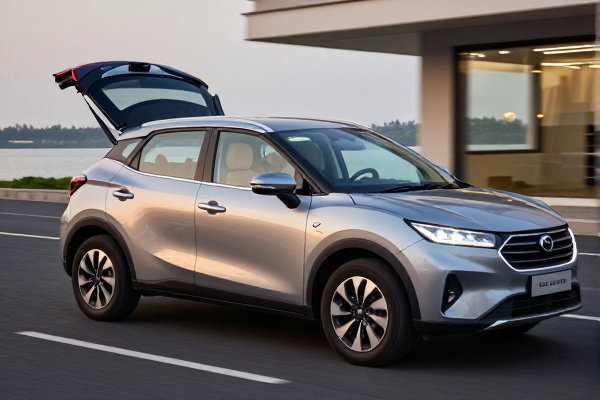
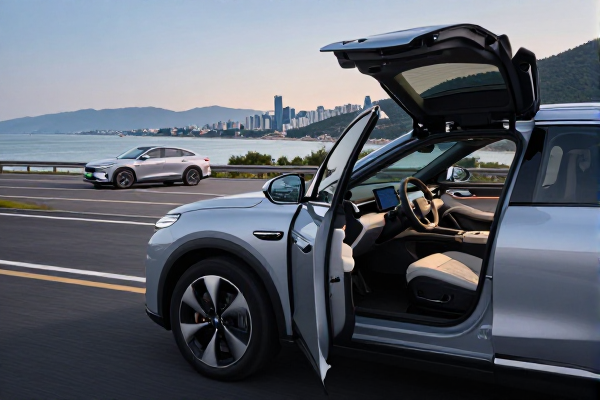
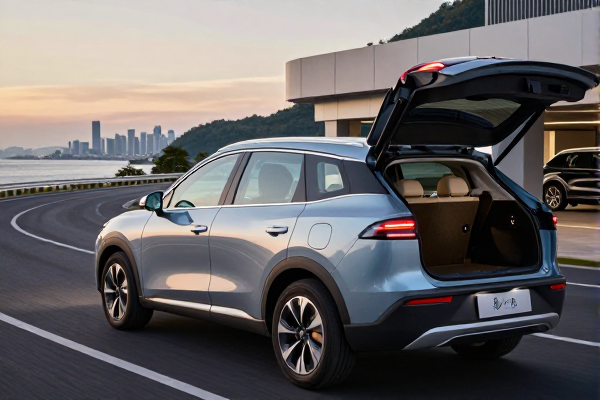
Hyundai kept the Tucson's visual identity fully intact. Full LED lighting is standard, including the horizontal light strips that anchor the nose. The chunky cladding around the wheel arches stays, a prominent tailgate badge finishes the rear, and paint options include shimmering silver metallic. The cheapest model still looks like a modern Hyundai, not a rental-fleet afterthought.
3. A 12.9-inch touchscreen front and center
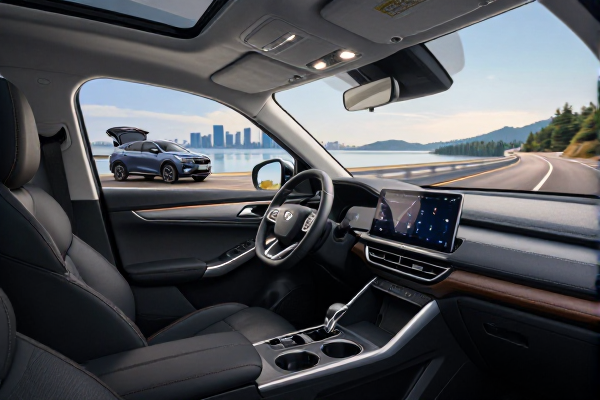
The cabin is where the base car overdelivers. A 12.9-inch touchscreen with navigation, wireless smartphone connectivity, and tactile controls dominates the dash. For scale: the largest display Hyundai currently sells on a U.S.-spec Tucson measures 12.3 inches, so the Korean base model tops what American buyers can get on higher trims today. Black faux leather and a clean layout keep the interior practical and uncluttered.
4. Comfort and convenience made standard
Heated front seats, a surround-view camera, smart key entry, an electronic parking brake, rear air vents, and USB-C ports are all included. None of this is extravagant, but start ticking those boxes on a base competitor and the price climbs quickly. Hyundai folds them in from the start, which is exactly how value perception is built.
5. A safety suite that starts at the bottom of the range
Highway Driving Assist, adaptive cruise control, and advanced forward collision avoidance are standard equipment. That means the entry Tucson can handle adaptive, semi-autonomous highway driving straight off the lot. Many rivals reserve that level of hardware for top trims or expensive option packages.
Powertrain: simple and sharp
Under the hood sits a 1.6-liter turbocharged four-cylinder driving the front wheels. There's no AWD and no hybrid at this level of the Korean lineup — just one gas engine and a sticker near $22,800. Hyundai is clear that this trim, its equipment, and its pricing are Korea-specific. A U.S. version, if it comes, would almost certainly use different powertrains; American Tucsons currently lean on a 2.5-liter four-cylinder, plus hybrid and plug-in hybrid options.
What this tells U.S. buyers
The Korean configurator is more than a regional detail. It's a window into Hyundai's packaging strategy, and it lands at a moment when entry-level rivals look thin by comparison. The base Toyota RAV4 LE gets an 8-inch touchscreen and cloth seats; the Honda CR-V LX uses a 7-inch display. Neither offers heated seats or a surround-view camera as standard. On paper, the Korean H-Pick out-specs both at a comparable price in its home market.
That gap says as much about competition as it does about Hyundai. In the U.S., Hyundai already makes forward collision-avoidance assist and lane-keeping standard across the Tucson lineup, so the foundation is in place. Add Hyundai's American warranty — 10 years or 100,000 miles on the powertrain — and a similarly equipped U.S. base trim could become one of the strongest value stories in the segment.
The fine print and the missed features
It's also worth noting what isn't on the H-Pick. No AWD, no hybrid assist, no bigger wheel options; those live on higher trims. That's a deliberate line in the sand: Hyundai wants the base price to stay inviting while leaving a clear upgrade path. Buyers who need all-weather grip or extra capability will step up, but the entry car is still fully usable for the majority of daily driving. What's absent comes down to performance and traction extras rather than daily-use essentials.
Why Korea gets this version first
Hyundai has a history of loading home-market cars with generous content. Korean buyers are picky, the domestic market is intensely competitive, and the brand can't hide behind badge loyalty. Using Korea as a proving ground also lets Hyundai test packaging ideas before rolling them into global launches. That's why a base Tucson in Seoul looks different from a base Tucson in Los Angeles — and why U.S. shoppers shouldn't expect a carbon copy.
The bottom line
The 2027 Tucson H-Pick raises the floor for what an entry-level compact crossover can offer. Big screen, heated seats, and serious safety gear are no longer reserved for the upper part of the range, at least not in Korea. Whether U.S. buyers get the same recipe remains to be seen, but the direction is hard to miss. In a segment where the cheapest model is often the one dealers try hardest to upsell away from, Hyundai is giving buyers a reason to stay put.