Browse

Log in / Register
 Share

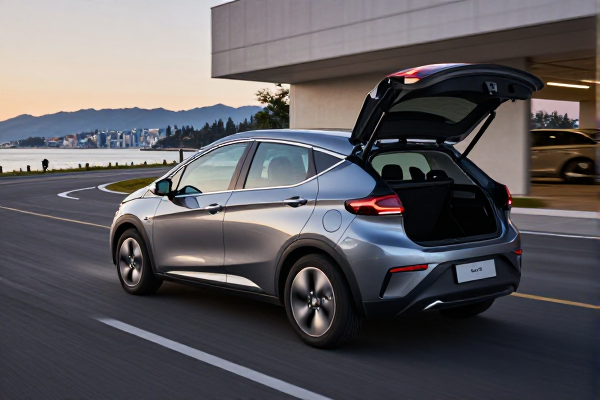
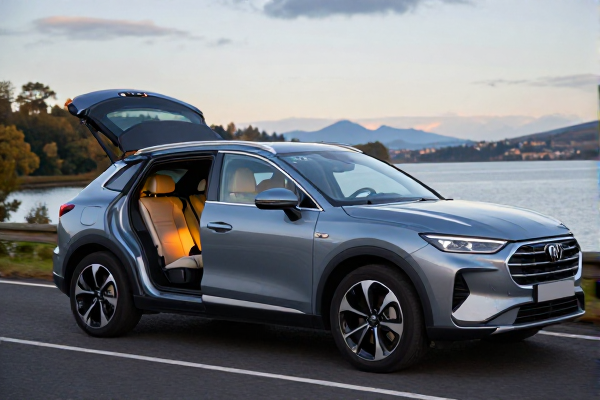
It was a spring weekend that was supposed to be a simple 400-mile test loop through upstate New York in the 2027 Chevrolet Bolt RS. Instead, it turned into a 14-hour charging nightmare that nearly ended with a flatbed tow. The culprit wasn't the car's battery or the charging networks—it was the factory-supplied CCS-to-NACS adapter, a $250 hunk of plastic that repeatedly refused to connect to fast chargers, leaving me stranded with 11 percent battery and 90 miles from home. As of May 4, 2026, the experience underscores a growing problem: adapters are now the weakest link in America's EV charging chain.
Why adapters exist
The whole industry is juggling two charging plugs while it switches from the Combined Charging System (CCS) to Tesla's North American Charging Standard (NACS). Almost every automaker now sells cars with NACS ports, which are designed to plug straight into Tesla Superchargers without an adapter. But most of the public fast-charging stations still standing in the US were built for CCS. And most Level 2 home chargers predate the switch too, which means NACS owners need one adapter for DC fast charging and another, entirely different one for the home wall unit.
That's double the gear to keep in the trunk, and double the chance something goes wrong. For the new Chevrolet Bolt, the adapters are also extra-cost accessories: $115 for the Level 2 version and $250 for the DC fast-charging one. It's not a great look when automakers push a new plug standard and then treat the bridge to the existing network as an upsell.
The Bolt itself is a big step forward
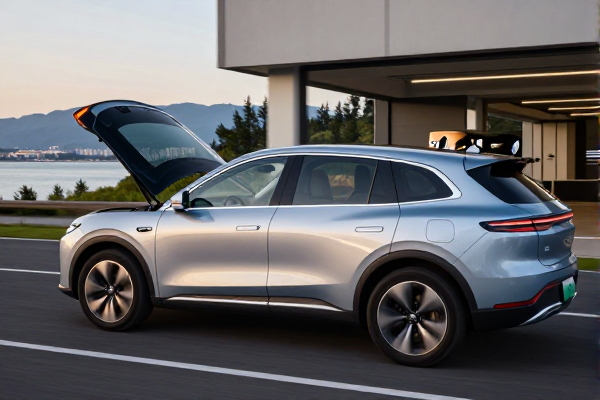
The 2027 Bolt sits on GM's Ultium platform with a 65-kWh battery that promises up to 264 miles of range. It's a front-driver with 220 horsepower—nothing rocket-ship, but fine for a subcompact—and it can now pull 150 kW on a DC fast charger, a serious upgrade over the original Bolt. In real highway driving, I saw around 230 miles of range, which makes it a perfectly serviceable road-trip car. The problem is getting it to charge.
There's another wrinkle: Chevrolet says this Bolt generation will only last a single model year before the lineup shifts again. That makes the adapter question even more pressing. Owners won't get four years of iterative charging refinements; they get one shot to get it right.
First signs of trouble
My first day with the Bolt should have been a red flag. Starting in Albany, the first Electrify America station I hit connected without any issue. Forty miles down the road, the second station gave me nothing. I tried five different plugs at the same site before I got one to communicate—and it was a slower 50-kW unit. That meant almost an hour of waiting just to reach my destination. I assumed the station was the problem; the home adapter, at least, behaved flawlessly when I plugged into my Level 2 unit that night.
Then, a couple of days later, the Bolt stopped charging at 2 a.m. with a "Cord lock not working" error. Unplugging and re-plugging didn't help, and a deep dive into owner forums showed a long thread of Bolt owners with the exact same complaint. Some had gotten new adapters from the dealer; others needed software updates. But with a 92 percent battery, I took a chance and left for the road trip, hoping fast charging would behave differently.
It didn't
At a ChargePoint fast station in Saratoga Springs, I watched two other EVs charge fine while the Bolt refused to handshake. The only way I could get a connection was to stand beside the car and hold the adapter at a precise, uncomfortable angle until the pins aligned. A nearby Plugshare listing pointed me to another station, where I repeated the same circus act. Over the weekend, I managed to get the Bolt from Albany to the Saratoga Lake area, but not without a lot of wiggling and swearing.
Eventually I found a Tesla Supercharger with native NACS support. One plug, no adapter, and the Bolt charged without a single error. That was the smoking gun: the vehicle and the charging network were fine. The Chevrolet adapter was defective.
The return trip was worse
The drive home was a string of failures—three more fast-charging stations and a dozen separate plugs that wouldn't even wake up the charging session. That included the same Electrify America location that had worked on day one. With the battery dropping to 11 percent, that all-too-familiar "cord lock" warning lit up the dash again. Off a two-lane highway south of Hudson, New York, my options were narrowing. The nearest compatible Supercharger was more than 30 miles in the wrong direction, and at this rate I wasn't going to make it.
I called a friend who lives nearby. He wasn't home, but he generously remote-activated his JuiceBox Level 2 charger. With a jump of adrenaline, I pulled into his driveway and plugged in. The slow-speed adapter engaged instantly: no errors, no handshake dramatics, just a steady 9 kW of power. We walked half an hour to a diner, ate ribs, and killed three hours while the Bolt quietly refilled. I got home with 15 percent battery—and the cord-lock error lighting up the screen again. A reset and a software update on both the car and the charger eventually got the car topped off to 100 percent.
The problem isn't just Chevrolet
A few weeks later I drove the Subaru Uncharted, another NACS-native EV, and its CCS-to-NACS adapter refused to communicate with any of four fast chargers at two different stations. These aren't dubious third-party dongles from a no-name brand. These are engineered, automaker-specified parts with the manufacturer's sticker on the box. In both cases, the native NACS charging experience was flawless—which makes it painfully clear where the responsibility lies.
J.D. Power's 2026 EV charging satisfaction study already lists adapter compatibility as one of the most common complaints among new EV buyers, and my experience suggests that's no surprise. When an automaker transitions to a new standard, it owns the customer experience all the way to the charger.
Looking for a fix
Since this incident, Chevrolet has been quietly replacing suspect Bolt adapters under warranty, and several other automakers have pushed out firmware updates designed to improve handshaking. If you own a NACS-port EV and carry a CCS adapter, test it before your next long trip. Charging networks and automakers have published compatibility lists; bookmark them. And if an adapter fails, push the automaker for a warranty replacement instead of accepting a flaky unit.
The frustration remains: owners shouldn't have to become electrical engineers to charge a car. An adapter should be a passive piece of plastic that works every time, not a part that determines whether you make it home or call a tow truck. Until automakers treat adapters with the same seriousness as battery software, the NACS transition will keep costing EV owners time, money, and peace of mind.