Browse

Log in / Register
 Share

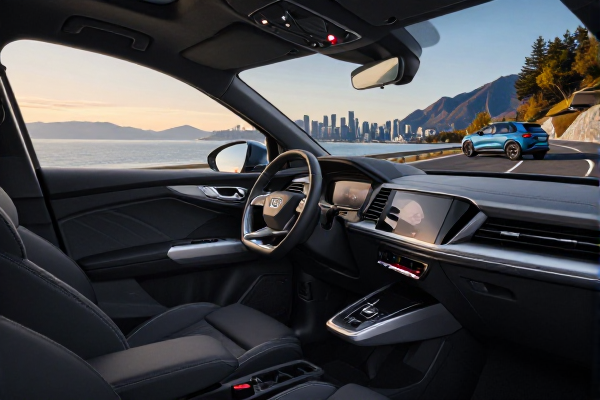
May 7, 2025 — Audi has pulled the covers off the facelifted Q4 E-Tron, a mid-cycle refresh for the compact electric crossover that has been on sale since 2021. The exterior is barely touched, but the cabin gets a major shake-up: the climate buttons are gone, a new 12-inch passenger screen is available, and the Q4 becomes Audi's first EV with bidirectional charging. European orders open next month, with U.S. availability expected to follow as a 2027 model. Here's everything you need to know.
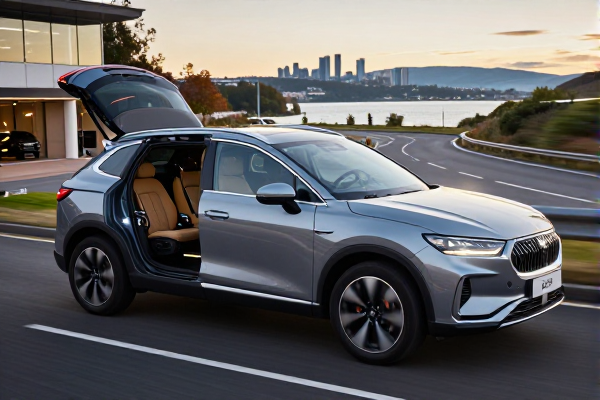
Audi didn't feel the need to change the Q4's appearance. The sheet metal carries over largely untouched, which is reasonable for a model that still sells well in a crowded segment. The real story is the interior, and it's one that's likely to split opinions.
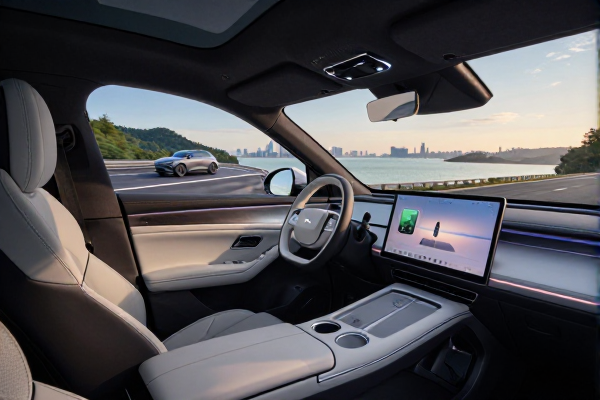
The dedicated physical buttons for the climate controls have been removed from the center console. Temperature, fan speed, and heated-seat settings now live inside a 12.8-inch touchscreen that sits alongside an 11.9-inch digital instrument cluster in the same housing. If you've driven any recent Audi or Volkswagen Group product, the layout will feel familiar — but it's still a significant shift for a model that previously offered quick, eyes-free control of the basics.
For buyers who want even more screen space, Audi offers an optional 12-inch passenger display. The company says it's the largest passenger screen it has ever fitted and claims it's a segment first. Whether that's a gimmick or a genuinely useful feature will come down to how often you actually use it; either way, it reinforces Audi's decision to lean into digital controls.
There's no way around it: this is a downgrade for people who prefer physical controls. Removing climate buttons forces drivers to rely on menus, which takes attention away from the road and can be annoying when you're wearing gloves or driving over broken pavement.
What makes it more frustrating is timing. Audi's own Concept C — a targa-topped electric sports car due next year — promises a return to more physical buttons and higher-quality materials. That suggests Audi knows the all-screen route has limits, but it's asking Q4 buyers to wait out the transition. The brand has already admitted that cabin quality has slipped in recent years. Audi has admitted as much, and it has promised to do better. But the 2027 Q4 E-Tron is here now, and its cabin reflects the old philosophy, not the new one.
The same screen-first approach is expected to spread to the redesigned Q3 and the forthcoming Q7 and Q9, both of which arrive later this year. So the Q4 isn't an outlier — it's a preview of where Audi is going. Whether that direction is the right one is a judgment call buyers will make in the showroom.
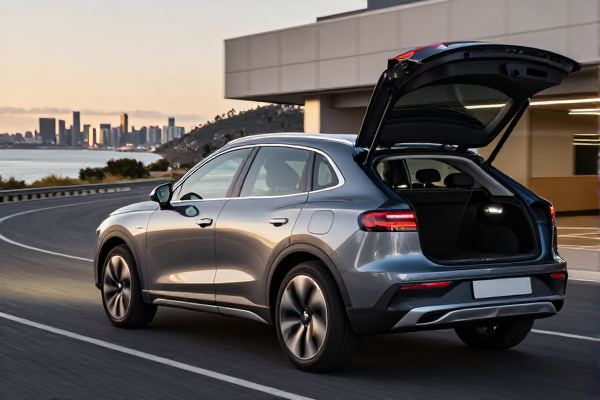
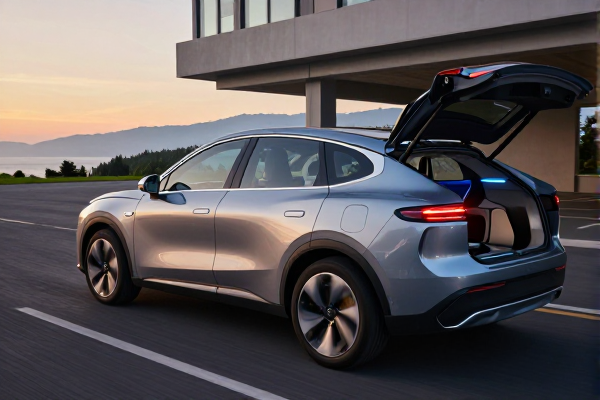
The most compelling addition to the facelifted Q4 E-Tron is Vehicle-to-Load (V2L), a feature that makes the compact SUV genuinely more useful. Audi says this is a first for its EV lineup, and it's easy to see why: a household power socket built into the cargo area lets you plug in everything from a laptop to a portable cooler, delivering up to 2.3 kW of power.
Want more? Audi offers an optional adapter that connects to the side charging port. It provides either a second household socket at 2.3 kW or a higher-output camping socket rated at 3.6 kW. In certain markets, Vehicle-to-Home (V2H) will also be available, allowing owners to keep essential circuits running during a blackout. U.S. availability of V2H hasn't been confirmed — Audi has only said "certain markets" so far.
For American buyers, V2L is now a substantial part of the sales case. The Ford F-150 Lightning and Hyundai Ioniq 5 have made bidirectional power a mainstream talking point, and Audi's entry into that club makes the Q4 more compelling. It also gives the Q4 a clear advantage over the Tesla Model Y, which doesn't offer practical V2L capability for everyday owners.
Audi's engineers also made incremental upgrades under the skin. The 82-kWh battery version now supports up to 185 kW, up from 175 kW previously. That doesn't sound like a huge jump, but it translates into roughly 112 miles (180 km) of range added in 10 minutes and a 10-to-80 percent charge completed in 27 minutes.
Range gets a boost, too. Audi installed a more efficient rear motor and a transmission with lower internal friction, then refined the software and electronics that manage energy use. The combined result is up to 20 miles (32 km) of additional range, depending on the configuration.
On the European WLTP test cycle, the most efficient Sportback now reaches 368 miles (592 km) between charges. At the other end of the lineup, the shortest-range version still manages 280 miles (451 km). EPA numbers for the U.S. are typically lower than WLTP figures, so it's safe to expect somewhere in the low- to mid-300-mile range for the most efficient U.S. version. That would keep it competitive with the longest-range non-Tesla models in the segment.
Audi hasn't announced U.S. pricing or exact timing for the facelifted Q4. Based on the European schedule and typical product planning, a late-2026 arrival as a 2027 model looks likely. The current Q4 starts at roughly $50,000 in the U.S., and there's no indication Audi plans any dramatic repricing — which leaves Audi with limited room for error in a crowded segment.
The Tesla Model Y undercuts the Q4 by several thousand dollars in base form, and rivals like the Volvo EX40, Genesis GV60, and Chevrolet Equinox EV are all vying for the same buyers with aggressive pricing and generous features. The Q4's counterargument has always been brand polish and build quality; whether that argument still holds depends on how the new screen-based cabin is received.
Then there's the charging connector. Audi has already begun rolling out Tesla Supercharger access for its EVs in North America using an adapter, and future models are expected to come with the NACS connector as standard. A 2027 Q4 would be a natural candidate for that switch, but Audi hasn't confirmed it for this car. U.S. buyers should keep an eye on that detail when official specs are released.
In Europe, Audi opens the order books next month, with first deliveries later in the summer. The facelifted Q4 E-Tron continues to be built alongside the VW ID.4 and ID.5 at the Zwickau plant in Germany. U.S. allocation will follow later, most likely aligned with the 2027 model year rollout.
The 2027 Audi Q4 E-Tron is a better car than the one it replaces. It charges faster, goes farther, and the addition of V2L capability gives it a useful talent that expands where and how you can use it. The optional passenger screen is an impressive piece of tech, even if it's unlikely to change anyone's buying decision.
But the loss of physical climate buttons is a step backward for usability, and it undercuts the argument that Audi is building interiors that are simpler and more focused. The company knows the direction it wants to go — the Concept C promises more buttons and better materials — and it has publicly acknowledged that recent cabins weren't good enough.
That leaves the Q4 E-Tron in an awkward spot. It's a more capable electric crossover than before, but also a more impersonal one. Some buyers will see the new interior as modern and clean; others will see it as another symptom of an industry that has gone too far with screens. Audi is betting that more pixels will win over skeptics. It's a gamble worth watching.