Browse

Log in / Register
 Share

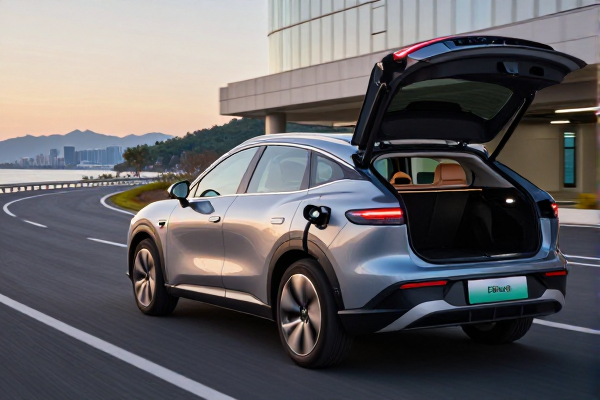
For potential electric vehicle buyers navigating higher sticker prices and the phase-out of federal tax credits, complimentary public charging has emerged as a critical factor in the total cost of ownership equation. As of late 2023, while many early adopter incentives have vanished, a handful of automakers continue to provide these valuable perks into the 2026 model year, offering a tangible offset to rising electricity costs.
BMW's Calculated Kilowatt-Hour Credit BMW maintains its position by offering a straightforward energy credit. Purchasers of new 2026 i4, i5, and iX models receive 1,000 kWh of complimentary charging through the Electrify America network, valid for two years. To put this in perspective, for an i4 eDrive40 with an estimated 307-mile range, this credit translates to roughly 3,780 miles of free driving, saving approximately $180 at average U.S. electricity rates. The flagship i7 sedan receives an even more generous 2,000 kWh allowance over three years. This approach provides clear, quantifiable value, though it requires planning to use within the expiry period.
Mercedes-Benz: Flexibility and Speed Mercedes-Benz adopts a dual-strategy, offering both unlimited charging sessions and hardware credits. Through the MB.CHARGE Public program, buyers of 2024-2027 model year EVs get two years of unlimited DC fast charging at Mercedes-branded High-Power Charging stations, which boast speeds up to 400 kW. Additionally, customers opting for a 2025 model year EQE or EQS can choose between a $1,000 charging credit for use within the MB.CHARGE network or a Home Wallbox unit (installation not included). This flexibility caters to both road-trippers and homeowners, though the charging credit excludes the Tesla Supercharger network.
Volkswagen's Tiered Legacy Support Volkswagen distinguishes itself with extensive support for older models. Its promotional offers via Electrify America extend back to the 2021 ID. series, with the most generous terms applying to the earliest models: 2021 ID. owners get three years of truly unlimited charging. For 2024 and 2025 models, the offer shifts to a three-year Electrify America Pass+ membership plus 500 kWh of free fast charging, providing a 25% ongoing discount after the initial credit is used. Notably, for the 2026 model year, the complimentary kWh offer disappears, leaving only the two-year Pass+ discount—a sign of the incentive's gradual sunset.
Audi's Model-Dependent Generosity Audi continues to offer some of the most compelling unlimited charging plans, but their value heavily depends on the chosen model. Drivers of 2024 and 2025 Q6, Q8, e-tron GT, and related Sportback models receive two years (2024) or one year (2025) of unlimited charging at Electrify America stations. For the more affordable Q4 e-tron, the offer is significantly reduced to a 250 kWh credit, enough for about three full charges. This tiered structure clearly incentivizes buyers toward Audi's higher-margin vehicles, making the cost-benefit analysis a crucial part of the purchase decision.
Tesla's Strategic Promotional Pulses Tesla's approach to free Supercharging has evolved from a universal perk to a targeted promotional tool. As of mid-2026, a limited-time offer provides one year of free Supercharging for new Model 3 Premium or Performance trim deliveries—a promotion frequently tied to end-of-quarter sales pushes. A more permanent offer for new customers is the 2,000-mile Supercharging credit granted for trading in a gas-powered vehicle. Industry analysts note that Tesla strategically deploys these promos to manage inventory and stimulate demand for specific configurations, making timing a key element for buyers seeking this benefit.
The Underlying Strategy and Consumer Outlook The persistence of these programs reveals a strategic shift. Once a broad customer acquisition tool, free charging is now a targeted lever for competitive differentiation and upsell encouragement. According to a recent analysis by BloombergNEF, the operational cost of providing these programs has spurred automakers to design more finite, cost-controlled offers like kWh caps or limited-time memberships. For consumers, this means carefully scrutinizing the terms—expiry dates, network restrictions, and eligible models—is more important than ever. The value can still be substantial, but it requires active management to fully realize the promised savings.