Browse

Log in / Register
 Share

March 18, 2026 — The Tesla Model 3 is still the electric car most American drivers measure the competition against. The 2026 version keeps the efficiency lead, polished software and Supercharger access that made it famous, but also drops the traditional turn-signal stalks in favor of steering-wheel buttons and a screen-based gear selector. Electrifying.com's Ginny Buckley tested the updated sedan in sub-zero conditions to see whether it still sets the standard.
Note: This assessment is adapted from Electrifying.com's first-drive review conducted in the UK. US pricing, EPA-range context and local market data have been added for American buyers.
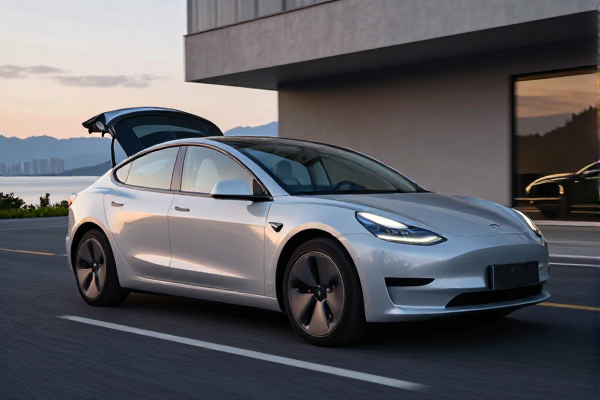
Don't expect a ground-up redesign. The 2026 Model 3 continues the "Highland" generation Tesla began rolling out in late 2023. The visuals improve subtly: slimmer LED headlights, a sharper rear bumper and C-shaped taillights that wrap around the trunk lid. TESLA lettering replaces the badge, and the charging port now sits integrated into the rear light cluster — a detail Buckley called one of her favorites in any EV.
The mechanical lineup largely carries over, with battery options spanning roughly 55 to 75 kWh depending on the trim. The real transformation inside is philosophical. Tesla deleted the conventional stalks entirely: drivers press buttons on the steering wheel rim to signal turns, and gear selection happens via swipe on the touchscreen. Mirror adjustments hide inside a digital menu. It's a cabin designed around screens, not muscle memory.
If there's one reason buyers keep returning to the Model 3, it's efficiency. The 2026 lineup manages about 5.2 miles per kWh on the WLTP cycle — an A++ E-Rating few competitors can match. That translates into a lower cost per mile and, just as important, less range loss when temperatures drop.
Buckley's winter test confirmed the edge: her tester returned around 3.24 miles/kWh in freezing conditions, which is respectable for any EV and class-leading for a mid-size sedan. In everyday driving, she estimates 260 to 280 real-world miles from a full charge. The official claimed figure for the tested battery is 318 miles on the WLTP cycle, with the wider line-up spanning 332 to 466 miles. US buyers should know EPA numbers are stricter than WLTP, so window-sticker range will read lower — and normal driving will land near the bottom of official estimates.
Range anxiety is a problem Tesla largely solved years ago. The 2026 Model 3 charges at up to 250 kW on DC fast chargers for US models and includes battery preconditioning, so the pack warms automatically when you set a Supercharger as your destination. The experience remains the smoothest in North America: plug in, walk away, and billing happens silently.
The 11 kW onboard AC charger is plenty for overnight home charging. The notable miss is vehicle-to-load — you cannot export power from the battery to run appliances or back up your home during an outage, something a growing list of rivals now offers.
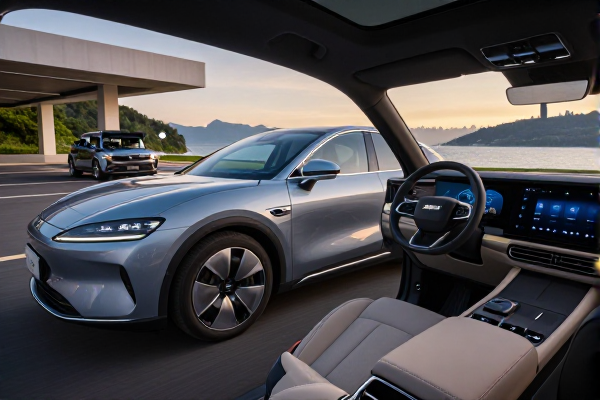
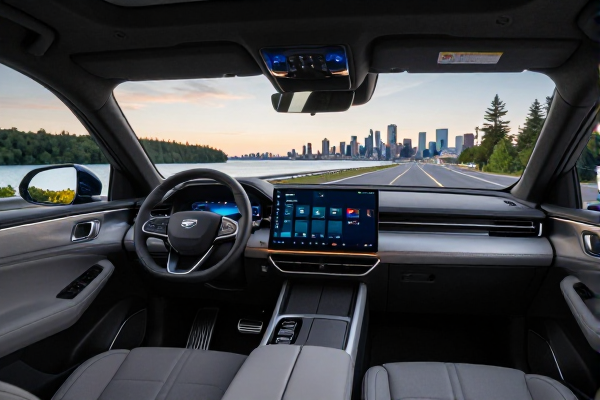
The cabin still revolves around the 15.4-inch central touchscreen, and it remains one of the fastest, most intuitive systems on sale. The interface responds instantly, menus are logical, and over-the-air updates keep adding features after delivery. Rear passengers get a new 8-inch display for entertainment and climate controls — a genuinely useful addition for family road trips.
Material quality has improved in this generation, with metallic trim and softer surfaces replacing the harder plastics of earlier cars. Rear-seat space is good, with a flat floor that helps three-across seating.
But the control changes divide opinion. After several days driving on twisting roads, Buckley admitted she still found the steering-wheel indicator buttons easy to miss when the wheel was turned. The screen-based gear selector adds another layer of unfamiliarity. And there is no instrument cluster or head-up display, so your eyes travel to the center screen for speed more often than they should.
The 2026 Model 3 rides better than the pre-facelift version. The suspension copes more confidently with rough pavement, road noise has been toned down (though it returns on coarse surfaces), and the one-pedal calibration is excellent: strong regenerative braking brings the car to smooth, controlled stops.
Buckley's complaints were about comfort and personality rather than capability. She found the front seats lacking support on longer trips, and the driving experience — while polished and efficient — stays emotionally cold. As she put it: "I feel like I'm driving a robot and it's not the most exciting robot." Some buyers will read that as a feature; others will see it as a warning flag.
The Model 3 is a genuine five-seat family sedan. The trunk swallows 594 liters (roughly 21 cubic feet) — more than several crossover EVs — plus an 88-liter frunk under the hood. Rear legroom is fine for two adults, and the rear display gives back-seat passengers their own controls.
Pricing in the US starts near $42,000 for the Rear-Wheel Drive model and climbs to about $56,000 for the Performance trim. Many buyers still qualify for the $7,500 federal EV tax credit (income and battery-material rules apply), bringing the effective base price close to $35,000. For context, the UK review car was priced at £37,990–£59,990 in its home market.
The Model 3 no longer dominates by default. The Hyundai Ioniq 6 offers more dramatic design and a quieter ride in some configurations; the Polestar 2 counters with conventional controls and a restrained Swedish look; the Ford Mustang Mach-E appeals to drivers who want an SUV silhouette.
What keeps the Model 3 ahead is the combination: efficiency leadership, mature software and the unmatched Supercharger network. No current rival matches all three at once — and that still matters more than almost anything else for American EV buyers.
Electrifying.com scores the updated Model 3 8/10, balancing genuine admiration for efficiency, technology and ownership ease against frustration with the controls and driving character.
Buy the 2026 Model 3 if you want a friction-free EV: the best charging network, class-leading efficiency, instant software and family-friendly practicality.
Skip it if you prefer conventional stalks, more engaging road feel or vehicle-to-load capability. The Ioniq 6 and Polestar 2 deserve a test drive before you put down a deposit.
How much does the 2026 Tesla Model 3 cost in the US? About $42,000 to $56,000 before incentives, depending on trim. The federal EV tax credit can reduce the effective price further for eligible buyers.
What is the real-world range of the 2026 Model 3? Tesla claims up to 318 miles WLTP for the base battery configuration. In real-world winter testing, expect 260 to 280 miles from a full charge, with about 3.24 miles/kWh achieved in sub-zero temperatures.
How fast can the 2026 Model 3 charge? Up to 250 kW DC on US models, plus an 11 kW AC onboard charger. Battery preconditioning ensures optimal Supercharger performance when routing with the navigation system.
Does the 2026 Model 3 have turn-signal stalks? No. Tesla replaced them with steering-wheel-mounted buttons, and gear selection is now handled through the touchscreen.
Is the Model 3 practical? Yes. It offers a 594-liter trunk, an 88-liter frunk, generous rear seating and a rear passenger display that families will appreciate.