Browse

Log in / Register
 Share


On May 7, 2026, Porsche’s biggest electric gamble is still, technically, an open secret. The 2026 Cayenne Electric has been confirmed, spied, and teased, but Porsche has not yet posted the final U.S. specs or opened order banks. Prototypes continue to test in Europe and North America, and the platform beneath them is well known. Here’s what an American buyer should expect from the first all-electric Cayenne, from range to charging to the window sticker.
Porsche has been clear that the next Cayenne generation will not be electric-only. Unlike the Macan, which has effectively dropped combustion engines from most showrooms, the Cayenne will offer both gasoline and electric drivetrains for years to come. That dual strategy matters in the U.S., where the Cayenne name has outsold every other Porsche SUV for two decades. Buyers who are not ready for an EV can still order a V-6 or V-8 Cayenne, while early adopters get the new PPE-based model under the same badge. It is a conservative approach, but it also gives Porsche cover if EV adoption slows.
The Cayenne Electric rides on the same Premium Platform Electric used by the Macan Electric and the Audi Q6 e-tron. That means an 800-volt architecture, a floor-mounted battery, and one or two electric motors. Porsche has not confirmed outputs, but the platform already tops out above 630 hp in the Macan Electric Turbo. A Cayenne version will almost certainly need more, especially if Porsche charges a Turbo badge premium. Expect dual-motor all-wheel drive across the lineup, with no base rear-drive model at launch.
Battery capacity also remains unconfirmed, but it will likely be a 100-plus-kWh pack with different software limits for each trim. Porsche tends to favor sharp performance over maximum range, so U.S. EPA numbers may trail some rivals. Still, the Cayenne is a grand tourer, not a daily commuter, and Porsche knows the range chart is the first number an American customer checks.
The EPA range estimate has not been published. Based on the Macan Electric’s EPA results and the Cayenne’s larger body, an entry-level Cayenne Electric should land somewhere in the 280-to-310-mile bracket. A higher performance trim will probably sit closer to 250-270 miles, especially with larger wheels and a sportier calibration. That won’t be class-leading, but it should be enough for most owners, particularly if paired with dependable fast charging.
Charging is where the PPE platform shines. The Cayenne Electric is expected to handle up to 270 kW on a compatible 350-kW unit, which is enough for roughly a 10-to-80 percent recharge in about 25 minutes. At 400-volt chargers, the pack can split into two banks and charge in parallel, a trick that keeps road trips moving even at older DC stations. As of May 7, 2026, nothing has appeared on fueleconomy.gov, so the official EPA window sticker is still weeks or months away.
The styling will not shock anyone. Camouflaged prototypes show the same tall beltline, sloping roofline, and muscular fenders as the current Cayenne. What changes is the nose: a shorter, mostly closed front surface to hide the charging port and cut drag. Expect matrix LED headlights, active front shutters, and a rear roof spoiler that extends at speed. None of this will make passersby think it’s a Tesla, and that is exactly what Porsche wants.
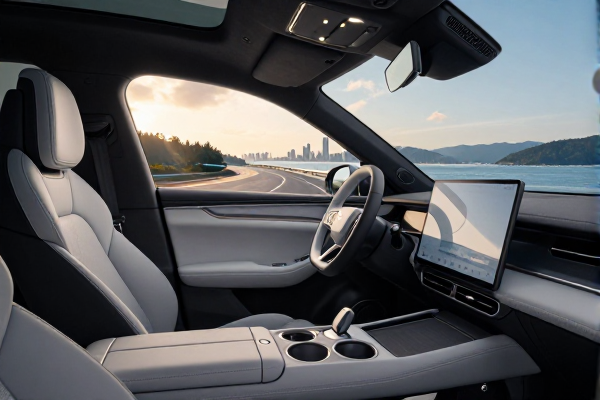
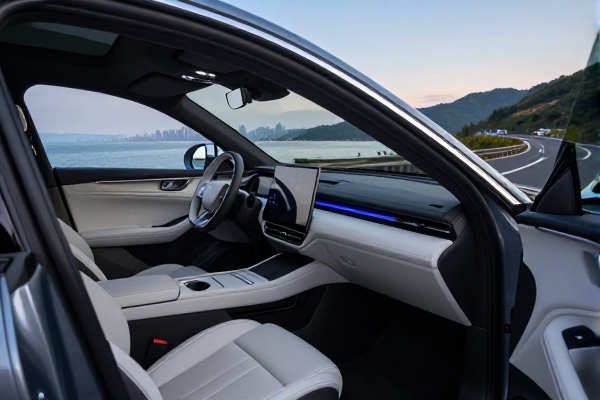
Inside, the cabin will lean on the Macan Electric’s layout. That means a curved driver display, a central touchscreen with Google built-in, and a passenger screen that can stream video or control navigation without disturbing the driver. Physical switches will be scarce, but Porsche usually keeps the volume and climate controls easy to find. Rear headroom should improve over the current model now that a battery pack doesn’t require a transmission tunnel.
Porsche’s engineering target is simple: the 2026 Cayenne Electric should feel smaller than it is. The floor-mounted battery lowers the center of gravity, and dual-motor torque vectoring can rotate the SUV into a corner. Rear-axle steering should be optional on standard models and standard on higher trims, making the big SUV easier to park in tight garages and more stable on highway lane changes.
The U.S. market will also push Porsche to get the ride quality right. America has more concrete freeways, more speed bumps, and longer stretches of broken tarmac than Germany. Adaptive air suspension is expected across the range, and the software will likely be tuned differently for U.S. models. Early reports won’t happen until the media embargo lifts, but Porsche’s track record with heavy EVs is solid.
American Cayennes are often used for trailering and long-distance family trips. Porsche has not released a tow rating for the electric model, but the current Cayenne can pull about 7,700 pounds. The electric version will have plenty of torque; towing range will drop noticeably when hauling a trailer. Buyers who tow every month will probably stick with the gasoline version. Porsche may eventually offer a trailer-specific range display and battery pre-conditioning for hills, but those features have not been confirmed.
Pricing is the last unknown. The Macan Electric starts near $78,000 in the U.S., so the Cayenne Electric will sit above it. A reasonable estimate puts the base price in the mid-$80,000 range, with a loaded Turbo easily crossing $120,000. That would place it against the Tesla Model X, Rivian R1S, Lucid Gravity, and Mercedes EQS SUV.
There is one important U.S. caveat: the Cayenne Electric will likely be assembled in Europe, which means it will not qualify for the federal $7,500 clean-vehicle tax credit. Porsche dealers may use the separate commercial clean vehicle credit on managed leases, which would give customers a way to access part of that incentive. It is not the same as a purchase credit, and it creates a pricing disadvantage against American-built rivals.
Porsche still has not named a reveal date. The most realistic scenario is an unveiling within the next few months, with U.S. deliveries beginning late this year or in early 2027. The car is already being referred to as the 2026 Cayenne Electric in early promotional materials, though the final model-year designation on U.S. window stickers may shift. Porsche has never needed the standard Detroit calendar to sell cars in North America.
The Cayenne Electric does not need to be the absolute best electric SUV in America. It needs to be the best electric Cayenne. The PPE platform gives it strong charging capacity, the suspension hardware should preserve Porsche’s handling identity, and the name itself carries decades of trust with U.S. buyers. If the EPA numbers land within the likely bracket, Porsche will have credible reasons to trade in a gas Cayenne for the same shape with a quiet drivetrain. That is the bar, and the 2026 Cayenne Electric looks ready to clear it.