Browse

Log in / Register
 Share
Share

As we look toward the 2026 model year, the midsize car segment is poised for a significant evolution, blending refined practicality with groundbreaking technology. For American families, commuters, and value-conscious drivers, these vehicles remain the cornerstone of personal transportation, offering a critical balance of space, efficiency, and features. This preview, based on current manufacturer roadmaps, insider industry trends, and consumer demands as of May 2024, analyzes the contenders set to define excellence in two years' time.
The defining shift for 2026 will be the seamless integration of electrified powertrains across nearly all lineups. While fully electric options will expand, the immediate sweet spot for many buyers will be sophisticated hybrid systems. Expect next-generation versions of stalwarts like the Toyota Camry Hybrid and Honda Accord Hybrid to achieve near-electric driving refinement in city conditions, with combined MPG ratings potentially exceeding 55. The key differentiator will be how these systems are tuned—prioritizing either serene, linear acceleration or maximizing every last drop of fuel efficiency.
Inside the cabin, the digital experience will become the new battleground. The era of clunky, laggy touchscreens is ending. By 2026, expect expansive, curved OLED displays with processor speeds rivaling premium tablets, offering crisp graphics and instant response. However, a counter-trend is emerging based on consumer feedback: the smart reintroduction of physical controls for critical functions like climate adjustment and audio volume. Brands like Mazda, with its anticipated next-gen Mazda6, are likely to champion this "human-centric" philosophy, pairing gorgeous interiors with intuitive, tactile interfaces.
Advanced Driver-Assistance Systems (ADAS) will transition from optional packages to standardized, comprehensive suites. Highway driving will be fundamentally altered by widespread adoption of hands-free, eyes-on-the-road systems like GM's Super Cruise and Ford's BlueCruise on compatible roads. The real progress, however, will be in urban environments. Look for systems that better handle complex city driving scenarios—navigating tight construction zones, identifying unpredictable pedestrian movements, and making confident, unprotected left turns at busy intersections.
Beyond the spec sheet, long-term ownership costs and durability are becoming primary purchase factors. Data from leading vehicle valuation firms indicates that models with a historical reputation for reliability, such as the Subaru Legacy (anticipated with a next-generation platform), coupled with transparent and affordable battery warranties for hybrids, will dominate resale value rankings. Manufacturers are moving towards longer, more inclusive bumper-to-bumper and powertrain warranties to build consumer trust in their newer technologies.
A unique perspective for 2026 is the role of the midsize car as a "technology bridge." For millions of drivers not yet ready to commit to a full EV, these vehicles will offer the most accessible entry point to cutting-edge features like vehicle-to-grid (V2G) compatibility (allowing the car to power your home), over-the-air (OTA) update capabilities that continuously improve the car, and advanced bidirectional charging. This makes the midsize sedan or hatchback not just a mode of transport, but an integrated, upgradable tech device.
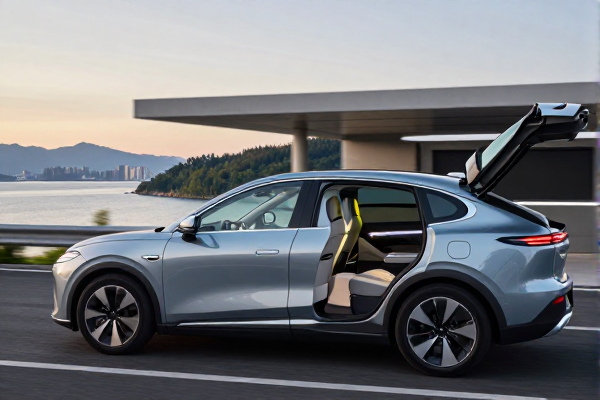
Design language will also see a notable shift away from sheer aggression toward sophisticated, aerodynamic elegance. The goal is reducing wind noise and boosting efficiency without sacrificing presence. Expect more fastback-like rooflines on sedans, flush door handles, and active aerodynamic elements like grille shutters and underbody panels. The Hyundai Sonata's current design language offers a preview, with future iterations likely to become even more streamlined and cohesive.
Finally, the value proposition will be redefined. The base price of a well-equipped midsize car may see a modest increase, but the standard equipment level will be vastly richer. Features like heated seats and steering wheels, premium audio systems with immersive sound, and comprehensive safety tech will move from the options list to the standard column. For the savvy buyer in 2026, the decision will less often be about adding packages and more about choosing the brand's philosophy and driving character that best suits their lifestyle.