Browse

Log in / Register
 Share

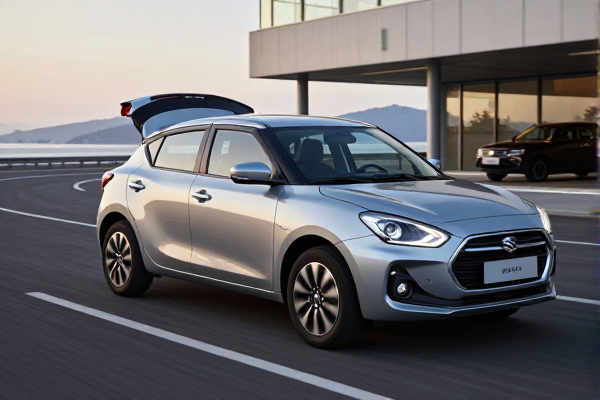
May 9, 2026 — Maruti Suzuki is turning up the efficiency pressure in the compact-sedan segment. Under a September 2026 update, the Dzire will gain a new CNG-automatic variant while every existing powertrain receives revised engine calibration. The most visible effect is on ARAI fuel economy: the petrol-manual jumps from 24.79 kmpl to 25.15 kmpl, the petrol-AMT climbs to 26.13 kmpl, and the CNG-manual improves by nearly 1.9 kmpkg.
The Dzire's familiar 1.2-litre three-cylinder petrol engine stays at 1,197cc, but its software map has been redrawn. Peak power rises from 81.58PS to 82.93PS at 5,700rpm — a 1.35PS, or 1.65 percent, improvement. Torque is up 0.7Nm to 112.4Nm, a gain of just under one percent, and the torque peak has shifted from 4,300rpm to 4,500rpm.
That change in the torque band is worth attention. It suggests engineers targeted a smoother, more linear mid-range delivery rather than a sharper low-rev kick. In everyday driving it may be invisible, but combined with the efficiency-focused calibration, it points to a calmer, less strained character on highways.
Both gearbox choices — a five-speed manual and five-speed AMT — carry over. Here is how the old and new petrol specifications stack up:
| Specification | Old Dzire | New Dzire | Difference | % Change |
|---|---|---|---|---|
| Engine | 1.2L naturally aspirated | 1.2L naturally aspirated | — | — |
| Displacement | 1197cc | 1197cc | — | — |
| Cylinders | 3 | 3 | — | — |
| Power | 81.58PS @ 5700rpm | 82.93PS @ 5700rpm | +1.35PS | +1.65% |
| Torque | 111.7Nm @ 4300rpm | 112.4Nm @ 4500rpm | +0.7Nm | +0.63% |
| Gearbox (MT) | 5-speed manual | 5-speed manual | — | — |
| Manual FE | 24.79 kmpl | 25.15 kmpl | +0.36 kmpl | +1.45% |
| Gearbox (AMT) | 5-speed AMT | 5-speed AMT | — | — |
| Auto FE | 25.71 kmpl | 26.13 kmpl | +0.42 kmpl | +1.63% |
On paper, a 0.36 kmpl gain for the manual and 0.42 kmpl for the AMT looks modest. Over a year of stop-and-go city driving it still matters, particularly in India's compact-sedan segment, where running costs are a major purchase driver. And because the figures come from the ARAI test cycle — the same benchmark used across the industry — the relative gain is a fair indication of where the Dzire now stands against its rivals.
The more dramatic updates come on the CNG side. The CNG-manual's output stays untouched at 69.75PS and 101.8Nm, but its ARAI economy improves from 33.73 kmpkg to 35.63 kmpkg. That is a jump of 1.90 kmpkg, or 5.63 percent — far larger than the petrol variants' gains.
Just as importantly, the September 2026 update introduces a CNG-AMT powertrain for the first time. Its certified figure of 36.47 kmpkg makes it the most efficient Dzire on offer, and it removes the biggest practical drawback of CNG models: dealing with a clutch in heavy traffic. Factory-fitted CNG automatics remain rare in this price class, which gives the Dzire a clear talking point against rivals.
| Specification | Old Dzire CNG | New Dzire CNG | Difference | % Change |
|---|---|---|---|---|
| Engine | 1.2L naturally aspirated | 1.2L naturally aspirated | — | — |
| Displacement | 1197cc | 1197cc | — | — |
| Cylinders | 3 | 3 | — | — |
| Power | 69.75PS @ 5700rpm | 69.75PS @ 5700rpm | — | — |
| Torque | 101.8Nm @ 2900rpm | 101.8Nm @ 2900rpm | — | — |
| Gearbox (MT) | 5-speed manual | 5-speed manual | — | — |
| Manual FE | 33.73 kmpkg | 35.63 kmpkg | +1.90 kmpkg | +5.63% |
| Gearbox (CNG-AMT) | — | 5-speed AMT | New | New |
| Auto FE | — | 36.47 kmpkg | New | New |
For Indian buyers, the decision between petrol and CNG often comes down to a compromise. CNG delivers far lower running costs per kilometer, but the lack of an automatic option has historically pushed many urban buyers toward petrol. The new CNG-AMT removes that trade-off almost entirely — buyers get the convenience of an automatic with running costs that are still significantly lower than even the most efficient petrol engine. That could make the Dzire CNG-AMT the default recommendation for fleet operators and high-mileage private owners alike.
The Dzire has always been among the most frugal compact sedans in India, and the new numbers stretch that lead. Key competitors, including the Hyundai Aura and Tata Tigor, continue to offer competitive economy, but matching a factory CNG-AMT with a certified 36.47 kmpkg is a different proposition. Even on petrol alone, the updated Dzire's 26.13 kmpl AMT figure sits at the top of the class.
There is an efficiency gap also for the manual: the Dzire petrol-manual's 25.15 kmpl. For buyers who cover long daily commutes, this kind of delta translates directly into fuel bills, and Maruti Suzuki knows that is a decisive factor in this market.
ARAI figures are produced in controlled laboratory conditions. Real-world consumption depends heavily on traffic, air-conditioner usage, tyre pressure, and driving style. What the ARAI cycle does provide is a consistent benchmark — and in that consistent comparison, the Dzire has improved in every direction at once: more power for the petrol, better economy everywhere, and a new transmission option on CNG.
Maruti Suzuki has not yet detailed variant-wise pricing for the 2026 Dzire update. The refreshed line-up — along with the CNG-AMT — is expected to reach dealerships around September 2026, with full prices and specifications announced closer to launch.
This isn't a ground-up redesign. It's a careful, cost-effective recalibration that strengthens the Dzire's strongest argument: low running costs. For global observers, including U.S. readers keeping an eye on small-car engineering, it's also a reminder that substantial efficiency gains can still come from tuning, not just new hardware.