Browse

Log in / Register
 Share


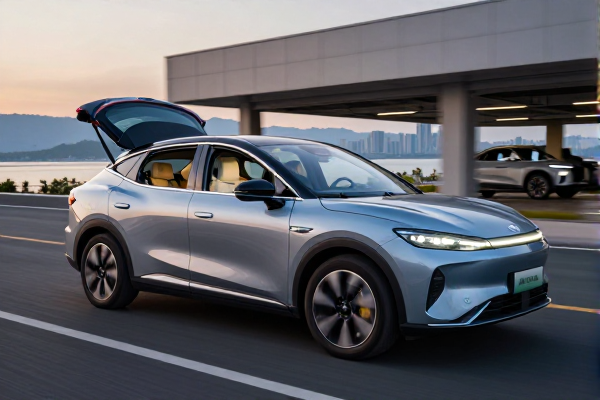
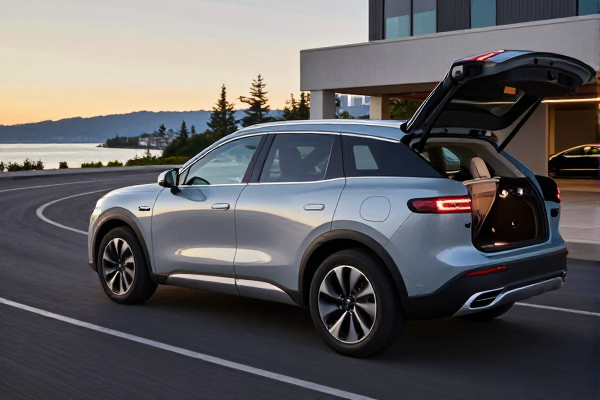
March 2025 – Lexus has officially revealed an upgraded version of its NX mid-size SUV, bringing significant changes to the powertrain, chassis, and interior. While the announcement was made for the Japanese market, the same updates are expected to reach the United States when the refreshed model arrives in showrooms likely in late 2026 or early 2027.
The NX is Lexus’s best-selling model in the U.S., and these upgrades are designed to keep it competitive against the BMW X3, Audi Q5, and Mercedes-Benz GLC. The refresh includes a new e-Axle with silicon carbide (SiC) inverter technology, improved battery capacity for the plug-in hybrid, and a 30% increase in overall body rigidity.
In Japan, the NX is offered as 300h, 350h, and 450h+. For the U.S., the powertrain lineup will likely be adjusted to match market preferences. The current U.S. NX lineup includes the NX 250 (2.5L, 203 hp), NX 350 (2.4L turbo, 275 hp), NX 350h (2.5L hybrid, 240 hp), and NX 450h+ (2.5L plug-in hybrid, 302 hp). The refreshed model is expected to drop the NX 250 and focus on the hybrid and PHEV variants.
The 350h will continue with a 2.5-liter hybrid making 240 hp (179 kW), available in front- or all-wheel drive. The flagship 450h+ PHEV retains its 2.5L engine but receives a new battery pack with 30% higher capacity (from 18.1 kWh to about 23.5 kWh) and 8% higher output, boosting its all-electric range. In Japan, the 450h+ now achieves 140 km (87 miles) on the WLTP cycle. For the U.S., EPA-estimated EV range is expected to increase from the current 37 miles to around 50–55 miles, a significant improvement for daily commuting.
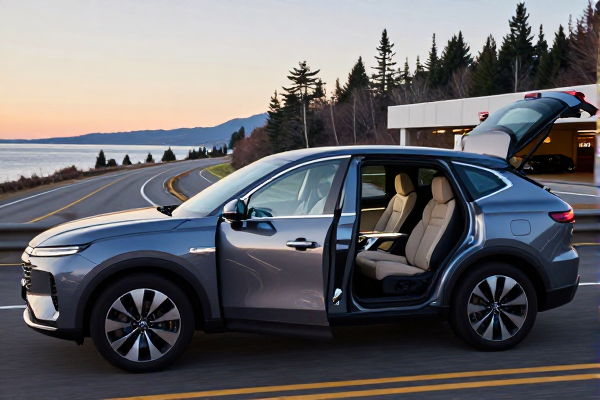
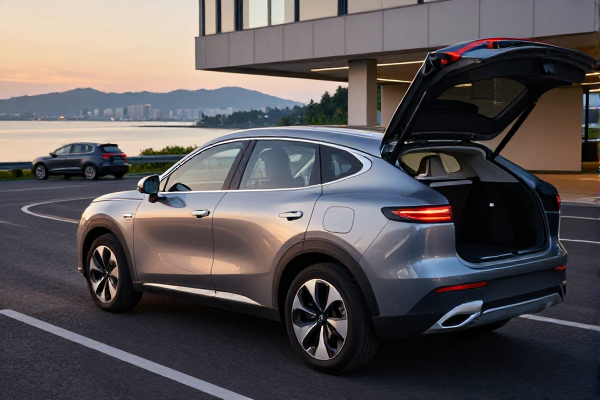
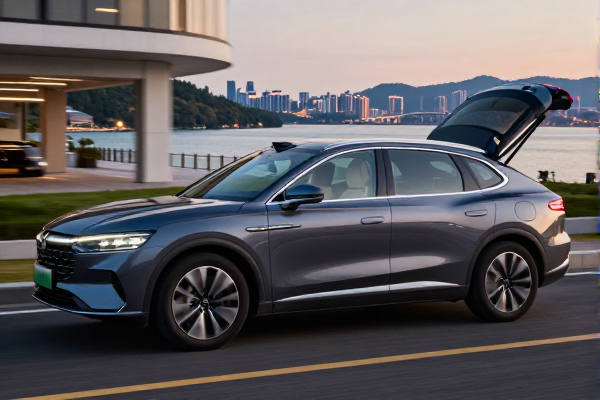
The updated NX measures 4,690 mm (184.6 in) in length, a 30 mm (1.2 in) increase over the outgoing model, but width (1,865 mm / 73.4 in), height (1,660 mm / 65.4 in), and wheelbase (2,690 mm / 105.9 in) remain unchanged. The front end features reshaped headlights and daytime running lights, integrated with a raised mesh grille that improves aerodynamics and cooling. Black exterior mirror covers replace chrome, and the rear gains LED taillights with a new “Double L Signature” graphic.
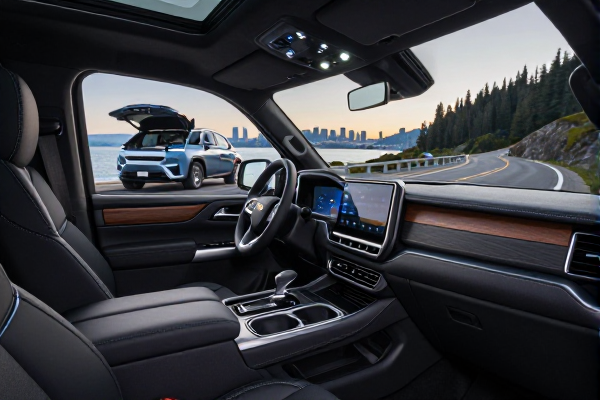
Inside, the most notable change is the new 14-inch touchscreen for navigation and multimedia, joined by a 12.3-inch digital instrument cluster. The system is controlled by a new “Sensory Concierge” interface that combines ambient lighting, audio, air conditioning, seat temperature, and fragrance to create a personalized atmosphere. Lexus describes it as “linear illumination” that helps occupants relax.
The refreshed NX also adopts a new compact e-Axle that integrates the transaxle, motor, and power control unit (PCU). The inverter now uses silicon carbide (SiC) power elements, which reduce energy loss and improve fuel economy by about 5–7% in real-world driving, according to Lexus engineers.
By switching battery cell orientation from longitudinal to lateral in the PHEV model, Lexus lowered the center of gravity and increased floor rigidity by approximately 25%. The overall body torsional stiffness improved by 30%, a figure validated at the Toyota Technical Centre Shimoyama in Japan and the Nürburgring in Germany.
New dampers with ultra-low-speed valves provide a better balance between handling response and ride comfort. The variable-ratio steering has been recalibrated for faster response, and the steering wheel is now 10 mm smaller in diameter (from 370 mm to 360 mm). Standard wheels are 18-inch alloys with 235/60 tires, while F Sport grades get 20-inch rims with 235/50 tires.
Active safety systems have been enhanced to detect objects more broadly and at greater distances. Pre-collision warning, adaptive cruise control, lane-change assist, driver monitoring, adaptive high-beam, blind-spot monitoring, and a panoramic 3D overhead view are all included. Lexus claims the system can now address a wider range of accident scenarios, including intersections and low-speed pedestrian situations.
Pricing for the U.S. market has not been announced. For reference, the current 2025 NX starts at $40,600 for the NX 250 and goes up to $56,000 for the NX 450h+ F Sport. The refreshed model is expected to carry a modest increase of $1,000–$2,000 due to the new hardware. Lexus will likely release full details closer to the U.S. launch, which is expected in the first half of 2027.