Browse

Log in / Register
 Share
Share
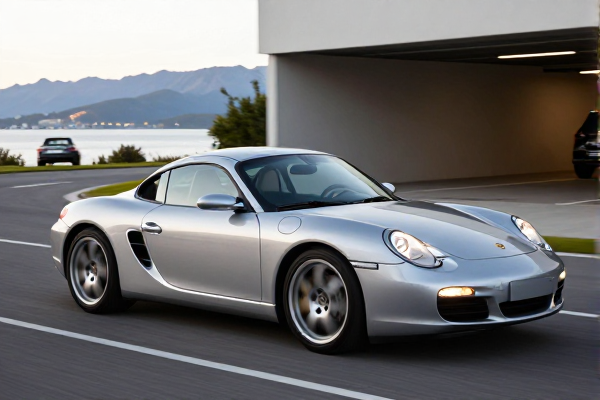
August 6, 2025 – The 2003 Porsche Boxster represents the sweet spot of the 986 generation: updated with a glass rear window, improved interior, and more power, yet still affordable enough to tempt enthusiasts who crave a genuine mid-engine sports car. While the 911 often steals the spotlight, the Boxster's role in rescuing Porsche from near-collapse in the 1990s is undeniable. Two decades later, the 2003 model remains a compelling blend of driving purity, daily usability, and classic Porsche DNA at a fraction of the cost of a modern 911.
Before the Boxster arrived, Porsche was struggling. Annual sales hit just 15,000 cars in 1993, and the aging lineup—including the 964 911, 928, and 968—was expensive to produce. A collaboration with Toyota on manufacturing efficiency and the appointment of Wendelin Wiedeking as CEO set the stage for a new entry-level model. The 1996 Boxster, sharing about 50 percent of its components with the 996 911, made both cars financially viable. It not only revived the company but also cemented the mid-engine layout as a Porsche hallmark.
The 2003 model year brought meaningful updates to the 986 Boxster. The most visible change: a glass rear window replaced the earlier plastic unit, improving visibility and durability. The front bumper was redesigned, side intakes were refreshed, and new wheel designs appeared. Inside, a glovebox finally arrived, steering wheel was revised, and materials were upgraded.
Mechanically, the 2.7-liter flat-six received revised engine management, boosting output to 168 kW (225 hp). The Boxster S climbed to 191 kW (256 hp) thanks to VarioCam Plus variable valve timing. Both engines offered better throttle response and flexibility. Suspension tuning was softened slightly for improved ride comfort, and side airbags became standard in most markets. Electronic stability control was offered as an option.
The 2.7-liter flat-six isn't a torque monster, but it's tractable around town and pulls eagerly past 4,000 rpm. The engine spins smoothly to its 7,200 rpm redline, emitting a gruff, guttural flat-six sound that's unmistakably Porsche. The five-speed manual gearbox (a six-speed was reserved for the S model) has a slightly long throw but a slick, fluid action. Pedals are well spaced for heel-and-toe downshifts.
The steering is the highlight—alive with feedback, transmitting road texture through the wheel. The car turns in with genuine mid-engine bite, and the chassis communicates balance without the need for electronic aids. There's no torque vectoring, no drive modes, just a simple, engaging setup. Ride quality is firm over broken pavement, and some scuttle shake creeps into the cabin, but most enthusiasts will call it character.
Today, a well-maintained 2003 Boxster 2.7 can be found for $12,000–$18,000 in the U.S., depending on mileage and service history. The Boxster S commands a premium of $4,000–$6,000 more. Compared to a 996 911 of the same era, the Boxster offers similar dynamics at roughly half the price.
The biggest concern for any 986 Boxster is the M96 engine's intermediate shaft (IMS) bearing. A failure can destroy the engine. The 2003 model year benefits from a larger, more durable bearing, but it's still a risk. Look for cars with documented IMS replacement or aftermarket upgrades. Other common issues include coolant pipes that can leak and rear main seal leaks. A thorough pre-purchase inspection is essential, especially for cars with over 60,000 miles.
Bring a Trailer data from 2024–2025 shows that pristine 2003 Boxster S examples with under 30,000 miles have sold for $25,000–$30,000, while average-condition 2.7 models with 80,000–100,000 miles trade around $14,000–$16,000. The market has been stable, with slight upward pressure on low-mileage, well-documented cars.
The 2003 Boxster holds its own against modern rivals like the Mazda MX-5 Miata or the Toyota GR86. It's not as quick as a new Miata RF, but it offers a more premium feel, superior build quality, and that flat-six sound. The Boxster's mid-engine balance gives it an edge in cornering poise. For someone seeking an affordable entry into classic Porsche ownership, the 2003 Boxster is arguably the best value in the modern classic market.
The 2003 Porsche Boxster is a driver's car that rewards engagement over outright speed. It's practical enough for daily use, with two trunks and a reliable roof mechanism. The updates from the 2003 model year make it the most desirable of the 986 generation. If you find one with a solid service history—especially with IMS bearing addressed—you'll own a piece of Porsche history that's still a blast to drive. Get in while good examples are still easy to find.