Browse

Log in / Register
 Share

Aug. 20, 2026 — A rare 1979 BMW Motorsport sedan with direct links to the earliest history of the M5 will cross the auction block at Humer Granner in Austria on Oct. 17. The Polaris Silver four-door began life as a 525 before BMW Motorsport swapped in the 3.5-liter inline-six from the 635CSi, effectively creating a prototype for the E12 M535i. The car is offered without a reserve price and carries an estimate of €75,000–€95,000, or about $84,000–$106,000.
In 2026, the M badge is easy to find: almost every model in the BMW lineup has an M variant, from the 2 Series coupe up to the 7 Series sedan. That was not the case in the late 1970s. BMW Motorsport was only a few years old, and its road-going work was done on a near-bespoke basis, using regular production cars as starting points. The resulting sedans were never advertised and were unknown to many salespeople.
At a time when the most powerful 5 Series in BMW’s regular brochure offered only about 177 hp, the idea of a 3.5-liter, 218-hp sedan was remarkable. Yet dealers had no official information about the conversions. A customer who asked for a “533i” or a “535i” might be met with a blank stare. These were effectively secret specials, built behind closed doors.
The conversion program started in earnest in 1974, two years after BMW Motorsport was founded and the first 5 Series went on sale. M’s small team took cars from the Dingolfing plant and replaced their standard engines with larger six-cylinder units from the CS coupe, the 6 Series, and the E3 sedan. Models like the 525, 528, and 528i were all eligible. The result was a family sedan with the heart of a grand tourer.
Confusion often surrounds the 533i and 535i names. For the 1979 model year, the 533i was a 3.2-liter conversion that made 197 hp and reached 132 mph. Then came the 535i, which used the larger 3.5-liter engine and pushed output to 218 hp. Both were built only on request, and neither appeared in BMW’s official price lists. The car at auction is the latter, the higher-output version, which makes its rarity even more significant.
The car now headed for auction is a late example of that 535i recipe. It was built in the summer of 1979, after BMW Motorsport had refined the package and one year before the production M535i was introduced. The specification includes a five-speed manual with dog-leg first gear and direct top, a limited-slip differential, sports dampers, and 14-inch BBS Mahle wheels. Inside, the original seats were swapped for deeply bolstered bucket seats from Auto Sport Spezialsitze, a German specialist of the period.
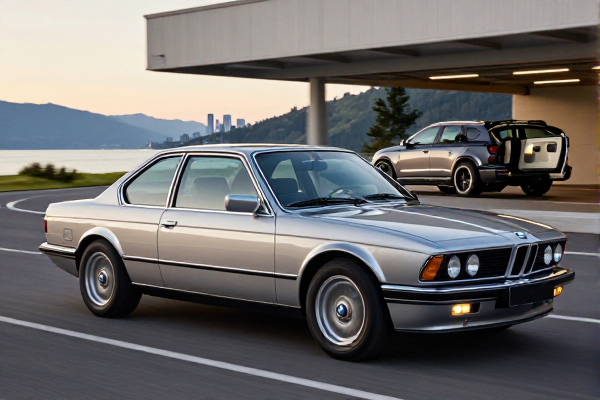
Visually, the car is subtle. The Polaris Silver paint is standard for the time, the bumpers and trim are stock, and there are no dramatic body kits. The only obvious clue to its performance is the set of wider BBS wheels. This understated approach was typical of the late-1970s Motorsport conversions, which were built for driving rather than showing off.
Now on its fourth owner from new, the car has been fully restored. The auction listing describes the bodywork and mechanicals as completely refreshed, and the car is presented as a running, drivable vehicle. The interior retains the period-correct bucket seats, finished in a style that fits the late-1970s cockpit.
Humer Granner will offer the car at its sale in Austria on Oct. 17, 2026. With no reserve, the highest bidder on the day will secure it, regardless of whether the price reaches the published estimate. The catalogue estimate is €75,000–€95,000, a range that looks attractive for a vehicle of this rarity.
Gauging actual production numbers is difficult because BMW never gave the conversions a separate model code. The car rolling onto the auction block is still technically an E12 525, and its VIN reflects that. Buyers looking to confirm authenticity should ask for the original engine stamp, which must match the 3.5-liter M30 from the 635CSi. Factory archive data and a BMW Classic inspection can also support the provenance.
Beyond the paperwork, the car’s significance is historical. The production M535i arrived in 1980, and the M5 followed in the next generation. This hand-built 1979 sedan is a direct ancestor of both, and it demonstrates how M’s engineering ideas were developed before they reached the showroom.
Early BMW M models have become highly collectible, and the market now routinely puts restored M5s and even M535is into six-figure territory. This prototype conversion is potentially rarer than any of those. With no reserve on the auction, the final price will be determined by how much faith bidders place in the car’s story—and in its condition.
The Polaris Silver 535i is not merely a modified classic. It represents the period when BMW Motorsport was a skunkworks rather than a model range. For anyone who ever wanted an M5 but appreciates the undocumented origins of the breed, this is an opportunity that may not come again.