Browse

Log in / Register
 Share

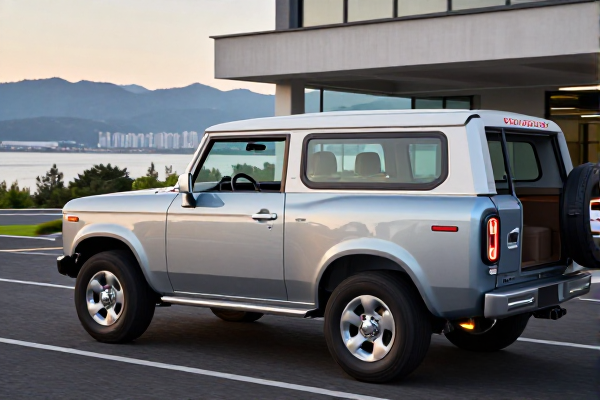
Some old trucks never get a second chapter. This 1970 International Scout did more than that—it got an entirely new powertrain and somehow kept the part everyone expected to disappear.
The Scout sat in a field for years, the kind of truck you’d normally scroll past on a classifieds feed: faded paint, rusted details, and a question mark instead of a future. But instead of a crate V8 or a fresh carburetor, this one got an electric motor. And here’s the kicker: it still shifts through its original 4-speed manual gearbox.
That last detail turns a straightforward EV conversion into something far more interesting. As of May 9, 2026, this 1970 Scout represents an unlikely meeting point between old-school off-road character and modern electric propulsion—one that still asks for a clutch pedal and a firm hand on a worn shift lever.
International Harvester built the Scout as a rugged, go-anywhere machine long before the word “SUV” entered everyday vocabulary. The 1970 model, with its boxy body, removable roof options, and solid axles, became a favorite for farm work, trail exploring, and general abuse. This particular example spent years parked outside, exposed to weather and ignored.
That kind of history leaves a truck with two possible paths: a slow decline into parts-yard oblivion, or a resurrection with a new skill set. The owner chose the latter—and made the call to keep the original gearbox intact.
The result is a truck that looks like it rolled off someone’s back pasture, but underneath it now hums instead of rumbles. No exhaust, no gas tank, no oil pressure gauge to worry about. Just instant torque and a very familiar shift pattern.
Most EV conversions don’t use a manual gearbox. Builders typically remove the transmission and fabricate a direct-drive adapter that bolts the electric motor straight to the driveshaft. That reduces weight, simplifies the build, and keeps things cheaper.
This Scout takes the road less traveled. By keeping the original 4-speed, the conversion preserves the hands-on experience that makes old off-roaders so enjoyable. You still row through gears. You still push the clutch. You still feel the mechanical connection between your arm and the wheels.
There’s an engineering angle too. Electric motors deliver full torque almost instantly, which can shock drivetrain components designed around internal combustion power. A manual gearbox lets the driver modulate that force with a clutch pedal. That’s not nostalgia for nostalgia’s sake—it’s practical protection for half-century-old axles, universal joints, and transfer case parts.
Any conversion project takes planning, but mating a modern electric motor to a 1970 transmission is especially fussy work. The motor needs a custom adapter plate, a way to handle the input shaft, and a compatible release mechanism for the clutch. The builder has to measure, machine, and test until everything spins true.
The original bellhousing won’t just bolt up to an electric motor. That’s why most shops source spacer plates, pilot bearings, and clutch actuators from specialists who deal specifically in classic EV conversions. It’s not a kit-and-forget operation; it’s a careful marriage of two very different automotive eras.
Battery placement is another challenge. A truck of this size doesn’t offer a lot of clean, protected floor space. Builders often end up placing cells between the frame rails, behind the rear axle, or in the bed with a lockable cover. Weight distribution matters even more when there’s no engine block sitting over the front axle.
Driving a manual EV takes a moment to adjust to. The biggest surprise is how forgiving the setup feels off the line. Instead of managing a lumpy carburetor idle or hunting for the clutch bite point of an old four-banger, you simply feed in power as you release the pedal. There’s no engine speed to fall on its face, no stall risk in the traditional sense.
The Scout’s personality changes too. In the low gears, electric torque turns it into a serious crawler. You can creep through rough terrain with fine throttle control instead of clutching through a narrow power band. Then, when you want to hustle down a two-lane road, you still get the satisfaction of grabbing third and feeling the drivetrain respond.
It’s still not a fast truck. It doesn’t need to be. The point isn’t to outrun anything—it’s to enjoy the experience of driving a classic vehicle that no longer depends on gasoline.
The International Scout platform has strong appeal for EV builders for a few reasons. Its ladder frame is simple and robust. Its engine bay has plenty of room for a motor and controller. And its boxy body makes it easy to hide batteries and electronics without ruining the silhouette.
On top of that, the Scout looks like what people imagine when they think of a vintage American 4x4. That visual nostalgia remains intact even when the charging cable comes out. For owners who want the style of the 1970s with a modern powertrain, there aren’t many better starting points.
This particular project also fits a wider trend. Interest in turning classic trucks and SUVs into EVs has grown steadily as cities tighten emissions rules and gas prices remind everyone why alternatives matter. A 1970 Scout converted to electric power keeps its personality while gaining the benefits of clean, quiet operation.
From a mechanic’s point of view, keeping the original 4-speed is more than an eccentric choice. It actually solves one of the greatest challenges in classic EV restoration: preserving the driver involvement that makes old vehicles special.
If you take everything away—engine noise, shifting effort, exhaust notes—you’re left with an appliance. That’s fine for daily commuters, but it misses the point of owning a classic. This Scout keeps the ritual of driving. The engine is gone, but the tactile feedback is still there.
It also proves that electrification doesn’t have to erase the past. With the right parts and enough patience, you can bring a field-scarred relic back to life without turning it into a silent, soulless object.
One of the curious parts of owning an EV conversion like this Scout is the routine that follows. Instead of stopping for gas, you plug in at home or at a public charger. Instead of oil changes, you check coolant levels and battery health. Instead of listening for a ticking valvetrain, you listen for the subtle whine of the electric motor.
The character of the truck changes, but the ethos remains: go places, carry things, and don’t complain about the road. This 1970 Scout spent years sleeping in a field. Now it’s out earning attention again—driven, charged, and still shifting one gear at a time.