Browse

Log in / Register
 Share
Share
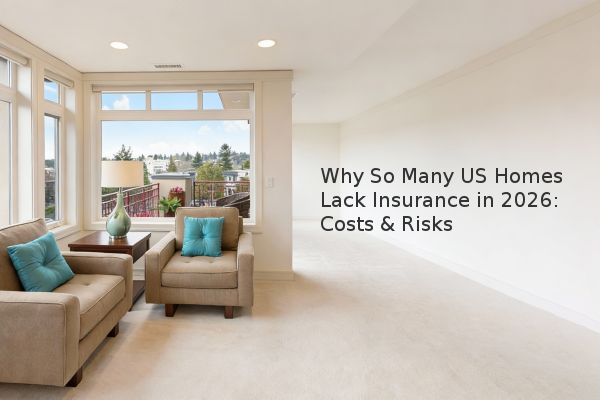
More than 11 million owner-occupied homes in the United States are uninsured, representing approximately 1 in 7 properties that are financially vulnerable to disaster. This situation, driven by rapidly escalating insurance premiums, leaves a significant portion of homeowners at substantial financial risk. The core reason for this trend is the 33% increase in average annual home insurance costs from 2020 to 2023, pushing coverage out of reach for many, particularly in high-risk states like Florida and New Mexico. For homeowners without a mortgage, skipping insurance can seem like a necessary financial decision, but it exposes their most important asset to potential total loss.
The primary driver behind the rise in uninsured homes is cost. Based on our experience assessment, the average annual premium has risen sharply, creating a significant hurdle for buyers and existing homeowners alike. When monthly housing expenses are already stretched, insurance is often viewed as a discretionary cost rather than a necessity, especially for those who own their homes outright. A freehold property—a property owned outright without any mortgage or lien—is not legally required to carry insurance, making it a common target for budget cuts. However, this decision carries immense risk, as a single event like a fire or storm could result in a total financial loss without any means of recovery.
The analysis reveals that uninsured rates are not evenly distributed across the country. New Mexico has the highest state-level rate at 23.3%, followed by West Virginia and Mississippi. At the metropolitan level, the disparity is even more pronounced. McAllen, Texas, has a staggering 43.3% of homes without coverage, which is nearly double the rate of the second-least-insured metro, El Paso, Texas (23%). Notably, even areas with well-known natural disaster risks show high percentages of uninsured properties. For example, despite significant hurricane exposure, 21% of homes in Miami are uninsured.
Florida presents a stark case study of the insurance affordability crisis. The state's high risk for hurricanes has led to some of the most expensive homeowners insurance—a policy that provides financial protection against disasters and liability—premiums in the nation. According to recent data, 20% of Florida homeowners pay at least $4,000 annually for coverage. Consequently, the state's overall uninsured rate of 18% is well above the national average. In high-risk counties ranked by the National Risk Index, such as Miami-Dade (23.5% uninsured), Broward (22.7%), and Lee County (17.9%), the high cost of premiums is likely pricing out a significant number of residents, forcing them to gamble with their financial security.
The rising cost of insurance is directly influencing buyer behavior and market dynamics. In markets with high premiums, prospective buyers must adjust their budgets to account for thousands of dollars in additional annual expenses. This can price some buyers out of the market entirely, reducing demand in certain regions. As experts note, buyers may begin to seek out markets with lower insurance costs, potentially shifting population trends. For sellers in high-cost insurance areas, a growing pool of uninsured neighbors could indirectly affect property values by signaling broader market stress and increased financial vulnerability within the community.
Facing high premiums does not make going without insurance a wise strategy. Homeowners should proactively shop around and compare quotes from different providers annually. Increasing your deductible—the amount you pay out-of-pocket before your insurance coverage kicks in—can significantly lower your premium. It is also advisable to inquire about discounts for home security systems, storm shutters, or updated roofing. For those struggling with affordability, contacting your state's insurance department to inquire about possible fair access to insurance requirements (FAIR) plans—state-mandated programs designed to provide coverage for high-risk properties—may be an option. The most critical takeaway is that forgoing insurance is a high-risk gamble that places your entire financial investment in your home in jeopardy.
Ultimately, while insurance premiums represent a growing financial burden, they are a fundamental component of responsible homeownership. The cost of being uninsured—the potential loss of your home and equity—far outweighs the annual premium. Homeowners are encouraged to view insurance not as an optional bill but as an essential protection for their most valuable asset.