Browse

Log in / Register
 Share

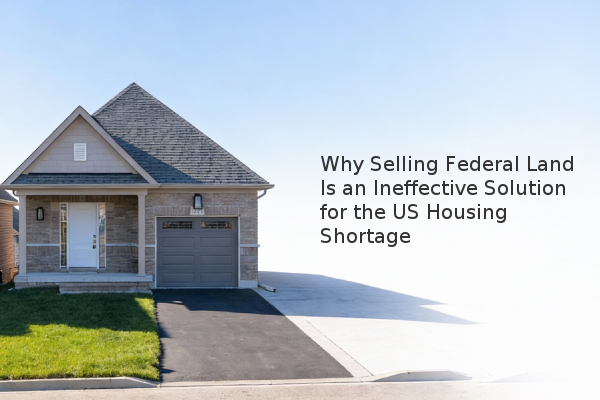
Selling millions of acres of federal land is an ineffective strategy for solving the US housing supply shortage. While the nation faces a deficit of nearly 4 million homes, expert analysis indicates that this proposal would offer limited benefits, failing to address the core regulatory and infrastructural barriers that prevent new construction. The most viable solutions involve streamlining local zoning laws and incentivizing the construction of affordable housing units.
What is the current state of the US housing supply shortage?
The United States is grappling with a severe housing supply deficit, estimated at nearly 4 million homes. This shortfall is a primary driver of soaring home prices and declining affordability for many Americans. The gap between housing demand and supply has widened over the past decade, creating a competitive market where buyers face bidding wars and rental costs consume a significant portion of household income. The fundamental issue is not a lack of land but a bottleneck in the development process, including lengthy permit approvals, restrictive zoning codes, and high construction costs.
Why wouldn't selling federal land solve the housing shortage?
The proposal to sell federal land to boost housing supply is met with skepticism for several key reasons. First, much of the federal land available for potential sale is located in remote areas far from job centers and existing infrastructure. Building a functional community requires more than just land; it necessitates roads, water systems, sewage treatment, and access to public services—investments that can be prohibitively expensive for developers and municipalities. Second, the transfer of land from federal to private ownership does not automatically guarantee that it will be used for residential development, nor does it circumvent the local zoning and environmental regulations that often delay or halt projects for years.
What are the more effective solutions to increase housing supply?
Based on our experience assessment, the most promising strategies to close the housing gap focus on optimizing existing urban and suburban areas. Key solutions include upzoning single-family neighborhoods to allow for accessory dwelling units (ADUs) and multi-family buildings, which increases density without requiring new land. Additionally, cities and states can revise outdated zoning codes to encourage mixed-use development and reduce parking mandates that inflate project costs. Another critical approach is for local governments to expedite the permitting process, reducing the timeline from planning to construction and encouraging more builders to enter the market.
What should home buyers and policymakers focus on?
For prospective buyers frustrated by high prices, the focus should be on markets where local governments are actively promoting housing growth. For policymakers, the priority should be on implementing regulatory reforms that directly unlock the potential for new construction rather than one-time land sales. This includes offering tax incentives for building affordable units and removing barriers to constructing different types of housing, such as townhouses and condominiums.
Ultimately, solving the housing shortage requires a nuanced, multi-faceted approach centered on regulatory efficiency. Selling federal land is a simplistic solution to a complex problem; the real work involves modernizing the systems that govern how and where we build.