Browse

Log in / Register
 Share
Share
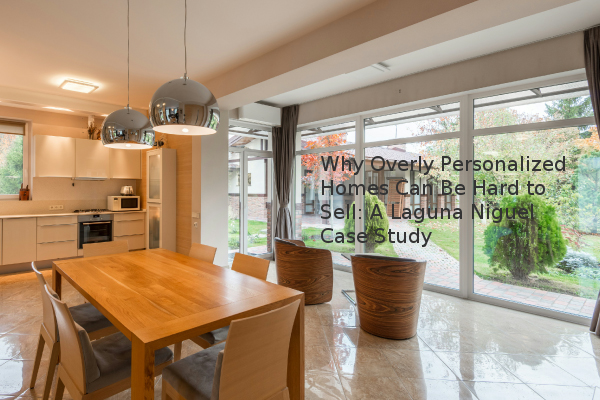
A home’s intense personalization can significantly hinder its sale, often requiring a substantial price reduction to attract buyers who can see past the unique decor. This is the central challenge facing a distinctive Laguna Niguel, California, property, which saw its asking price drop by over 40%—from $10 million to $5.9 million—within months of being listed in 2026. The situation highlights a critical real estate principle: highly customized properties appeal to a narrower buyer pool, ultimately impacting value based on traditional metrics like price per square foot.
The primary obstacle is a misalignment with current market preferences. Based on our experience assessment, today's buyers often favor neutral, minimalist spaces they can easily imagine making their own. This property, described by the listing agent as "not vanilla by any means," features a lifetime collection of global art, sculptures, and themed rooms. Every surface is detailed, which can overwhelm buyers unable to visualize the home without its current owner’s strong aesthetic. The key challenge for sellers is understanding that personal investments in customizations do not always translate directly into market value.
When a property's value is heavily tied to unique, non-standard features, establishing a fair market price becomes complex. The seller's perception of value, often based on emotional attachment and the cost of renovations, can diverge from the agent's valuation. This agent's assessment relied on traditional valuations, which compare the home to similar recent sales in the area, known as comps (comparables). The significant price reduction from $10 million to $5.9 million reflects the necessity to align the asking price with what the broader market is willing to pay for the underlying structure and location, rather than the one-of-a-kind interior design.
Beyond the decor, the 8,200-square-foot home boasts substantial assets. It includes seven bedrooms, nine bathrooms, and two kitchens spread over four stories, connected by a glass elevator. The home overlooks a private golf course and features an outdoor area with an 800-square-foot deck, a tropical pool, a slide, and a cave with a waterfall. The floor plan is designed for both grand entertaining—with a pub, library, and playhouses—and private living, as the owner created a separate alcave on the top two floors. These functional amenities represent significant value, separate from the decorative style.
Conclusion
For potential home sellers, the main takeaway is to objectively assess your home's market appeal before listing. While personalizing your space is a joy, understand that future buyers may not share your taste. Consider simplifying overly unique spaces to broaden your property's appeal. For buyers, a highly customized home listed well below its original price can represent an opportunity, but it's crucial to budget for potential renovation costs to make the space your own. The core lesson is that in real estate, universal appeal often trumps highly personal vision when it comes to maximizing value.