Browse

Log in / Register
 Share
Share
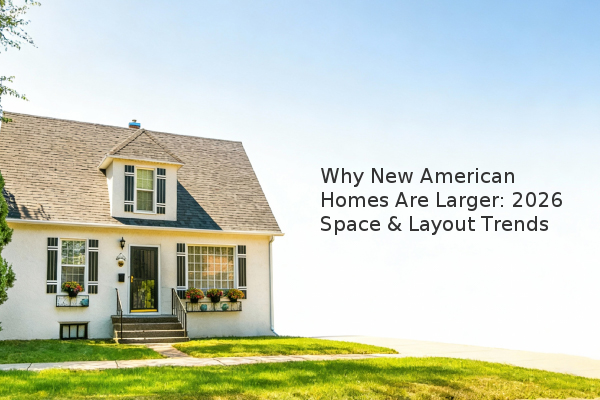
The most significant trend in the American housing market is the continued increase in the size of newly built single-family homes. Driven by the demand for dedicated home offices, multi-generational living, and more elaborate amenities, the average new home now exceeds historical norms. This expansion directly impacts buyer budgets, utility costs, and lifestyle choices, making understanding the drivers behind this trend essential for any 2026 home purchase decision.
What is the Average Square Footage of a New Home in 2026?
Based on current construction data, the average square footage of a new single-family home sold in the United States has continued its upward trajectory. While the specific national average fluctuates by region, new builds consistently offer more space than those constructed just a decade ago. This growth isn't just about adding more bedrooms; it encompasses larger common areas, more specialized rooms, and enhanced storage solutions. For buyers, this means a higher baseline cost but also greater flexibility in how the space is utilized. The key consideration is whether this additional square footage aligns with your household's actual needs or simply represents a larger financial and maintenance obligation.
Why Are New Homes Being Built Larger?
Several factors are fueling the demand for larger homes. The normalization of remote and hybrid work models has created a non-negotiable need for functional home office space, which many older homes lack. Furthermore, multi-generational living arrangements are on the rise, requiring additional bedrooms and bathrooms, or even separate living suites, often referred to as Accessory Dwelling Units (ADUs). An ADU is a secondary housing unit on a single-family residential lot. Beyond necessity, higher expectations for in-home entertainment and luxury amenities, such as spa-like owner's suites and gourmet kitchens, also contribute to the square footage increase. Builders are responding to what the market demands: versatile spaces that support modern American life.
| Factor Influencing Size | Typical Space Allocation |
|---|---|
| Remote Work | Dedicated home office or study |
| Multi-generational Living | Additional bedroom/bathroom or separate ADU |
| Lifestyle Amenities | Larger kitchens, walk-in closets, media rooms |
How Does a Larger Home Impact Your Budget and Finances?
The choice for more space carries significant financial implications beyond the higher sale price. A larger mortgage—a loan specifically used to purchase real estate—will naturally result in higher monthly payments and more interest paid over the life of the loan. Property taxes are often calculated based on the home's value and size, meaning a bigger home typically leads to a larger annual tax bill. Utility costs for heating and cooling a more expansive area can be substantially higher, an important factor given energy price volatility. Homeowners insurance premiums will also reflect the increased cost to rebuild the larger structure. It's crucial to factor in these ongoing expenses, not just the initial purchase price.
What Should Buyers Prioritize: Size or Layout?
While square footage is an easy metric to compare, the efficiency and quality of the floor plan are often more critical. A well-designed 2,000-square-foot home can feel more spacious and functional than a poorly laid-out 2,500-square-foot home. Buyers should prioritize a layout that enhances daily living. Look for open-concept common areas that facilitate family interaction, ample natural light, and a logical flow between rooms. Focus on how the space works for you. A bonus room that can serve as a flexible space for a gym, playroom, or guest room may offer more value than a seldom-used formal dining room.
Are There Alternatives to a Brand-New, Large Home?
For buyers concerned about the cost and upkeep of a new, large home, alternatives exist. Purchasing an older home and undertaking a strategic renovation allows for customization without the premium price of a new build. Another growing trend is the purchase of a smaller, new-construction home from a builder who offers highly customizable, efficient floor plans that maximize every square foot. The key is to weigh the benefits of a move-in-ready, large home against the potential savings and personalization opportunities of other options.
In conclusion, the trend toward larger new homes is a direct response to evolving American lifestyles. When navigating the 2026 market, carefully assess your need for additional space against the long-term financial commitment. Prioritize a functional layout over raw square footage and consider the total cost of ownership, including property taxes and utilities. For a sound investment, choose a home with energy-efficient features and a design that will maintain strong resale value by appealing to future buyer preferences.