Browse

Log in / Register
 Share

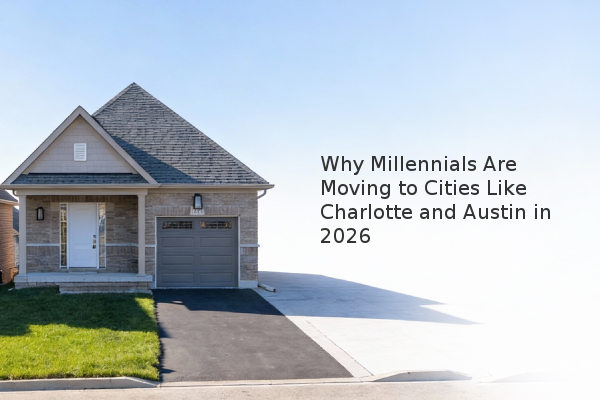
Driven by affordability and strong job markets, millennials are increasingly choosing interior U.S. cities like Charlotte, North Carolina, and Austin, Texas, over traditional coastal hubs. This demographic shift is reshaping real estate demand, making these markets highly competitive for both buyers and renters. The primary drivers are a lower cost of living, including more affordable housing, and robust economic opportunities. For anyone considering a move or a real estate investment in 2026, understanding this trend is crucial for making informed decisions.
The migration pattern is largely an economic decision. Based on our experience assessment, the high cost of living in cities like New York and San Francisco is a significant barrier to entry for many young professionals. For example, while the average monthly rent for a one-bedroom apartment in New York City can exceed $3,300, similar apartments in Charlotte and Austin average closer to $1,070 and $1,180, respectively. This substantial difference in housing costs, a major component of one's monthly budget, frees up capital for savings, investments, or discretionary spending. Furthermore, these interior cities often have lower overall property tax rates and costs of goods, enhancing their financial appeal.
For millennials transitioning from renting to buying in these popular markets, several factors require careful evaluation. First, the increased population growth can lead to competitive real estate transaction processes. It's essential to get pre-approved for a mortgage loan—a pre-arranged amount of money borrowed from a lender to purchase a home—to strengthen your offer. Second, understand the local property transfer tax, which is a fee levied by the state or local government when a property title is transferred from one person to another. These costs vary by location and can impact your closing costs. Consulting with a local real estate expert can provide clarity on these specifics.
| City | Avg. 1-Bedroom Rent (2026) | Key Market Consideration |
|---|---|---|
| Charlotte, NC | ~$1,070 | Rapidly appreciating home values |
| Austin, TX | ~$1,180 | Competitive new construction market |
| Houston, TX | ~$1,100 | Large inventory of single-family homes |
A robust job market is a fundamental pillar supporting real estate demand. Cities experiencing significant millennial growth typically feature diverse and expanding industries, from tech in Austin to finance in Charlotte. This economic vitality provides job security for residents, which in turn fuels confidence in making long-term financial commitments like purchasing a home. When assessing a city's real estate potential, researching employment growth statistics and major company expansions provides valuable insight into future housing demand and property value stability.
Renters attracted to these areas should be prepared for a competitive rental market. High demand can lead to quicker lease signing timelines and potentially higher security deposits. To avoid rental pitfalls, it is critical to thoroughly review all lease agreements and understand tenant rights specific to that state. Always conduct a walk-through inspection with the landlord and document the property's condition before moving in. This helps prevent disputes over security deposits when the lease ends.
The trend of millennials moving to affordable, dynamic interior cities is a dominant force in the 2026 real estate landscape. For potential movers, securing financing pre-approval is a critical first step in a competitive buying market. Renters must act quickly but carefully, ensuring all rental agreements are thoroughly understood. Ultimately, the combination of economic opportunity and relative affordability makes cities like Charlotte, Austin, and Houston compelling choices for real estate activity this year.