Browse

Log in / Register
 Share

In the luxury real estate market, significant price adjustments are a strategic response to market conditions rather than a reflection of a property's value. A recent high-profile example involves a Beverly Hills estate, initially listed for $23.95 million, undergoing a series of price reductions before being relisted at $17.95 million. This case underscores a critical lesson for sellers: an accurate initial listing price, informed by comparable sales and current market dynamics, is essential for a timely sale. Even for exceptional properties, an aspirational price can delay the selling process, necessitating strategic corrections to align with buyer expectations.
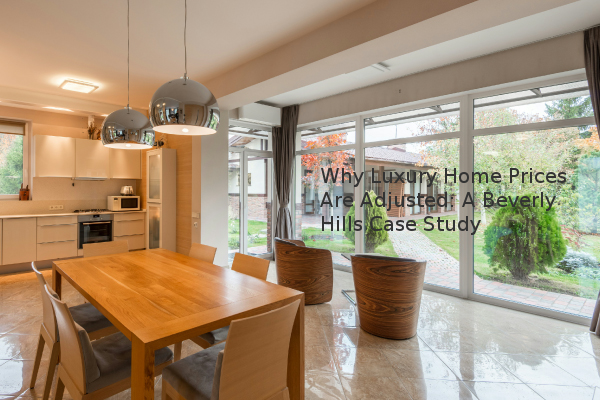
The value of a high-end property is determined by a combination of location, unique features, and recent sales of comparable homes, known as "comps." In this case, the 8,520-square-foot home is situated on nearly an acre of land in the prestigious 90210 zip code. Key features that contribute to its value include seven bedrooms, nine bathrooms, a state-of-the-art kitchen, a home theater, a gym, a saltwater pool, and extensive custom design details. However, according to industry analysis, the initial listing price may have been overly ambitious for its specific location within Beverly Hills. Properties on the outskirts of prime areas often command different prices than those in the core, or "Beverly Hills proper," despite similar square footage and amenities. Pricing must be competitive within its immediate micro-market to attract serious buyers.
Even in a strong seller's market, individual property pricing must be precise. Based on our experience assessment, the Los Angeles luxury market in 2026 remains highly competitive. However, if a home is perceived as overpriced relative to its direct competitors, it will linger on the market. The owners of this property made incremental price adjustments over several months, a common strategy to gauge buyer interest. The most substantial reduction of $6 million brought the asking price to a level that industry experts consider more competitive. This adjustment reflects the principle that price is the primary driver of market activity. A correctly priced luxury home in a desirable area will typically generate significant interest and multiple offers, even if the initial asking price was lowered to achieve that result.
This case study offers a clear takeaway for potential sellers. The decision to reduce the price was a strategic move to reignite buyer interest and position the property as a compelling value within its segment. The owners had also purchased a larger, newly built residence nearby, which may have influenced their motivation to sell. For any homeowner, understanding your motivation to sell is crucial for setting a realistic price strategy. If a quick sale is a priority, an aggressive, market-supported price from the outset is often more effective than starting high and reducing later. This approach can prevent the property from becoming "stale" in the minds of potential buyers.
The current real estate climate in sought-after areas like Beverly Hills continues to favor sellers, characterized by high demand and low inventory. This environment means that well-priced luxury properties can still sell quickly. The key is alignment with the market. The significant price correction on this particular home has, based on expert opinion, made it a much more competitive offering. A strategic price reduction can effectively transform a property's market position, moving it from an aspirational listing to a viable purchase for qualified buyers actively searching in that price range.
In summary, the journey of this Beverly Hills listing highlights several actionable insights for luxury home sellers: