Browse

Log in / Register
 Share
Share
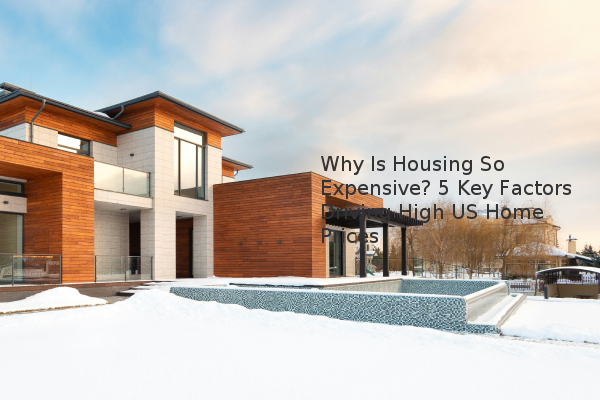
The high cost of housing in the United States is primarily driven by a persistent imbalance between strong demand and critically low supply, exacerbated by rising construction costs, stringent local zoning laws, and higher financing expenses. This confluence of factors has pushed the median home price to a level that challenges many aspiring homeowners. Understanding these core market dynamics is essential for making sense of today's real estate landscape.
A fundamental economic principle, the relationship between supply and demand, is the most significant contributor to high prices. For over a decade, the US has underbuilt housing relative to population growth and household formation. This chronic shortage means there are simply not enough homes available for the number of people who want to buy them. When numerous buyers compete for a limited number of properties, prices inevitably rise, leading to competitive bidding situations that push sale prices well above the initial listing price.
Construction costs have surged, making it more expensive to build new homes and, consequently, increasing the price of existing ones. The prices for essential materials like lumber, steel, and concrete remain volatile and elevated. Furthermore, a shortage of skilled labor in the construction trades has led to higher wages, which are passed on to the homebuyer. These rising input costs mean that for builders to achieve a profit, new construction must be priced at a premium, which elevates the value of comparable existing homes in the area.
Local zoning regulations and land-use policies significantly constrain the supply of new housing. Many municipalities, particularly in desirable coastal and suburban areas, have zoning laws that prioritize single-family homes on large lots, restricting the development of higher-density, more affordable options like townhouses, duplexes, and apartment buildings. These regulations, often called "exclusionary zoning," limit the number of housing units that can be built on available land, artificially restricting supply and keeping prices high.
The cost of borrowing money directly impacts housing affordability. When the Federal Reserve raises interest rates to combat inflation, mortgage rates typically follow. For example, a percentage point increase on a $400,000, 30-year fixed-rate mortgage can add hundreds of dollars to the monthly payment. This reduces a buyer's purchasing power, forcing them to look at lower-priced homes. While higher rates can cool buyer demand, they do little to increase supply, often resulting in a market where prices remain high even as sales activity slows down.
Beyond the basic cost of a house, several additional expenses contribute to the overall high cost of housing. Property taxes are a recurring cost based on the assessed value of a home, which can be a significant financial burden in many states. Additionally, in many regions, homebuyers are required to purchase title insurance, a policy that protects the lender and the owner against losses from disputes over the property's ownership. These ongoing costs factor into the long-term financial commitment of homeownership.