Browse

Log in / Register
 Share
Share
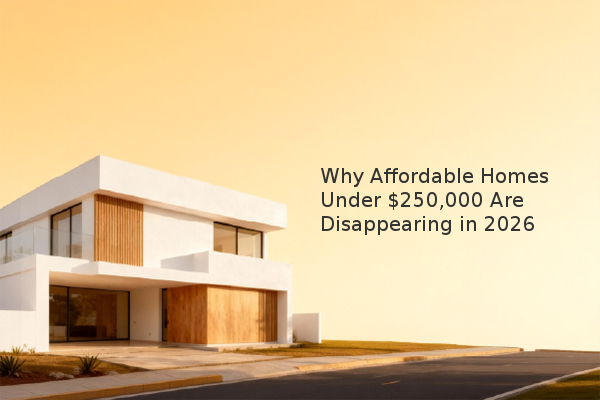
For home buyers seeking a bargain, the market presents a significant challenge: the inventory of affordable homes, particularly those priced under $250,000, has drastically shrunk. Based on our experience assessment of current market data, the core issue is a severe supply shortage across all price points, with the most acute deficit in the entry-level segment. This scarcity is driving up median home prices, creating a competitive environment where buyers must be financially prepared and act decisively.
The share of existing homes—properties that have been previously lived in—priced under $100,000 fell by 20.7% in March 2026 compared to the same month a year prior. More critically, the percentage of homes available for under $250,000 decreased by 7.8% nationally. This data, from the National Association of Realtors®, highlights a market-wide trend where affordable options are becoming increasingly rare. The national median home price (the point at which half of homes sell for more and half for less) reached $250,400 in March 2026, a 5.8% annual increase. This consistent upward pressure on prices directly results from there not being enough homes for sale to meet buyer demand.
The primary driver is a simple imbalance of supply and demand. Danielle Hale, chief economist at realtor.com®, notes, "In general, we’re seeing that there aren’t enough homes available for sale across all price ranges, but the biggest shortage is under $250,000.” Several factors contribute to this shortage. High land, construction, and material costs make it financially challenging for builders to profitably create new homes at this price point. As a result, newly constructed homes have a significantly higher median price of $326,800, about 30.5% more than an existing home. This pricing gap forces more budget-conscious buyers to compete for a dwindling supply of older, existing homes, intensifying competition and accelerating price appreciation in that segment.
Comparison of Median Home Prices (March 2026)
| Housing Type | Median Price | Annual Price Change |
|---|---|---|
| All Existing Homes | $250,400 | +5.8% |
| Single-Family Homes | $252,100 | -1.0% |
| Condos & Co-ops | $236,100 | -3.2% |
| Newly Constructed Homes | $326,800 | Data from Feb. 2026 |
While the overall sales volume of existing homes reached 5.6 million in March 2026, this figure represents a 1.2% decrease from the previous year. This decline occurs despite a healthy economy generating sustained buyer interest. Lawrence Yun, NAR's chief economist, summarizes the situation: "Supply is woefully low, and home prices keep climbing above what some would-be buyers can afford." The sales numbers vary by property type. Sales of condos and co-ops saw a monthly increase but were down annually, potentially indicating a shift for some buyers towards more affordable, albeit smaller, property types as single-family home prices rise.
For prospective buyers, the market demands patience, flexibility, and financial readiness. Getting pre-approved for a mortgage is a critical first step to understand your precise budget and demonstrate seriousness to sellers. Buyers should also be prepared to move quickly when a suitable property appears and may need to consider homes that need minor updates or expand their search to different neighborhoods. For sellers of well-priced, mid-tier homes, the low inventory creates a favorable environment, potentially leading to multiple-offer scenarios. However, the affordability barrier means pricing a home correctly from the start is more important than ever to attract qualified buyers.
The key takeaway is that the dream of a cheap home is increasingly difficult to realize. Success in today's market hinges on understanding these dynamics, setting realistic expectations, and working with a real estate professional who can provide localized, data-driven advice. Buyers should focus on their long-term financial comfort rather than stretching for a specific, increasingly scarce price point.