Browse

Log in / Register
 Share

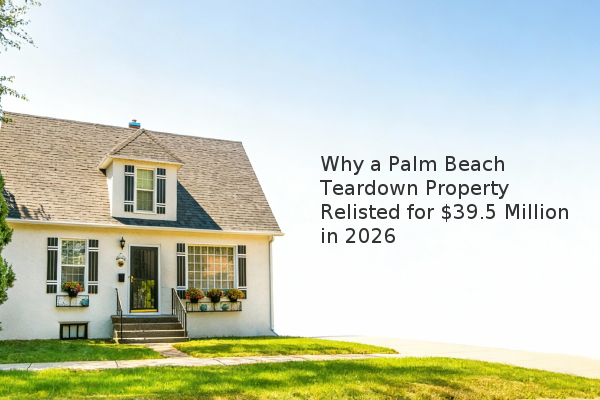
A prime oceanfront property in Palm Beach, Florida, is back on the market for $39.5 million in 2026, just months after it sold for $31 million. This rapid relisting of a teardown—a property purchased primarily for its land value with the intention of demolishing the existing structure—suggests the new owner's plans changed unexpectedly. Based on our experience assessment, the seller is likely aiming to recoup their purchase costs rather than turn a significant profit, highlighting the unique dynamics of the ultra-luxury real estate market.
A sudden change in circumstances is the most common reason a high-end property is resold shortly after purchase. The buyer, often a limited liability company (LLC)—a business structure that can offer personal asset protection—may have encountered personal, financial, or logistical hurdles. “For whatever reason, they aren’t willing or able to move forward with renovating the home or potentially tearing it down,” explains a Florida real estate advisor. The significant carrying costs, including property tax—a tax levied by the government on the value of real estate—and insurance, can motivate a quick sale even without a price markup. In such cases, the goal shifts from profit to breaking even on the initial investment.
The property's ability to sell for $39.5 million is uncertain, as the Palm Beach luxury market shows signs of cooling. While the 0.81-acre parcel is the largest private beachfront lot on the North End, broader market trends are influential. Data indicates the area's median listing price had decreased by nearly 7% year-over-year as of late 2025. In a thin market—an economic term describing a market with very few buyers and sellers—the decisions of a handful of wealthy individuals can cause significant price fluctuations. Affluent buyers can afford to be patient, waiting for potential price reductions before committing to a multi-million dollar project.
A potential buyer should focus on the land's intrinsic value and development potential. The key appeal lies in the freehold estate—a type of outright ownership of the land and any buildings on it—offering 152 feet of private beach frontage in a prestigious location. Title insurance—a policy that protects against financial loss from defects in the property title—is an essential safeguard in such a high-value transaction. However, buyers must also factor in rising costs. Higher insurance premiums and construction expenses can significantly impact the total investment required to build a custom home, making thorough financial planning critical.
Prospective buyers should conduct extensive due diligence, focusing on total development costs rather than just the purchase price. The current seller's motivation appears to be cost recovery, which could present an opportunity for a patient buyer. Ultimately, the value is in the land, not the existing structure, making it a blank canvas for a luxury estate.