Browse

Log in / Register
 Share

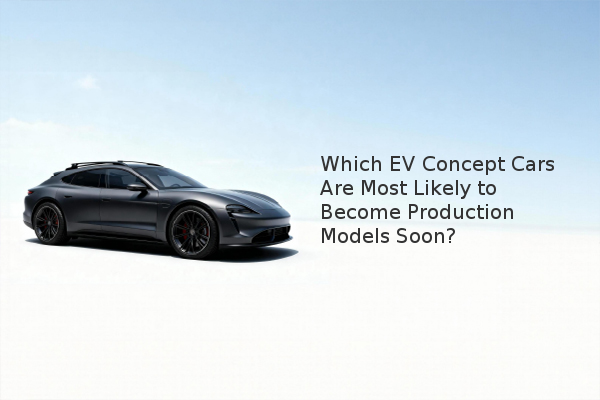
Several exciting electric vehicle concepts from major automakers are strong indicators of production-bound models that could hit the market within the next few years. While concept cars are often pure design exercises, the ones highlighted below demonstrate a clear path toward series production, giving car shoppers a tangible preview of the electric future. This analysis, based on our assessment of industry trends and automaker announcements, focuses on the concepts with the highest potential to become real, buyable vehicles.
Revealed just before the announcement of a production Acura ZDX EV, the Precision EV Concept is a direct styling precursor. While the final production car may adjust certain elements, the concept’s overall design language is a near-certainty for Acura's upcoming electric models. Key features that are likely to influence production include:
The concept's futuristic interior, featuring a "Spiritual Lounge" mode for autonomous driving, points to Acura's vision for a high-tech cabin, though production versions will likely prioritize practicality.
Audi has presented a trio of concepts—the Grandsphere, Skysphere, and Urbansphere—that each explore a different facet of luxury electric mobility. These are more than flights of fancy; they are concrete previews of Audi's next-generation EV platform and design philosophy.
| Concept | Body Style | Key Feature | Target Experience |
|---|---|---|---|
| Grandsphere | Sedan | Private Jet-like Cabin | Luxury Travel |
| Skysphere | Convertible | Variable Wheelbase | Interactive Driving |
| Urbansphere | MPV/Van | Maximum Interior Space | Mobile Workspace |
Lexus unveiled three concepts, but the Electrified Sport concept is the most compelling. The brand itself calls it the "spiritual successor" to the legendary LFA supercar. While a direct production run is unconfirmed, the intense positive reaction to similar performance EV concepts (like the Dodge Charger Daytona SRT) makes a strong business case.
Lexus claims performance targets for the concept that are nothing short of breathtaking: a 0-60 mph time of under 2.0 seconds and a driving range of approximately 430 miles. Even if production specs are slightly less extreme, this concept signals Lexus's serious intent to produce a high-performance electric halo car that would compete at the highest level.
Lincoln's concepts, the futuristic Model L100 and the more grounded Star Concept, focus on redefining American luxury for the EV age. The Star Concept is particularly significant as its silhouette closely resembles the current Aviator SUV, suggesting a direct production path.
Key innovations likely to influence future Lincoln EVs include:
Based on our assessment experience, the automotive industry's shift to electrification means concept cars are now closer to production reality than ever before. For shoppers, these concepts are not just fantasy; they are a credible roadmap. When evaluating an EV concept, look for realistic proportions, technology that is currently feasible, and a design that aligns with the brand's existing lineup—these are the strongest indicators of a vehicle you will be able to drive home in the near future.