Browse

Log in / Register
 Share

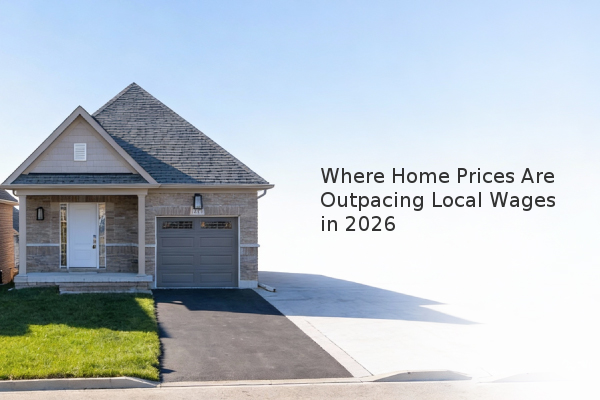
The housing affordability gap in the United States has widened significantly, with home price appreciation in specific markets far exceeding local wage growth. Based on our experience assessment, this trend is most acute in smaller metropolitan areas and scenic locales that have become magnets for remote workers and investors. The core issue is that local incomes have not kept pace with rapid home price inflation, creating significant challenges for residents trying to buy a home in their own communities.
The primary driver of this affordability gap is a fundamental shift in housing demand. The increased adoption of remote work policies has untethered many high-earning professionals from expensive coastal cities. These buyers, often bringing substantial home equity and salaries from larger markets, are migrating to areas perceived as offering a higher quality of life. This influx of external capital competes directly with local buyers whose wages are anchored to the regional economy. In many cases, the supply of homes for sale cannot expand quickly enough to meet this surging demand, leading to aggressive price escalation.
An analysis of market data reveals several counties where the disconnect between local wages and housing costs is most pronounced. The following examples illustrate the national trend.
Santa Barbara County, California The median list price in this coastal region remains exceptionally high. The constrained supply of land, locked between the Pacific Ocean and the Santa Ynez Mountains, severely limits new construction. While the area has long been desirable, the pandemic-era surge of buyers from Los Angeles and San Francisco exacerbated the situation. Local service-sector employees often face commutes exceeding one hour to find affordable housing.
Gallatin County, Montana Home to Bozeman and proximity to Yellowstone National Park, this area has become a haven for nature enthusiasts. The influx of new residents has been so significant that locals have coined the term "Boz Angeles." The resulting housing crunch has been severe, with reports of some long-term residents resorting to living in RVs due to the lack of affordable options, despite local wages rising.
Jones County, Mississippi The popularity of the HGTV show "Home Town," filmed in the county seat of Laurel, has placed this area on the national map. The show's portrayal of a charming, low-cost lifestyle has attracted buyers from across the country. However, this external demand has driven up prices without a corresponding increase in local wage growth, making it difficult for existing residents to participate in the housing market.
| County & State | Key Market Dynamics |
|---|---|
| Richmond County, GA | Boost from new military tech jobs, but local wages lag behind. |
| Jefferson County, AR | Investor activity is high due to low entry prices, but the local economy is weak. |
| Carter County, TN | Proximity to outdoor amenities attracts remote workers, outpacing local incomes. |
For local residents aspiring to buy a home, the environment is highly competitive. They are often competing against buyers who are not constrained by local salary levels. This frequently means waiving contingencies, making offers significantly above the asking price, and experiencing bidding wars that can inflate final sale prices. For sellers, this represents a significant opportunity to build equity. However, for sellers who also need to buy a new home in the same market, the advantage is often negated by the increased cost of their next purchase.
The long-term sustainability of these price trends is uncertain. Some economists suggest that as remote work policies are refined and some employees are called back to offices part-time, the pressure on these markets may ease. However, the genie is unlikely to be entirely put back in the bottle. The fundamental appeal of these areas remains. Affordability may gradually improve if local wage growth accelerates or if a significant increase in new housing supply comes to market, but both are slow-moving solutions.
The key takeaway is that the housing affordability crisis is no longer confined to major metropolitan areas. Prospective buyers must conduct thorough research, get pre-approved for a mortgage to understand their true budget, and be prepared for a competitive process. Exploring adjacent, slightly less trendy towns may reveal more affordable options while still providing reasonable access to desired amenities.