ok.com
Browse
Log in / Register

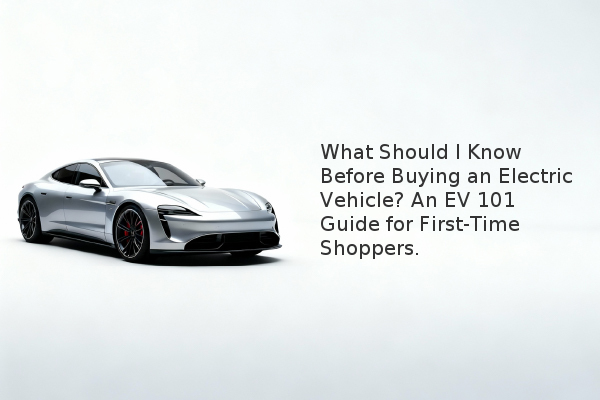
What Should I Know Before Buying an Electric Vehicle? An EV 101 Guide for First-Time Shoppers.

OKer_msy2awp
12/04/2025, 03:14:09 AM
What Should I Know Before Buying an Electric Vehicle? An EV 101 Guide for First-Time Shoppers.

The core considerations for buying an electric vehicle (EV) fundamentally differ from purchasing a gas-powered car, centering on your charging options at home and on the go, the real-world driving range, and a total cost of ownership that includes potential savings on fuel and maintenance.

For many car shoppers, the world of electric vehicles can seem complex. This guide cuts through the noise to provide a clear, objective starting point, focusing on the practical aspects of EV ownership that impact your daily life and budget.

How Does EV Charging Work and What Are the Three Levels?

Charging an EV is categorized into three distinct levels, defined by speed and typical use cases, which is a critical first concept to grasp.

  • Level 1 Charging: This uses a standard 120-volt household outlet. It's the slowest method, providing about 2-5 miles of range per hour of charging. Based on our assessment experience, Level 1 is best as a secondary option or for drivers with very short daily commutes (under 40 miles).
  • Level 2 Charging: This requires a 240-volt outlet, similar to what an electric dryer uses. A Level 2 charger can typically add 10-60 miles of range per hour, making it the recommended solution for home charging. Most owners can fully recharge their EV overnight.
  • DC Fast Charging: Often found at public charging stations, these high-powered units can charge an EV battery to 80% in as little as 20-40 minutes. It's ideal for long road trips but is not recommended for regular daily use, as frequent fast charging can impact long-term battery health.
Charging LevelConnector Type(s)Typical Miles of Range per HourBest Use Case
Level 1Standard Household Plug2-5 milesEmergency/Overnight topping off
Level 2J1772 (Standard for most EVs)10-60 milesPrimary home charging solution
DC FastCCS, CHAdeMO, Tesla NACS150-400+ miles in 30 minLong-distance travel

What is a Realistic EV Driving Range and How Can I Maximize It?

The official driving range published by manufacturers (often based on EPA estimates) is a useful benchmark, but real-world range is affected by driving style, weather, and terrain.

Cold weather is a significant factor, as it reduces battery efficiency and requires energy for cabin heating. Aggressive acceleration and high-speed highway driving also consume more energy. To maximize your range:

  • Utilize Regenerative Braking: This feature, which captures energy during deceleration and feeds it back to the battery, is a key advantage of EVs. Using it effectively can extend your range.
  • Precondition the Battery: While still plugged in, use your EV's app to warm up or cool down the cabin and battery before driving. This uses grid power instead of the battery's energy.
  • Plan Efficient Routes: Use in-car navigation systems designed for EVs, which factor in elevation changes and nearby charging stations.

How Does the Driving Experience of an EV Compare to a Gas Car?

The most immediate difference is instant torque, which provides swift, quiet acceleration from a stop. The lower center of gravity from the floor-mounted battery pack also enhances handling and stability.

EVs lack traditional multi-gear transmissions, resulting in a seamlessly smooth acceleration without any gear shifts. The cabin is also significantly quieter at low speeds, with wind and tire noise becoming more apparent at highway speeds. Many drivers appreciate the one-pedal driving capability offered by strong regenerative braking, allowing them to slow down significantly by simply lifting off the accelerator.

What is the True Cost of Owning an Electric Vehicle?

While the upfront purchase price of an EV is often higher than a comparable gas-powered car, the total cost of ownership over time can be lower due to savings on fuel and maintenance.

  • Purchase Price: EVs generally have a higher Manufacturer's Suggested Retail Price (MSRP), but federal and state incentives can offset this. For example, the federal EV tax credit can be up to $7,500 for eligible buyers and vehicles.
  • Fuel Costs: Electricity is typically cheaper than gasoline on a per-mile basis. The cost to charge at home is usually much lower than using public DC Fast Chargers.
  • Maintenance: EVs have fewer moving parts. There are no oil changes, spark plugs, or exhaust systems to maintain. Common maintenance items include tire rotations, cabin air filter replacement, and brake service (though brakes wear slower due to regenerative braking).

Before visiting a dealership, assess your daily driving needs, research home charging installation costs, and use online tools to compare real-world ranges and available incentives in your area to make a fully informed decision.

Cookie
Cookie Settings
Our Apps
Download
Download on the
APP Store
Download
Get it on
Google Play
© 2025 Servanan International Pte. Ltd.