Browse

Log in / Register
 Share
Share

Determining your home's value is a critical first step whether you're considering selling, refinancing your mortgage, or simply tracking your net worth. Your property's worth is not a single figure but a range influenced by recent sales of comparable homes, your property's unique condition, and current market dynamics. The most accurate estimate often comes from a Comparative Market Analysis (CMA) prepared by a real estate professional or a formal appraisal from a licensed appraiser.
Several core factors directly impact your home's valuation. Location remains the most significant, with desirability dictated by school districts, proximity to amenities, and neighborhood appeal. The property's size, including square footage and lot size, along with the number of bedrooms and bathrooms, form the baseline for comparison. The home's age, condition, and any upgrades or renovations also play a substantial role. Finally, broader economic conditions, such as local market inventory and mortgage interest rates, set the overall context for what buyers are willing to pay.
Professionals primarily use two methods to determine value. The most common for sales purposes is the Sales Comparison Approach. This involves analyzing recently sold properties, or "comps," that are similar to yours in location, size, and features. Adjustments are made for differences; for example, if a comp has a renovated kitchen and yours does not, its sale price is adjusted downward to estimate your home's value. A formal appraisal follows this method rigorously.
The other method, often used for unique properties or by assessors, is the Cost Approach. This estimates what it would cost to rebuild the home from the ground up, minus depreciation, and then adds the value of the land. While less common for standard single-family homes, it can be useful for new construction or properties without many comparable sales.
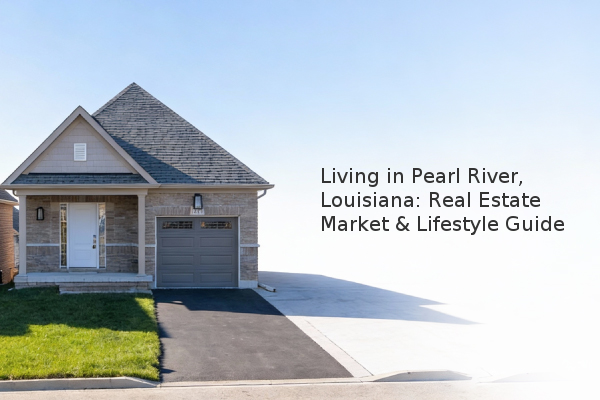
Beyond the basic metrics, specific features and conditions can significantly sway your home's value. Curb appeal—the first impression your home makes—can impact a buyer's perception and offer price. Updated major systems, like a new roof or HVAC system, add tangible value by reducing the buyer's anticipated maintenance costs. Conversely, needed repairs or outdated aesthetics can detract from the value. Highly desirable features like a modern kitchen, updated bathrooms, and ample storage space are strong value drivers. The following table illustrates how different features can influence value perception.
| Feature | Potential Positive Impact | Potential Negative Impact |
|---|---|---|
| Updated Kitchen | High | Outdated appliances, worn countertops |
| Number of Bathrooms | High (esp. adding a primary bath) | Fewer than neighborhood average |
| Outdoor Living Space (e.g., deck, patio) | Moderate to High | Poorly maintained yard |
| Home Office Setup | Moderate (market-dependent) | Lacks dedicated workspace |
| Parking/Garage | High in urban areas | Limited or no off-street parking |
Many homeowners start with Automated Valuation Models (AVMs), which are algorithms that use public data like recent sales, tax assessments, and property characteristics to provide an instant estimate. While convenient, AVMs cannot physically inspect your property and may not account for unique features or recent upgrades. They provide a useful starting point but should not be relied upon as a definitive value. For a more personalized estimate, you can research recent sales of similar homes in your area on your own, focusing on properties sold within the last three to six months.
The most reliable path to understanding your home's value is to consult a real estate expert who can perform a detailed CMA. This service is typically provided without obligation. Based on our experience assessment, a professional evaluation that considers both data and the on-the-ground reality of your local market will provide the most accurate and actionable estimate of your home's worth.
To summarize, accurately determining your home's value involves a combination of data analysis and professional insight. The most effective approach is to use online estimators as a preliminary guide, then seek a Comparative Market Analysis from a local expert for a precise valuation that reflects your home's true condition and the nuances of your specific market.