Browse

Log in / Register
 Share

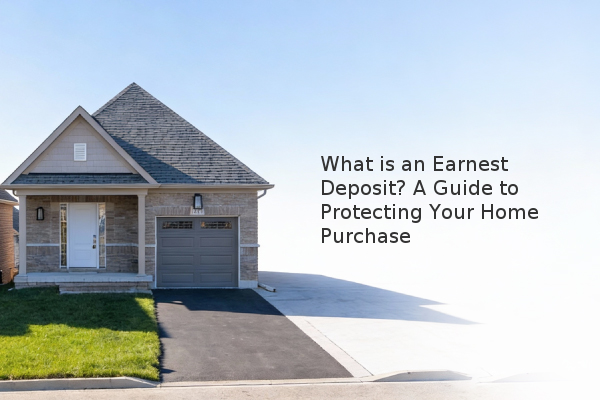
An earnest money deposit (EMD) is a crucial component of a real estate transaction, serving as a good-faith gesture from the buyer to the seller. This deposit, typically ranging from 1% to 3% of the home's purchase price, demonstrates the buyer's serious intent to proceed with the purchase. The primary function of the EMD is to protect the seller by taking the property off the market, with the funds being held in an escrow account—a neutral third-party account—until closing. Understanding how to safeguard this deposit is essential for a smooth home-buying experience, as its forfeiture is a real risk if the contract is breached without utilizing specified contingencies.
When you make an offer on a house, the earnest money deposit is the sum of money you submit alongside your purchase agreement. It is not an additional fee but rather a part of your overall down payment. For example, on a $400,000 home, an EMD of 2% would be $8,000. This money shows the seller you are committed. The amount can vary based on local market conditions; in a highly competitive seller's market, a larger EMD might make your offer more attractive. The key is that these funds are not given directly to the seller. They are deposited into an escrow account managed by a title company, attorney, or real estate brokerage, ensuring they are disbursed correctly according to the terms of the purchase contract.
The most important way to protect your earnest money is through well-defined contingencies written into your purchase contract. These are conditions that must be met for the sale to move forward, allowing you to back out of the deal and get your EMD returned in full. Common protective contingencies include:
| Contingency Type | Purpose | Protects Your EMD If... |
|---|---|---|
| Financing | To secure a mortgage | Your loan application is denied |
| Inspection | To uncover property defects | Major issues are found (e.g., foundation problems) |
| Appraisal | To validate the purchase price | The appraisal value is lower than the offer |
Beyond contingencies, several best practices can minimize risk. First, never make the earnest money check payable directly to the seller. It should always be made out to the designated escrow holder. Second, thoroughly review and understand all contract deadlines. Missing a contingency deadline, such as the window for completing the home inspection, could inadvertently waive your right to back out and reclaim your deposit. Third, ensure you have a clear proof of funds letter from your bank to avoid any issues related to the source of the deposit. Finally, maintain all communication and documentation in writing to create a clear paper trail.
Assuming the transaction proceeds smoothly and all contingencies are satisfied or waived, the earnest money deposit is not lost. At the closing table, the funds in escrow are applied toward your down payment and closing costs. For instance, if you put down an $8,000 EMD and your total closing costs are $5,000, that $8,000 would be credited, covering the costs and contributing $3,000 to your down payment. This makes the EMD a show of good faith that ultimately reduces the amount of cash you need to bring to closing.
To protect your earnest money deposit, always insist on key contingencies in your contract, understand all deadlines, and work with reputable, licensed professionals throughout the home-buying process. This strategic approach provides a safety net, ensuring your financial commitment is secure while you complete your due diligence on what is likely one of the most significant investments of your life.