Browse

Log in / Register
 Share
Share
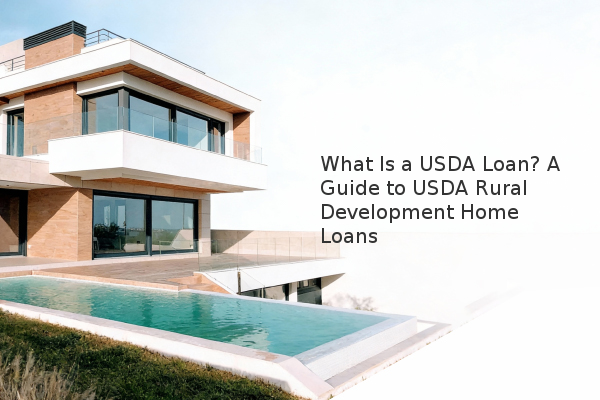
A USDA loan is a zero-down-payment mortgage program backed by the U.S. Department of Agriculture to promote homeownership in eligible rural and suburban areas. Unlike conventional loans, this program is designed for low- to moderate-income borrowers and offers 100% financing, meaning no down payment is required. The core conclusion is that a USDA loan can be a powerful tool for eligible homebuyers, but it is strictly limited by geographic location and household income caps.
How Does a USDA Loan Work? The most common type is the USDA Guaranteed Loan, where the USDA guarantees a portion of the loan made by a participating private lender. This guarantee reduces the lender's risk, allowing them to offer favorable terms like no down payment to borrowers who might not otherwise qualify. It's crucial to understand that the USDA is not the direct lender. Borrowers must still apply through a approved mortgage lender, and the property must be located within a USDA-defined eligible area. These areas are often more expansive than one might think, including many suburbs on the outskirts of major metropolitan areas.
Key Eligibility Requirements for a USDA Mortgage Eligibility is based on three primary factors: the property, your income, and your creditworthiness. First, the home must be your primary residence and situated in a qualified rural area. Second, your household's adjusted annual income must not exceed 115% of the area's median income. This income calculation includes certain deductions, such as for dependents. Third, while there is no official minimum credit score set by the USDA, most lenders will look for a score of at least 640 to qualify for the streamlined automated underwriting process. You must also demonstrate a stable income and a debt-to-income ratio that shows you can manage the monthly payments.
| USDA Loan Factor | Typical Requirement |
|---|---|
| Down Payment | 0% |
| Mortgage Insurance | Required (Upfront + Annual Fee) |
| Property Location | USDA-Eligified Rural/Suburban Area |
| Occupancy | Primary Residence Only |
| Income Limits | Must not exceed 115% of Area Median Income |
The Pros and Cons of Using a USDA Loan The most significant advantage is the 100% financing, which removes the largest barrier to homeownership for many. USDA loans also typically have competitive interest rates and more flexible credit guidelines than conventional loans. However, there are notable drawbacks. Borrowers must pay an upfront guarantee fee (currently 1% of the loan amount) and an annual fee (currently 0.35%), which are similar to mortgage insurance. These fees increase the overall cost of the loan. Furthermore, the geographic and income restrictions mean this program is not available to all homebuyers, particularly those looking in urban centers or with higher incomes.
The Step-by-Step Process to Get a USDA Loan The journey begins with determining your eligibility. You can use the USDA's online eligibility maps to check potential properties. Next, get pre-approved by a USDA-approved lender, who will review your credit, income, and debts. Once pre-approved, you can shop for a home within the designated eligible zones. After your offer is accepted, the lender will submit the application to the USDA for final approval, a process that includes a home appraisal to ensure the property meets specific standards. Based on our experience assessment, the entire process can take 30 to 60 days from contract to closing.
In summary, a USDA loan is a unique government-backed mortgage that provides a viable path to homeownership without a down payment for those who qualify. The key takeaways are: