Browse

Log in / Register
 Share

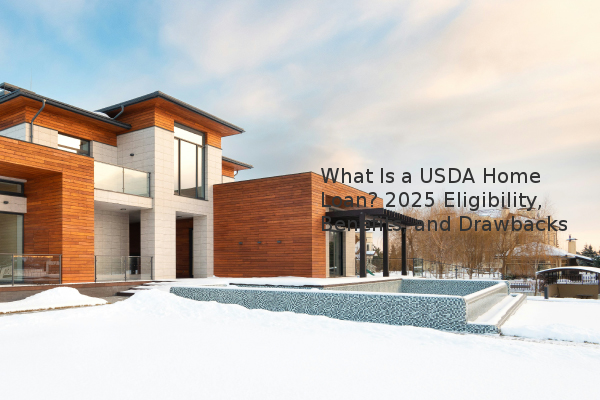
A USDA home loan, officially known as a Section 502 Guaranteed Loan, is a zero-down-payment mortgage program backed by the U.S. Department of Agriculture. Its primary purpose is to promote homeownership in eligible rural and suburban areas. For qualified buyers, this program offers a unique path to homeownership without the traditional barrier of a large upfront down payment. This article provides a comprehensive, objective overview of the USDA loan's key features, eligibility requirements, and potential drawbacks based on current 2025 guidelines.
The two most critical eligibility factors for a USDA loan are the property's location and the applicant's income. Unlike conventional loans, these criteria are specifically designed to support the program's mission.
Property Location Eligibility The home must be located in a USDA-eligible area, which is broadly defined as "rural" but often includes many suburban communities on the outskirts of metropolitan areas. It is a common misconception that these loans are only for remote farmland. The USDA provides an online eligibility map where potential buyers can enter a specific address to verify its status. The boundaries for these areas are periodically updated, so checking the official map for the most current information is an essential first step.
Household Income Limits USDA loans are intended for low- to moderate-income households. Your eligibility is determined by your annual gross household income, which includes the income of all adult members living in the home, even if they are not on the loan application. This total income must not exceed 115% of the area's median income. These limits vary significantly by state and county, reflecting local cost-of-living differences. For example, the income threshold for a family of 1-4 in a high-cost California county will be much higher than in a rural Mississippi county.
The most significant advantages of a USDA loan are its accessible down payment and competitive credit requirements, making it a powerful tool for eligible buyers.
While beneficial, USDA loans come with specific costs and restrictions that buyers must factor into their decision.
Upfront and Annual Guarantee Fees Instead of private mortgage insurance (PMI), USDA loans charge two types of fees. An Upfront Guarantee Fee of 1% of the loan amount is paid at closing (though it is typically financed into the total loan). Additionally, there is an Annual Guarantee Fee of 0.35% of the remaining principal balance, which is divided into monthly payments. These fees help fund the program but add to the overall cost of the loan.
| Fee Type | Cost | How It's Typically Paid |
|---|---|---|
| Upfront Guarantee Fee | 1% of loan amount | Financed into the mortgage |
| Annual Guarantee Fee | 0.35% of principal | Added to monthly payments |
Property and Occupancy Requirements The program is strictly for primary residences; investment properties and vacation homes are not permitted. The home must also meet the USDA's minimum property standards, ensuring it is safe, sound, and structurally secure. A USDA-approved appraiser will confirm this during the purchase process.
The process for obtaining a USDA loan is similar to other mortgages but with an added layer of verification. You must work with a lender approved to originate USDA loans. After pre-approval, the lender will submit the application to the USDA for their guarantee. This step ensures the borrower and property meet all program guidelines before final approval and closing.
In summary, a USDA home loan is a highly advantageous program for buyers who meet specific location and income criteria. Its zero-down-payment feature is unmatched in the mortgage market. However, the associated guarantee fees and strict property requirements are important factors to consider. Prospective applicants should always consult the official USDA eligibility map and speak with a qualified USDA-approved lender to assess their individual situation based on the latest 2025 program rules.