Browse

Log in / Register
 Share
Share
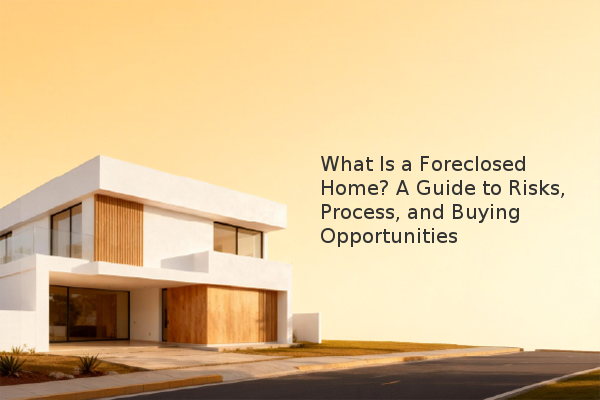
A foreclosed home is a property seized by a lender, typically a bank, after the homeowner fails to meet the mortgage obligations. While purchasing a foreclosed property can present a significant financial opportunity, it involves a unique process with distinct risks, including potential hidden costs and the "as-is" nature of the sale. Understanding the foreclosure timeline, from pre-foreclosure to the auction and Real Estate Owned (REO) stage, is critical for any potential buyer.
Foreclosure is a legal process that begins when a homeowner defaults on their mortgage loan. Default occurs after several missed payments. The lender then issues a notice of default (NOD), which is a public document that formally starts the process. This initiates the pre-foreclosure period, during which the homeowner can still reclaim the property by paying the overdue amount, plus fees, in a action known as reinstatement, or by selling the home.
If the default is not cured, the property typically proceeds to a foreclosure auction. These auctions are often held on the courthouse steps and are open to the public. Successful bidders usually must pay in cash or with a cashier's check. It's crucial to understand that buying at auction carries high risk; the winning bidder acquires the property as-is, often without the right to a prior interior inspection. The previous homeowner may also have the right of redemption, allowing them to reclaim the property for a period after the sale by paying the sale price.
If a property does not sell at the foreclosure auction, the lender takes ownership. At this point, it becomes part of the lender's inventory, classified as Real Estate Owned (REO). These REO or bank-owned properties are then sold through traditional real estate channels, often listed on the Multiple Listing Service (MLS). Buying an REO property is generally less risky than buying at auction. While the sale is still as-is, buyers typically have the opportunity to conduct professional home inspections and negotiate repairs or a price reduction based on the findings. The table below outlines key differences between auction and REO purchases.
| Purchase Method | Opportunity for Inspection? | Financing Options | Typical Condition |
|---|---|---|---|
| Foreclosure Auction | No, exterior view only | Cash only | Unknown, often poor |
| REO (Bank-Owned) | Yes, full inspection allowed | Mortgage financing possible | Fixer-upper, but known |
The primary appeal of a foreclosed home is the potential for a below-market purchase price. However, this comes with considerable trade-offs. The property is sold in its current condition, and the seller (whether a trustee at auction or a bank) provides no warranties. There could be significant hidden issues, from deferred maintenance to structural damage or even code violations. Furthermore, the property may have occupants—either the former owners or tenants—whom the buyer may need to legally evict, a process that can be time-consuming and costly. It is highly recommended to work with a real estate agent experienced in foreclosure transactions and to budget for immediate, substantial repairs.
For those considering this path, a methodical approach is essential. First, secure financing pre-approval, especially for REO properties where mortgages are common. Next, partner with an agent who understands the local foreclosure market. Then, conduct exhaustive due diligence: obtain a comparative market analysis (CMA) to determine the property's true market value, hire inspectors to uncover potential problems, and consider the cost of any necessary eviction proceedings. Based on our experience assessment, a thorough inspection is the single most important step in mitigating the risks associated with a foreclosed home.
Purchasing a foreclosed property requires a careful balance of opportunity and risk. The key to a successful purchase lies in understanding the distinct stages of foreclosure, conducting exhaustive due diligence, and securing professional guidance to navigate the complexities of an as-is sale.