Browse

Log in / Register
 Share
Share
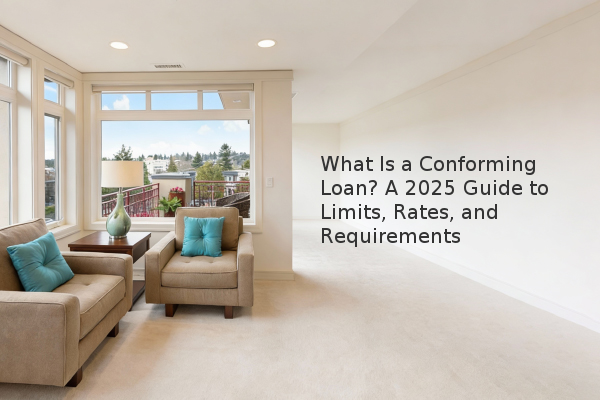
Securing a conforming loan is a primary goal for many U.S. homebuyers because it typically offers the most competitive interest rates and streamlines the mortgage process. These loans adhere to strict guidelines set by government-sponsored enterprises (GSEs) like Fannie Mae and Freddie Mac, which include maximum loan amounts, credit score minimums, and debt-to-income ratios. For most of the country in 2025, the conforming loan limit for a single-family home is $806,500, with higher limits up to $1,209,750 in designated high-cost areas. This guide explains the key benefits, outlines the qualification requirements, and helps you determine if this is the right mortgage option for your home purchase.
A conforming loan must meet two primary sets of criteria: borrowing limits and underwriting standards. Underwriting is the process a lender uses to assess a borrower's creditworthiness and the risk of the loan.
The most common type of conforming loan is a conventional loan. To qualify for a conforming conventional loan, borrowers generally need:
It's important to note that individual lenders can set stricter requirements than these baseline figures.
The single most defining feature of a conforming loan is that it does not exceed the maximum loan amount, or conforming loan limit, set by the Federal Housing Finance Agency (FHFA) for Fannie Mae and Freddie Mac. These limits are adjusted annually and vary by county, reflecting local housing costs.
The table below outlines the 2025 conforming loan limits for properties with 1 to 4 units.
| Property Units | Standard Area Limit | High-Cost Area Limit |
|---|---|---|
| 1 Unit | $806,500 | $1,209,750 |
| 2 Units | $1,032,650 | $1,548,975 |
| 3 Units | $1,248,150 | $1,872,225 |
| 4 Units | $1,551,250 | $2,326,875 |
Source: Federal Housing Finance Agency (FHFA). Limits are even higher for properties in Alaska, Hawaii, Guam, and the U.S. Virgin Islands. You can look up the exact limit for any U.S. county using the official FHFA online map tool.
Opting for a conforming loan provides several distinct benefits for the homebuyer:
A conforming loan isn't the right fit for every situation. You might need to explore non-conforming loans if:
Based on our experience assessment, the best first step is to get pre-qualified with a lender. They can assess your financial profile, discuss your homebuying goals, and provide a clear picture of which loan types—conforming or non-conforming—you are likely to qualify for.