Browse

Log in / Register
 Share

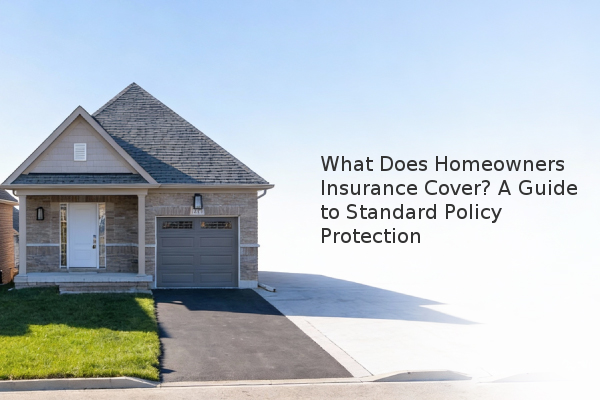
Homeowners insurance is a crucial financial safety net that protects your home's structure, your personal belongings, and your assets from liability claims. A standard policy, known as an HO-3, typically covers damage from 16 specific perils, including fire, theft, and windstorms. However, it's vital to understand that common events like floods and earthquakes are excluded and require separate policies. Based on our experience assessment, securing adequate coverage is one of the most important steps in safeguarding your investment.
Homeowners insurance is a contract between you and an insurance company. You pay a premium, and in exchange, the insurer agrees to cover financial losses from specific events, known as "covered perils," up to the limits outlined in your policy. When damage occurs, you file a claim, pay a pre-selected deductible (your out-of-pocket cost), and the insurer covers the remaining repair or replacement costs.
A typical policy is divided into several key coverage areas, each designed to protect a different aspect of your property and finances.
This is the core of your policy. Dwelling coverage pays to repair or rebuild the physical structure of your home—including the roof, walls, and built-in systems—if it's damaged by a covered event. It's essential to set this limit at your home's replacement cost, which is the amount to rebuild it from the ground up at current construction prices, not its market value.
This coverage applies to structures on your property that are not attached to your main home, such as a detached garage, fence, or shed. It is typically set at 10% of your dwelling coverage limit.
Personal property coverage protects the contents of your home, like furniture, electronics, and clothing, from covered perils. Most policies set this at 50-70% of your dwelling coverage. Valuables like jewelry or art have sub-limits, so you may need a separate scheduled personal property endorsement for full coverage.
If a covered event makes your home temporarily uninhabitable, loss of use coverage (or Additional Living Expenses (ALE)) helps pay for extra costs like hotel stays, meals, and storage. This coverage lasts until your home is repaired or you permanently relocate, up to your policy's limit.
Personal liability coverage protects you if you are found legally responsible for injuring someone or damaging their property. It can help cover medical bills, legal fees, and settlement costs.
This no-fault coverage pays for minor medical expenses if a guest is injured on your property, regardless of who was at fault. It typically offers limits between $1,000 and $5,000 per person.
Standard policies cover a wide range of sudden, accidental events. Common covered perils include:
Understanding exclusions is critical. Standard policies do not cover:
The national average annual premium ranges from approximately $1,500 to $2,500, but your cost depends on factors like your home's location, size, and your chosen coverage limits and deductible. The table below illustrates average annual premiums by state based on 2023-2024 data from industry sources.
| State | Average Annual Premium |
|---|---|
| Florida | ~ $3,600 |
| Texas | ~ $3,500 |
| California | ~ $1,700 |
| New York | ~ $1,800 |
| Illinois | ~ $1,900 |
To potentially lower your premium, consider bundling with auto insurance, increasing your deductible, or installing safety features like a security system.
While not legally mandated by the state, your mortgage lender will almost certainly require you to carry homeowners insurance. This protects their financial interest in the property. Even after your mortgage is paid off, maintaining coverage is a prudent financial decision to protect your assets.
In conclusion, the key to effective protection is to regularly review your policy to ensure your coverage limits reflect your home's current replacement cost and the value of your possessions. Always discuss specific risks with your insurance agent to identify any necessary endorsements for complete peace of mind.