Browse

Log in / Register
 Share
Share
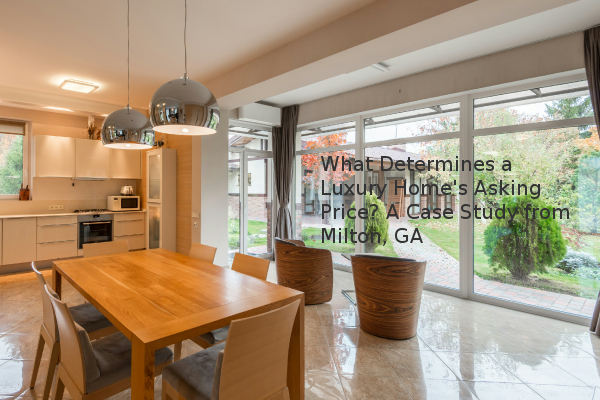
Setting an asking price for a luxury property involves a complex analysis of market data, square footage, and unique amenities, rather than simply the owner's initial expectations. This is particularly evident in premium markets like Milton, Georgia, where even significant price reductions must align with local comparables, or "comps"—recent sales of similar properties—to attract serious buyers. The recent pricing strategy for a high-profile, 15,694-square-foot estate in Milton demonstrates the critical balance between a home's intrinsic value and current market realities.
How Do You Calculate a Fair Asking Price for a Luxury Home?
A fundamental starting point is the price per square foot, calculated by dividing the asking price by the home's total livable area. For example, a $3,950,000 ask for a 15,694 sq. ft. home results in a price of approximately $252 per square foot. However, this figure only becomes meaningful when compared to the local market. According to recent data, the median listing price in Milton is around $1,45 million, highlighting the premium nature of this specific property. A fair price is ultimately determined by a comparative market analysis (CMA), which evaluates similar homes in size, condition, and location that have recently sold.
What Key Features Influence a Multi-Million Dollar Home's Value?
Beyond square footage, specific amenities justify a premium asking price. This Milton property includes several high-value features that cater to a luxury lifestyle. The gourmet kitchen, complete with an oversized island, serves as a central gathering space. Entertainment is a major focus, with a billiard room, arcade, home theater, and a climate-controlled wine cellar for 500 bottles. For wellness, there is a private gym with an adjacent massage room. Outdoor living spaces, including a vanishing-edge pool, and practical elements like a six-car garage and an in-law suite, significantly broaden the home's appeal and functional value. These elements are not just additions; they are investments that can be quantified during an appraisal.
How Does the Local Market Context Affect the Final Sale Price?
Even with extensive amenities, a home's value is constrained by its geographical market. Milton is an affluent suburb of Atlanta, but the pool of buyers for homes above $3 million is limited. With 282 homes currently on the market in Milton, there is significant competition. For a sale to proceed, the price must be competitive within this specific segment. A prolonged time on the market, often leading to sequential price cuts, suggests the initial price was not aligned with what buyers in that market are willing to pay. The final sale price will be a function of a buyer's perception of value relative to other available properties.
What is the Impact of a Price Reduction Strategy?
Strategic price reductions are a common tool to stimulate interest and generate new offers when a property stagnates. Each reduction broadens the property's visibility to a new tier of potential buyers who may have different search parameters. However, frequent and large price cuts can also signal desperation to buyers, potentially leading to lower offers. The goal is to find the price point where the market recognizes the property's value, prompting a competitive bidding situation. Based on our experience assessment, a well-timed price adjustment, supported by a fresh marketing push, can often break a cycle of low interest.
In conclusion, pricing a luxury home is a dynamic process that requires objective analysis. Sellers should prioritize a professional appraisal and a detailed CMA from a real estate expert familiar with the ultra-luxury segment. While unique features add value, they must be priced within the context of the local market to avoid extended listing periods. The most successful sales occur when the asking price accurately reflects both the property's standout qualities and the verifiable sales data of comparable homes.