Browse

Log in / Register
 Share
Share
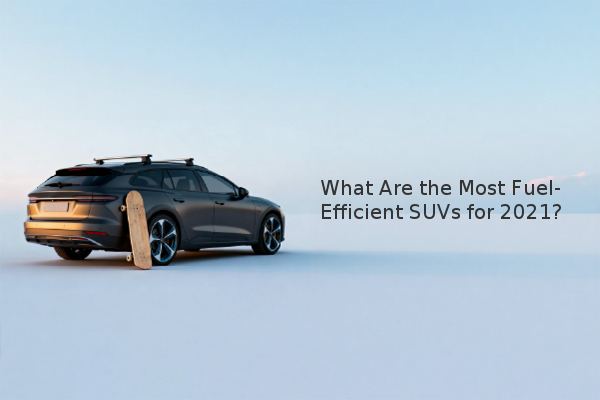
The most fuel-efficient SUVs for 2021 span four powertrain categories, with the Lexus UX 250h hybrid leading at 42 mpg combined, the Toyota RAV4 Prime plug-in hybrid achieving 94 MPGe, and the Tesla Model Y electric SUV delivering 125 MPGe. While SUVs are often chosen for their commanding view of the road and versatile cargo space, fuel efficiency has become a significant advantage across gas, hybrid, plug-in hybrid, and all-electric models. Based on EPA combined fuel economy ratings and requiring at least available all-wheel drive, this guide provides a definitive ranking for eco-conscious shoppers.
Gas-only SUVs, powered solely by an internal combustion engine, are becoming increasingly efficient. The EPA combined rating represents a weighted average of city and highway driving.
The 2021 Lexus UX 200 achieves an impressive 32 mpg combined (29 city/37 highway). This premium subcompact SUV is powered by a 169-horsepower, 2.0-liter four-cylinder engine paired with a continuously variable automatic transmission (CVT), a type of transmission that provides seamless gear ratios for optimal efficiency. It's important to note that while Lexus recommends premium fuel, the owner's manual states regular unleaded is acceptable.
A four-way tie for second place includes the 2021 Buick Encore GX, Chevrolet Trailblazer, Kia Seltos, and Mazda CX-3, each achieving 31 mpg combined. Shoppers prioritizing city driving might prefer the Encore GX (30 mpg city), while those focused on highway miles may lean toward the Seltos or CX-3 (34 mpg highway). Adding all-wheel drive to any of these models will lower these fuel economy figures.
| Model | City MPG | Highway MPG | Combined MPG |
|---|---|---|---|
| Lexus UX 200 (FWD) | 29 | 37 | 32 |
| Buick Encore GX (FWD) | 30 | 32 | 31 |
| Kia Seltos (FWD) | 29 | 34 | 31 |
Hybrid SUVs combine a gasoline engine with one or more electric motors and a battery pack, recapturing energy during braking to improve efficiency. While some offer brief electric-only driving, their primary fuel source remains gasoline.
Topping this category, the 2021 Lexus UX 250h delivers a standout 42 mpg combined (43 city/41 highway). This model includes standard all-wheel drive and produces 12 more horsepower than the gas-only UX 200, all without a requirement for premium fuel.
The 2021 Ford Escape Hybrid offers a choice of front-wheel or all-wheel drive. The FWD version achieves 41 mpg combined (44 city/37 highway), while AWD models are rated at 40 mpg combined. The 2021 Toyota RAV4 Hybrid, a popular choice with standard AWD, returns a strong 40 mpg combined (41 city/38 highway). For those seeking even greater electric capability, the RAV4 Prime plug-in hybrid is a compelling alternative.
Plug-in hybrid electric vehicles (PHEVs) feature a charging port and a larger battery than conventional hybrids, allowing for significant all-electric range—often enough for a daily commute—before the gasoline engine engages. The EPA measures their efficiency using miles-per-gallon equivalent (MPGe), which equates the electrical energy consumed to the energy in a gallon of gasoline.
The 2021 Toyota RAV4 Prime is the efficiency leader with a 94 MPGe rating and an estimated 42 miles of all-electric range. After the battery is depleted, it still achieves a respectable 38 mpg combined. The EPA states it requires 36 kilowatt-hours to travel 100 miles.
Following closely is the 2021 Subaru Crosstrek Hybrid with a 90 MPGe rating. Its main drawback is a shorter 17-mile electric range, though it achieves 35 mpg combined on gasoline alone. The 2021 Lincoln Corsair Grand Touring offers a middle ground with 28 miles of electric range and a 78 MPGe rating, achieving 33 mpg combined after the battery is drained.
Battery-electric SUVs (BEVs) produce zero tailpipe emissions and are powered exclusively by electricity. Their efficiency is measured in MPGe and kWh per 100 miles, which indicates how much electrical energy is consumed over that distance.
The Tesla Model Y Long Range is the most efficient all-electric SUV, boasting a 125 MPGe rating and requiring only 27 kWh to travel 100 miles. It also offers an impressive 326-mile driving range. The Performance version is slightly less efficient but still excellent at 111 MPGe.
The 2021 Hyundai Kona Electric is a strong contender with a 120 MPGe rating and 28 kWh per 100 miles, though its 258-mile range is more modest. The larger Tesla Model X demonstrates that size doesn't always mean inefficiency, with ratings up to 105 MPGe and a remarkable 371-mile range in its Long Range Plus configuration.
Based on our assessment experience, the best choice depends on your driving habits and access to charging. For those without easy charging, a hybrid like the Lexus UX 250h is ideal. If you have a short commute and can charge at home, a PHEV like the RAV4 Prime offers the best of both worlds. For maximum efficiency and lower long-term fuel costs, an electric SUV like the Tesla Model Y is unmatched.