Browse

Log in / Register
 Share

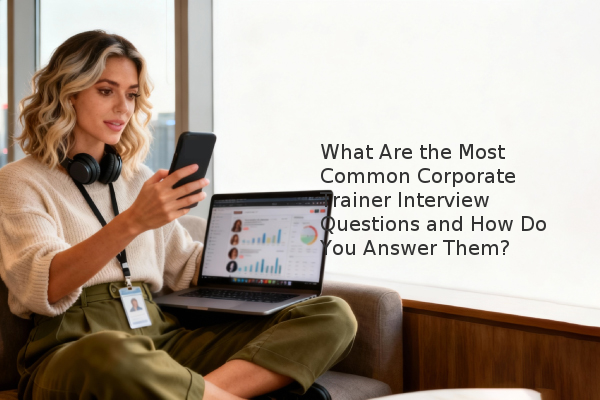
Preparing for a corporate trainer interview involves anticipating a mix of general, experiential, and in-depth questions designed to assess your training style, problem-solving abilities, and cultural fit. Based on our assessment experience, hiring managers typically structure interviews around three key categories to evaluate a candidate's ability to boost employee skills and knowledge effectively. This article outlines 30 common questions and provides detailed example answers to help you formulate winning responses.
The initial interview stage often focuses on building rapport and understanding your motivations. These general questions help the interviewer gauge your personality and foundational fit for the role. Your answers should be concise and confident, directly linking your background to the position's requirements.
Common general questions include:
When describing your training style, for instance, avoid vague terms. Instead, specify a methodology, such as "adult learning principles," which are techniques designed specifically for training adults who bring existing experience to the table. A strong answer might be: "My training style is collaborative and based on adult learning principles. I focus on facilitating discussions and using real-world scenarios to ensure knowledge transfer is practical and immediately applicable."
This segment delves into your professional history to predict future performance. Interviewers seek concrete examples that demonstrate your competencies. Use the STAR method (Situation, Task, Action, Result)—a structured approach to answering behavioral questions by outlining a Situation, the Task required, the Action you took, and the Result achieved—to provide clear, evidence-based responses.
Key experience-based questions often are:
For a question about failure, frame it as a learning opportunity. Example: "Early in my career, I prepared a technical training module without first assessing the group's varying skill levels. The session struggled to engage both beginners and advanced learners. I learned to always conduct a pre-training skills assessment, a diagnostic tool to gauge participant knowledge beforehand, which now allows me to tailor content effectively for diverse groups."
The final interview stage often involves complex, situational questions to evaluate soft skills like communication, adaptability, and analytical thinking. These questions require structured answers that justify your decision-making process with logical explanations.
You might encounter questions like:
When addressing how to train mixed seniority levels, highlight differentiation strategies. A sample answer could be: "I would differentiate the content. For entry-level staff, I'd focus on foundational skills and clear procedures. For senior staff, I'd frame the training around strategic application, leadership coaching, and mentoring opportunities, which increases engagement and knowledge retention for both groups."
To excel in your corporate trainer interview, focus on providing specific examples, demonstrating a learner-centered approach, and showing how you measure training effectiveness. Preparing structured answers using the STAR method and researching the company's specific training needs will significantly increase your confidence and chances of success.