Browse

Log in / Register
 Share
Share
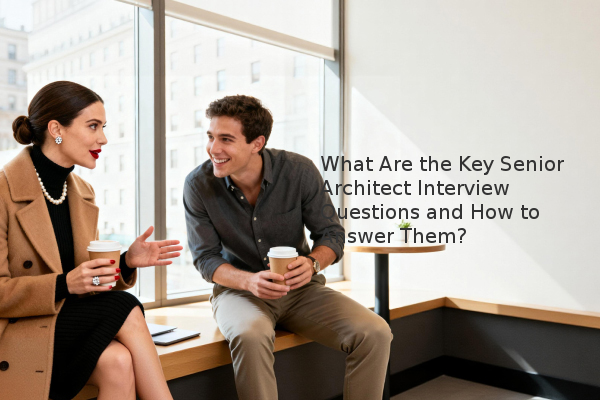
Preparing for a senior architect interview involves anticipating questions that assess your technical expertise, leadership, and problem-solving abilities. Success hinges on demonstrating a blend of deep architectural knowledge and soft skills through concrete examples from your experience.
Hiring managers seek candidates who transcend technical competency. The role demands a leader who can guide a team, manage complex projects, and navigate challenges. The evaluation often focuses on three core areas:
Your responses should go beyond stating what you know; they must illustrate how you’ve applied your skills. When discussing technical skills, cite specific projects, software used (like BIM or CAD), and how you ensured compliance with standards. For leadership, prepare stories about motivating a team, managing stakeholder expectations, or mentoring junior architects.
Based on our assessment experience, candidates who quantify their achievements—such as "reduced project delivery time by 10% by implementing a new collaborative software"—make a stronger impression. This demonstrates measurable impact.
Here are some frequent questions, designed to probe the areas above, with guidance on structuring effective responses.
How do you manage project deadlines and budgets effectively? Interviewers ask this to gauge your organizational and project management skills. A strong answer might be: "I utilize project management software to track progress against milestones and maintain a clear communication channel with the team and clients regarding any potential delays or cost overruns. For instance, on a recent $2M project, this proactive approach helped us identify a supply chain issue early, allowing us to source alternative materials without compromising the deadline or budget."
Can you describe a time you had to make a tough architectural decision? This question tests your problem-solving and ethical judgment. A sample answer could be: "During a commercial project, we discovered unexpected soil instability that rendered the original foundation design unsafe. The tough decision was to recommend a more expensive, deep-piling solution. I presented the data on safety risks and long-term viability to the client, emphasizing that while it increased the upfront cost, it prevented catastrophic failure. They approved the change, and the project was completed successfully."
How do you handle disagreements with a client or within your team? This evaluates your communication and conflict-resolution skills. You could respond: "I believe open dialogue is key. In a disagreement over a design element, I first listen carefully to understand the client's concerns. I then present alternative solutions that align with their core objectives while adhering to safety and regulatory standards. The goal is a collaborative resolution, not just winning an argument."
What is your approach to incorporating sustainability into projects? This question assesses your knowledge of modern trends and regulatory requirements. An effective answer: "Sustainability is integrated from the initial concept phase. I focus on passive design strategies, such as optimizing building orientation for natural light and ventilation, and specify materials with low embodied carbon. On my last project, these measures helped the design achieve a LEED Gold certification, providing the client with significant long-term energy savings."
Thorough preparation is your most significant advantage. Research the firm extensively—understand their portfolio, design philosophy, and recent projects. Tailor your examples to reflect their style or project types. Practice articulating your experiences using the STAR method (Situation, Task, Action, Result) to ensure your answers are structured and compelling.
In summary, the key to a successful senior architect interview is to: