Browse

Log in / Register
 Share

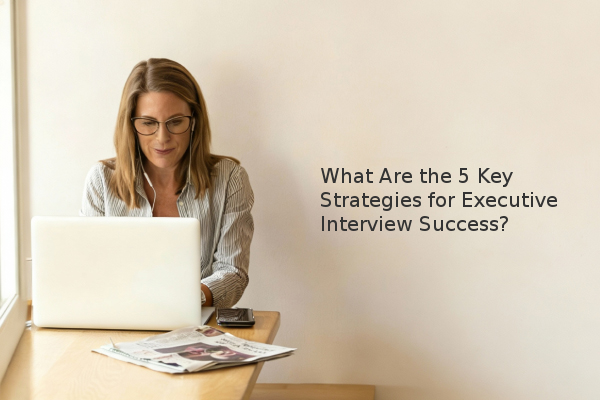
Mastering the executive interview is less about answering questions and more about strategically demonstrating your value. For senior-level candidates, the interview is a critical performance where you must showcase leadership, quantify achievements, and control the narrative. Based on our assessment experience, executives who employ these five key strategies significantly increase their chances of securing an offer.
The core of a successful executive interview is shifting from "telling" to "selling." Simply listing job responsibilities is insufficient; you must frame your accomplishments in terms of impact and value.
For example, if asked about team size, a basic response would be, "I managed a team of 35." A far stronger, value-driven answer is: "At IBM, I led a team of 35 professionals. Beyond management, I was accountable for the full talent lifecycle—directing recruitment, setting compensation bands, and designing incentive plans. Most significantly, my team drove a 35% increase in annual sales within one year." The lesson is to always quantify your achievements with concrete data like revenue growth, cost savings, or market share expansion.
Executive roles often require a broad skill set, and you may face questions about a tool or process you haven't used. The goal is to turn every negative into a positive by pivoting to related, transferable expertise.
If an interviewer asks about experience with a specific software like Excel and you have none, avoid a dead-end answer. Instead, you could state: "While I haven't used Excel extensively, I have deep experience designing complex data models in Lotus. I am highly proficient with data analysis principles, and I am confident I can master Excel's specific interface quickly." This approach demonstrates problem-solving skills and a learning agility that is valued at the executive level.
When discussing intricate topics like mergers and acquisitions, use the big-to-little strategy. This technique helps you organize your thoughts logically and makes it easy for the interviewer to follow your experience.
It's natural to feel nervous when interviewing with a company's top brass. However, it's crucial to remember that you've already passed the first test, typically a phone screening with HR or a recruiter. An invitation to a panel interview with senior executives is a strong indicator of serious interest. They would not invest their valuable time if they were not already convinced of your potential fit. Enter the room with the confidence that you are a qualified contender, not an unknown applicant.
You must take the initiative to ensure all your key selling points are communicated. Don't leave your most relevant experience unmentioned simply because it wasn't asked about.
As the interview nears its close, if a critical topic like your supply-chain management expertise hasn't been discussed, interject politely. You could say, "Before we conclude, I'd like to highlight my experience in global supply-chain optimization, which I believe is highly relevant to overcoming the challenges you mentioned earlier." This demonstrates strategic thinking and ensures you leave a complete picture of your qualifications.
To maximize your success in an executive interview, remember to: