Browse

Log in / Register
 Share

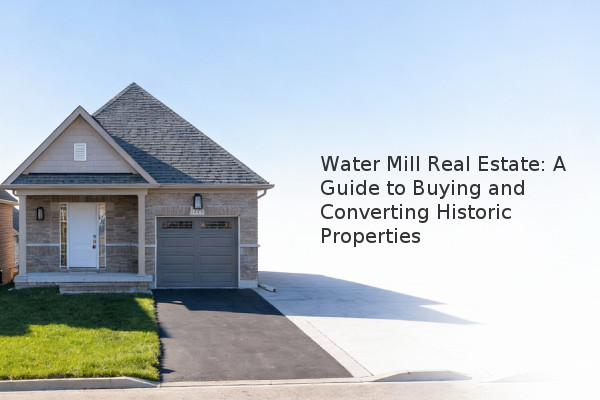
Purchasing and converting a historic water mill presents a unique opportunity to own a piece of American industrial history, but it requires navigating specialized financing, complex zoning laws, and significant restoration costs. This niche real estate investment is not for the faint of heart, yet for the right buyer, it can yield a distinctive residential or commercial property. The feasibility hinges on a thorough understanding of the property's structural integrity, historical designation, and potential for adaptive reuse, which is the process of repurposing old buildings for new uses.
Before making an offer, a buyer must conduct extensive due diligence. The most critical step is a specialized inspection that goes beyond a standard home inspection. This assessment should focus on the mill's foundation, the integrity of the water wheel or turbine mechanisms, and the dam or water rights associated with the property. Water rights are legal entitlements that allow the property owner to use water from an adjacent source; these rights can be highly complex and vary by state. Furthermore, many mills are listed on local or national historic registers. A historic designation can come with strict guidelines for exterior renovations and may qualify the owner for tax credits, but it can also limit what changes can be made.
The location's zoning is another pivotal factor. Is the property zoned for residential, commercial, or mixed-use? A conversion into a single-family home will have different requirements than one into a restaurant or event venue. Understanding these regulations upfront is essential to assessing the project's viability and potential return on investment. Based on our experience assessment, unforeseen zoning issues are a common pitfall that can halt a conversion project entirely.
The financial aspect of a water mill conversion is often its biggest hurdle. Initial purchase prices can be deceptive, as the true cost lies in the restoration. Budgeting must account for specialized contractors familiar with historical construction techniques, potential environmental remediation, and upgrading utilities like electrical and plumbing systems to modern codes. Financing such a project also differs from a standard mortgage. Lenders may require a commercial loan or a specialized renovation loan due to the property's unique nature and perceived risk.
| Cost Factor | Estimated Range | Notes |
|---|---|---|
| Purchase Price | $300,000 - $1.5M+ | Highly dependent on location and condition. |
| Structural Restoration | $150,000 - $500,000+ | Includes foundation, roof, and water wheel/turbine. |
| Systems Modernization | $75,000 - $200,000 | Electrical, plumbing, and HVAC updates. |
| Interior Finishing | $100,000 - $300,000 | Varies based on intended use (residential vs. commercial). |
However, there are potential financial incentives. Historic tax credits, both at the state and federal level, can offset a significant portion of qualified rehabilitation expenses. It is crucial to consult with a tax professional who has experience with historic properties to understand the specific eligibility requirements and application process.
The success of a water mill conversion is ultimately measured by its market value post-renovation. A well-executed adaptive reuse project can create a one-of-a-kind property that commands a premium price. The value is driven by its uniqueness, historical significance, and often, its picturesque setting. For commercial conversions, such as a mill turned into a boutique inn or a popular restaurant, the revenue-generating potential can be substantial.
The market for these properties is specialized but passionate. Selling a converted mill may take longer than a standard home, as you are marketing to a specific buyer who values history and character. Appraisals can also be challenging; an appraiser must use comparable sales of similar historic properties, which may be scarce. To maximize value, the renovation must seamlessly blend historical preservation with modern comfort and efficiency.
In conclusion, investing in a water mill property is a major undertaking that demands careful planning and expertise. The key to a successful project is a comprehensive initial inspection, a clear understanding of zoning and historical regulations, and a realistic budget that anticipates hidden costs. While challenging, a thoughtfully converted mill offers a unique and rewarding real estate opportunity unmatched by conventional properties.