Browse

Log in / Register
 Share
Share
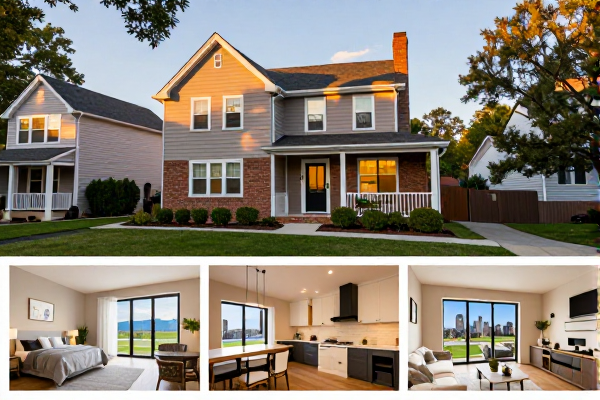
In 2026, a property's zip code in Washington, DC, remains one of the most significant factors influencing its market value, with price per square foot disparities exceeding $1,000 between the most and least expensive areas. Understanding this geographic financial landscape is crucial for buyers, sellers, and investors to make informed decisions. The core finding is that zip codes 20007 (Spring Valley, Kent) and 20008 (Kalorama, Cleveland Park) continue to command premium prices, while emerging neighborhoods in Wards 7 and 8 offer more accessible entry points into the DC market. This analysis, based on aggregated market data from the first half of 2026, provides a clear framework for navigating the capital's real estate geography.
A Washington DC zip code acts as a quick proxy for a neighborhood's amenities, school districts, and overall desirability. For example, properties in zip code 20007, encompassing the Spring Valley and Kent neighborhoods, consistently rank highest for median sale price, often driven by larger single-family homes and proximity to diplomatic centers. Conversely, zip codes east of the Anacostia River, such as 20019 and 20020, historically feature lower median prices but are experiencing some of the city's most dynamic growth rates. This variance is not arbitrary; it is directly tied to factors like access to public transportation (especially Metro stations), quality-of-life indicators, and historical investment patterns.
For prospective buyers, a DC zip code map is an essential first step in narrowing a search based on budget and lifestyle. The first action should be to cross-reference zip codes with key data points. The table below illustrates the stark contrast in the market as of mid-2026:
| Zip Code | Representative Neighborhoods | Median Sale Price (Q2 2026) | Key Characteristic |
|---|---|---|---|
| 20008 | Kalorama, Cleveland Park | ~$1.45 million | Established, historic homes, excellent schools |
| 20009 | Adams Morgan, U Street | ~$750,000 | High-density, vibrant nightlife, condominiums |
| 20002 | Trinidad, Kingman Park | ~$650,000 | Rapidly evolving, mix of row houses and new builds |
| 20020 | Anacostia, Congress Heights | ~$525,000 | Affordable entry point, significant future development plans |
Beyond price, buyers should investigate the "walk score" and "transit score" of a specific zip code, as these impact daily living and long-term property appreciation. A high walk score in areas like 20009 (Adams Morgan) adds a premium for convenience, while a zip code with future infrastructure projects, like the Streetcar expansion, may signal growth potential.
For sellers, understanding your zip code's current market velocity is critical for pricing strategy. In 2026, the average time on market (TOM) can vary from under 10 days in high-demand zip codes like 20016 (American University Park) to over 30 days in slower-moving segments. Sellers must look at recent comparable sales (comps) almost exclusively within their zip code, as conditions can change dramatically across neighborhood boundaries. It is also vital to highlight neighborhood-specific amenities that justify your price point, whether it's proximity to Rock Creek Park in 20015 (Palisades) or the new retail developments in 20003 (Capitol Hill/Navy Yard).
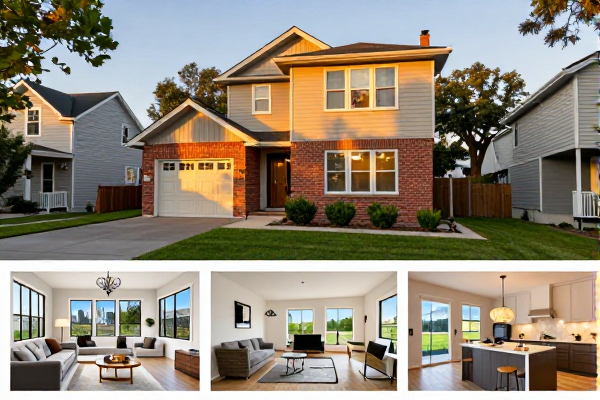
The DC real estate market is not static. Based on our experience assessment, a notable trend in 2026 is the continued "green line effect," with increased buyer interest along the Metro's Green Line in zip codes 20032 (Fort Davis) and 20020. This is driven by relative affordability and public and private investment in community amenities. Additionally, the demand for flexible living spaces post-pandemic has increased the value of properties with home offices or outdoor space, a factor that can sometimes outweigh a zip code's traditional ranking.
To effectively navigate the Washington DC housing market, always start with a current zip code map and recent sales data. Prioritize your non-negotiable needs, whether it's school districts, commute time, or property type, and let those criteria guide your zip code selection. For the most accurate assessment, consult hyper-local market reports that track quarterly changes within these specific geographic boundaries.