Browse

Log in / Register
 Share
Share
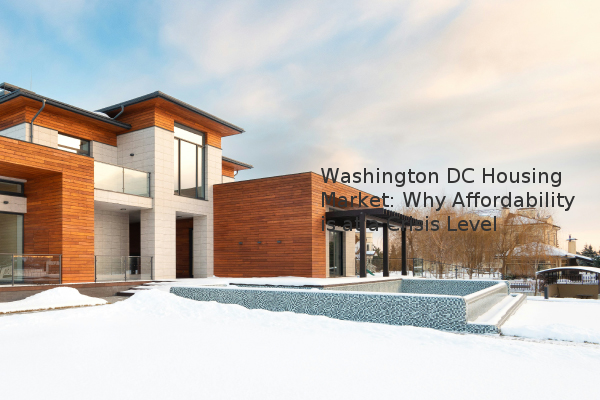
The Washington DC housing market is facing a severe affordability crisis, characterized by a median listing price of $610,723 and one of the nation's lowest affordability scores at 0.67. This means that only a small fraction of homes for sale are within financial reach for a household earning the median income of $98,916. A recent state-by-state report card gave DC a C- grade, highlighting critical constraints on new construction and deep structural barriers that price out many residents. For prospective buyers, the market demands significant financial preparation and an understanding of its unique challenges.
Housing affordability is a measure of how accessible homeownership is for the average household, typically calculated by comparing median income to median home prices. In Washington DC, this balance is severely strained. The median listing price soared to $610,723 in 2024, while the median household income was $98,916. This disparity resulted in an affordability score of just 0.67, indicating a market where typical earners can afford well under half of the available listings. This score is among the lowest in the United States, placing immense pressure on buyers and renters alike.
The scarcity of new housing supply is a primary driver of high costs. DC's new construction is limited by two major factors: geography and policy. The District accounted for only 0.1% of the nation’s housing permits in 2024 while representing about 0.2% of the U.S. population. This yields a permit-to-population ratio of just 0.5, signaling a significant underproduction of new homes. Furthermore, the little new construction that occurs is often concentrated in the luxury segment. The premium for a new home compared to an existing one was just 0.2%, suggesting new builds are not aimed at the affordable or mid-market segments that are in desperate need.
| DC Housing Supply Metrics (2024) | |
|---|---|
| National Share of Housing Permits | 0.1% |
| National Share of Population | 0.2% |
| Permit-to-Population Ratio | 0.5 |
| New Construction Premium | 0.2% |
Recognizing the crisis, local government has launched several initiatives to boost supply and assist buyers. In May 2025, Mayor Muriel Bowser's "Grow DC" budget made significant investments, including:
A key program is Housing in Downtown (HID), which incentivizes the conversion of vacant office buildings into residential units. For example, the demolition of 1990 K Street NW began in September 2025 to create housing for over 700 residents. Several other HID projects are in the pipeline, aiming to add hundreds of units to the downtown core.
The national housing shortage, estimated at over 4.7 million homes, underscores a country-wide problem. However, DC's situation is more acute than many other regions. Nationally, the median price for a new home was $450,797, and the price gap between new and existing homes narrowed to a record low of 7.8%. This indicates that in many parts of the country, new construction is becoming a more viable option for buyers. In contrast, the Northeast and Mid-Atlantic regions, including DC, face stricter zoning restrictions and a lack of developable land, which continues to suppress new housing starts and keep prices elevated.
For anyone considering entering the DC housing market, the path to homeownership requires careful planning. Based on our experience assessment, focusing on city assistance programs like the Home Purchase Assistance Program can provide critical financial support. Furthermore, being prepared for a highly competitive environment and understanding that new construction is unlikely to offer budget-friendly options in the near term are essential considerations. The core takeaway is that expanding the housing supply is the most sustainable solution to improving affordability over time.