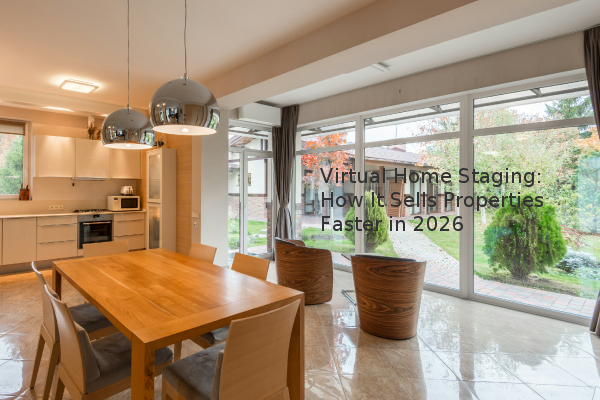
For sellers and real estate agents in 2026, virtual home staging is a proven strategy to sell properties faster and for a higher final sale price. By digitally enhancing listing photos, this service creates an aspirational vision for potential buyers at a fraction of the cost of traditional staging. Based on our experience assessment, this method significantly broadens a property's appeal, making it a critical tool in today's competitive market, especially for vacant or difficult-to-show homes.
What is Virtual Home Staging?
Virtual home staging is the process of using specialized software to digitally add furniture, decor, and other design elements to photographs of empty or sparsely furnished rooms. Unlike physical staging, which involves renting and placing actual furniture, virtual staging creates a photorealistic representation of a furnished space. This technique helps buyers visualize the potential of a property, addressing a key challenge in real estate marketing. The final staged images are used primarily on the Multiple Listing Service (MLS) and other online marketing channels to generate more interest and better-quality leads.
How Does the Virtual Staging Process Work?
The process is collaborative and typically follows a structured workflow to ensure the final images align with the target buyer's expectations.
- Initial Consultation and Room Assessment: The agent or homeowner provides the stager with high-quality, wide-angle photographs of each room to be staged. Crucially, the room must be completely empty or very neutrally arranged. The client also shares the property's key selling points (e.g., "great for entertaining," "cozy family home") to guide the style.
- Style Selection: The virtual stager presents a portfolio of design styles—such as modern, traditional, or minimalist—from which the client chooses. This ensures the final look appeals to the local market demographic.
- Digital Rendering: Using the photos and style guide, the stager digitally inserts furniture, artwork, rugs, and lighting. High-end services also include subtle edits like adjusting lighting and shadows to enhance realism.
- Revisions and Final Delivery: The client reviews the staged images and requests adjustments. Once approved, the stager delivers the final high-resolution images, which are now ready for the MLS and marketing materials.
What Are the Key Advantages Over Traditional Staging?
The primary benefits of virtual staging are its cost-effectiveness, flexibility, and speed.
- Cost Savings: The most significant advantage is cost. According to industry data from 2025, the average cost for physically staging an entire home ranges from $2,000 to $4,000+, depending on the home's size and rental duration. In contrast, virtual staging a single room averages $75 to $150, with whole-home packages often costing under $800. This makes professional staging accessible for a wider range of properties, including lower-priced listings where traditional staging may not be cost-effective.
- Speed and Flexibility: A virtual staging project can be completed in days, not weeks. There's no need to coordinate furniture delivery or installer schedules. Furthermore, a single empty room can be staged in multiple styles (e.g., as a home office and a nursery) to showcase its versatility to different buyers, which is impossible with physical staging.
- Marketability for Vacant Properties: Vacant homes can feel cold and unwelcoming. Virtual staging fills this emotional gap by creating a warm, inviting atmosphere that helps buyers connect emotionally with the space, directly impacting their perception of value.
| Staging Type | Average Cost (Whole Home) | Turnaround Time | Ideal For |
|---|
| Virtual Staging | $400 - $800 | 2-4 Days | Vacant homes, online-focused marketing, budget-conscious sellers |
| Traditional Staging | $2,000 - $4,000+ | 1-3 Weeks | High-end luxury properties, open houses, in-person viewings |
What Should Home Sellers Consider Before Choosing a Service?
While powerful, virtual staging requires careful execution to be effective and ethical.
- Realism is Critical: Poorly executed virtual staging that looks fake can damage a listing's credibility. It is essential to work with a skilled stager who uses high-quality assets and pays attention to details like perspective, shadows, and scale.
- Ethical Disclosure: Transparency is paramount. Most local real estate boards and the National Association of Realtors (NAR) have guidelines requiring that virtually staged photos be clearly labeled as such in the MLS description to avoid misleading buyers. This is a key aspect of maintaining transaction credibility.
- Complement, Don't Replace: Virtual staging is most effective for online marketing. It prepares buyers for a showing but cannot replace the experience of a well-furnished home during an in-person visit. For high-stakes properties, a hybrid approach using virtual staging for photos and minimal physical staging for key rooms may be the optimal strategy.
Virtual home staging is a powerful, cost-effective marketing tool that leverages technology to solve a classic real estate challenge. By creating an appealing visual narrative, it attracts more buyers and can lead to a quicker sale. The key to success lies in selecting a reputable service that produces realistic images and always adhering to ethical disclosure standards. For sellers looking to maximize their property's online appeal without a major investment, it represents a smart and strategic choice in the 2026 market.


 Share
Share