Browse

Log in / Register
 Share
Share

When purchasing a home in Los Angeles in 2026, the zip code is one of the most critical factors influencing property value, property taxes, and lifestyle. A comparative analysis of recent market data reveals that prices can fluctuate by over a million dollars between adjacent zip codes, making targeted research essential for informed decision-making. This guide provides an objective overview of how to leverage zip code information to assess market trends, understand tax implications, and identify neighborhoods that align with your budgetary and personal requirements.
A zip code is a postal code used by the United States Postal Service (USPS) for efficient mail delivery. In the context of Los Angeles real estate, a zip code serves as a key geographic identifier that aggregates data on property values, school districts, and local amenities. For a home buyer, understanding the nuances of a specific zip code provides a more accurate picture of the market than looking at the city as a whole. For instance, the median home price in the 90049 (Brentwood) zip code is significantly higher than in the 91406 (Van Nuys) zip code, reflecting differences in neighborhood demographics, school quality, and proximity to employment centers. This granularity allows for precise market comparisons.
To effectively analyze the Los Angeles housing market, prospective buyers should focus on zip code-specific data. Key metrics to track include the median sale price, price per square foot, and days on market. The price per square foot is a standardized metric that allows for a direct comparison of value between different properties, regardless of their size. The table below illustrates hypothetical market data for three distinct Los Angeles zip codes for early 2026, based on projections from current market trajectories.
| Los Angeles Zip Code | Median Sale Price | Price per Square Foot | Market Trend (YoY) |
|---|---|---|---|
| 90210 (Beverly Hills) | ~$4.5M | ~$1,450 | Stable |
| 90026 (Echo Park) | ~$1.1M | ~$775 | Moderately Appreciating |
| 90011 (Central LA) | ~$650,000 | ~$500 | Rapidly Appreciating |
This data demonstrates the vast economic diversity within the city and highlights how growth rates can vary, with some areas experiencing rapid appreciation due to new development or increased demand.
The financial impact of your chosen zip code extends beyond the purchase price. Property tax rates, while generally consistent across California due to Proposition 13, are calculated based on the purchase price of the home. Therefore, a more expensive zip code will result in a higher absolute annual tax bill. Furthermore, homeowners insurance premiums can vary by zip code based on assessed risks, such as proximity to wildfire zones or historical crime statistics. It is crucial to factor these ongoing costs into your long-term budget. Additionally, some zip codes may have specific Mello-Roos taxes or community facility districts, which are special assessments levied on properties to fund local infrastructure and services.
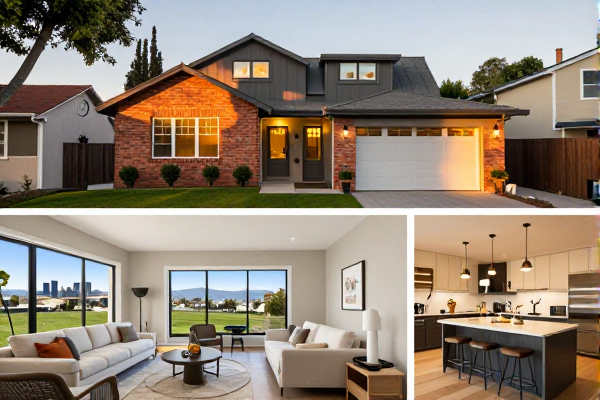
Beyond pure financials, a zip code dictates your daily experience. It determines the school district your children may attend, which is a primary driver of demand in many Los Angeles neighborhoods. It affects your commute time to major employment hubs like Downtown LA, Century City, or Silicon Beach. Access to public transportation, shopping centers, parks, and dining establishments are all hyper-local factors defined by zip code. A thorough evaluation should balance quantitative data with qualitative research, potentially including visits at different times of the day to assess traffic, noise, and overall community atmosphere.
In summary, a disciplined approach to zip code research is non-negotiable for navigating the Los Angeles real estate market in 2026. Focus on key metrics like price per square foot, account for all associated costs beyond the mortgage, and align your choice with practical lifestyle needs. By prioritizing data-driven analysis over generalized assumptions, you can make a more confident and strategic home purchasing decision.