Browse

Log in / Register
 Share
Share
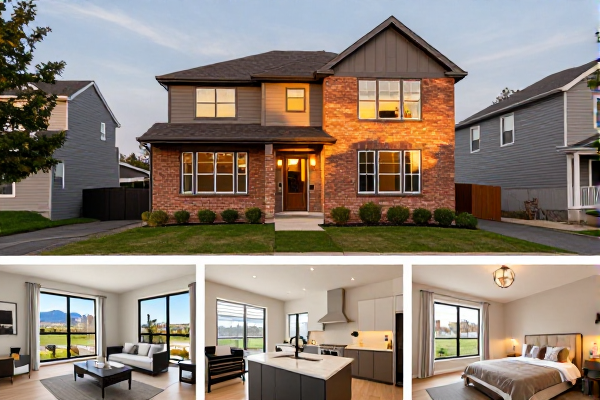
USDA loans offer a path to homeownership with no down payment for eligible buyers in designated rural and suburban areas. Backed by the U.S. Department of Agriculture, these loans are a cornerstone of its mission to boost rural communities. For 2026, understanding the specific income limits, property location requirements, and mortgage insurance structure is crucial for potential applicants. This guide provides an objective overview of how USDA loans work and who qualifies.
A USDA loan is a mortgage guarantee program designed to promote homeownership in less densely populated areas. It is important to distinguish that the USDA itself does not lend money; instead, it guarantees loans issued by approved private lenders, reducing their risk. Eligibility is not solely based on an applicant's financial profile but also on the property's location and the household's total income. To qualify, applicants must meet several key criteria set for 2026. First, the property must be located in a USDA-eligible area, which includes many suburbs. Second, the household income must typically not exceed 115% of the area's median income. Finally, the borrower must demonstrate a reliable credit history and the ability to repay the loan.
| Eligibility Factor | Description |
|---|---|
| Property Location | Must be in a USDA-designated rural or eligible suburban area. The USDA website provides an online eligibility map. |
| Income Limits | Household income cannot exceed 115% of the area's median income. Limits vary significantly by state and county. |
| Credit Score | While the USDA doesn't set a minimum, most lenders look for a score of 640 or higher for streamlined processing. |
| Debt-to-Income (DTI) Ratio | Your total monthly debt payments should generally be below 41% of your gross monthly income. |
| U.S. Citizenship | The borrower must be a U.S. citizen, U.S. non-citizen national, or a Qualified Alien. |
The most significant advantage of a USDA loan is the $0 down payment requirement, making it one of the few remaining zero-down mortgage options available in 2026. This dramatically lowers the upfront cash needed to purchase a home. Additionally, while borrowers are required to pay Upfront Guarantee Fee and an Annual Fee (a type of mortgage insurance), these fees are often lower than the FHA's Mortgage Insurance Premium (MIP) or the Private Mortgage Insurance (PMI) required on conventional loans with less than a 20% down payment. Interest rates for USDA loans are also typically competitive with conventional loan rates.
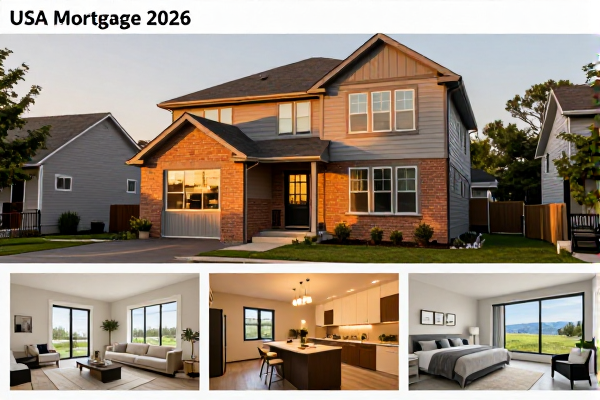
The application process for a USDA loan follows a similar path to other mortgages but with specific verification steps. The process can be broken down into five key stages: pre-qualification, finding an eligible property, formal application, USDA underwriting, and closing. It's advisable to work with a lender experienced in USDA loans, as they can help navigate the specific documentation requirements, such as thorough income verification.
In conclusion, USDA loans present a viable, zero-down-payment option for eligible homebuyers in 2026. The key to a successful application is verifying your household's income against current limits and ensuring your desired property is in a qualified zone. Prospective buyers should get pre-qualified with a knowledgeable lender and use the official USDA eligibility map as a first step. By understanding the requirements and process, you can effectively assess if this government-backed program aligns with your homeownership goals.