Browse

Log in / Register
 Share
Share
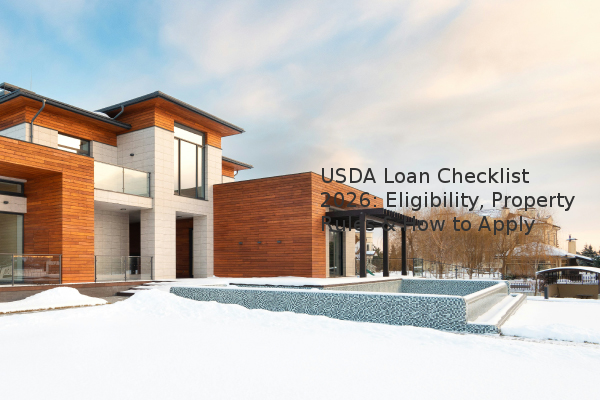
Securing a USDA loan can be a pathway to homeownership with no down payment, but the application process requires careful preparation. Based on our experience assessment, approval hinges on meeting strict location, income, and property criteria. This checklist outlines the eight key steps to confirm your eligibility and streamline your application for a USDA-backed mortgage in 2026.
Before diving into the specifics, you must meet the fundamental borrower criteria. A USDA loan, a government-backed mortgage program designed to promote homeownership in rural areas, is not for every applicant. The basic qualifications include:
Meeting these baseline requirements is the first critical step toward qualifying.
USDA loans are intended for low- to moderate-income households. Your total household income must fall within specific limits for your geographic area. These limits are based on the county where the property is located and the number of people in your household.
There are two main types of USDA loans: Direct and Guaranteed. For a Guaranteed loan (obtained through a USDA-approved lender), your household income generally cannot exceed 115% of the area's median income. The limits are typically lower for Direct loans from the USDA. It is crucial to check the most current limits on the official USDA website for 2026, as these figures are adjusted annually.
A cornerstone of the USDA loan program is its focus on rural development. Fortunately, a significant portion of the United States is classified as eligible. To verify a property's eligibility:
Confirming the property's location is eligible is a non-negotiable step in the process.
Beyond location, the home must meet specific property standards to ensure it is safe, structurally sound, and modest. The USDA will require an appraisal to confirm the property meets these conditions. Key standards include:
You must occupy the home as your primary residence within 60 days of closing.
For a Guaranteed USDA loan, you must use a lender approved by the program. Not all mortgage lenders offer USDA loans. You can find a list of approved lenders on the USDA's website. When contacting lenders, ask about their experience with USDA loans. A loan officer who specializes in these loans can provide invaluable guidance through the unique aspects of the application.
Having your financial documents organized will significantly speed up the underwriting process. You will need to provide proof of income and assets for all members of your household. Prepare the following documents:
Gathering these documents early is one of the most practical steps you can take.
To successfully navigate a USDA loan application in 2026, systematically verify your eligibility against this checklist. Start by confirming your income falls within local limits and then use the USDA's online tools to check property eligibility. Finally, partner with an experienced, USDA-approved lender and have your financial documentation ready to ensure a smoother path to approval.