Browse

Log in / Register
 Share
Share
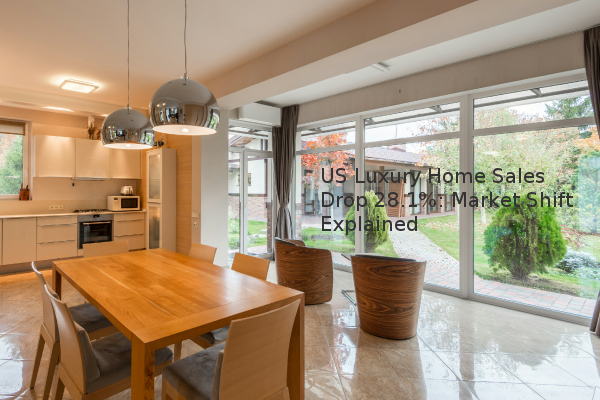
Luxury home sales in the United States fell by a record 28.1% year-over-year during the third quarter of 2022, the steepest decline in at least a decade. This pullback, driven by rising mortgage rates, economic uncertainty, and a cooling stock market, was significantly more severe than the 19.5% drop in the non-luxury market. The Median Sale Price for high-end homes—a key metric representing the middle point of all sales prices—still increased to $1.1 million, but price growth is decelerating rapidly as demand weakens.
The primary drivers are macroeconomic factors that have made purchasing a high-end property less feasible. The average 30-year fixed mortgage rate, a common home loan with an interest rate that remains constant for the entire 30-year term, surpassed 6% in September 2022, a level not seen since 2008. For a luxury buyer, this can add thousands of dollars to a monthly payment. As Redfin Chief Economist Daryl Fairweather noted, "Someone who was in the market for a $1.5 million home last year may now have a maximum budget of $800,000." Additionally, inflation and a tepid stock market have caused affluent buyers to reexamine their finances, with luxury goods often being the first expenditure cut.
While sales volume plummeted, the median luxury home price rose 10.5% year-over-year to $1.1 million. However, this growth rate is half the pace of the 20.3% increase seen a year earlier. This signals a cooling market where price growth is slowing due to diminished demand. In contrast, non-luxury home prices saw a 15.5% increase to $335,000, indicating that the premium segment is cooling faster than the broader market. Some markets, like Tampa and West Palm Beach, still saw price jumps exceeding 30%, while increases were more modest in places like New York and St. Louis.
Yes, the intense shortage of luxury homes is beginning to ease. The number of luxury homes for sale declined by just 1.9% year-over-year, a dramatic improvement from the record 25% decline a year prior. Nationwide, the supply of luxury homes has increased 39.2% since its record low in February 2022. This is due to a combination of fewer buyers and a slight 1.2% increase in new luxury listings. For the first time in two years, the supply of luxury homes fell at a slower rate than non-luxury homes, giving prospective buyers more options and less competition.
The downturn was most pronounced in expensive coastal markets, particularly in California.
In summary, the luxury housing market is undergoing a significant correction. The key takeaways for buyers and sellers are to expect less competition and more moderate price growth. For sellers, realistic pricing is critical. For buyers, the shifting market may present opportunities that were unavailable during the peak frenzy, but it's essential to factor in the higher cost of financing. Monitoring local metro-level data is crucial, as national trends can vary dramatically by region.