Browse

Log in / Register
 Share

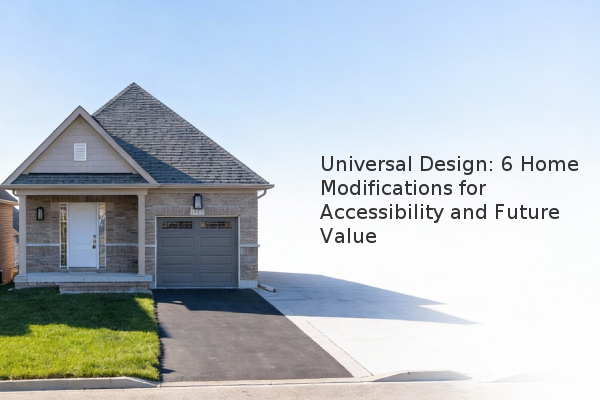
Implementing universal design principles—an approach that creates environments accessible to people of all ages and abilities—can significantly enhance both your quality of life and your property's market appeal. Based on our experience assessment, these modifications are not only practical for aging in place but also represent a smart investment. The core takeaway is that many accessibility improvements are cost-effective, blend seamlessly with modern aesthetics, and can increase your home's value by appealing to a broader range of potential buyers.
What are the most effective lighting upgrades for universal design? Proper lighting is fundamental to safety and accessibility, especially for those with changing vision. The key is to eliminate inconsistent or poor-quality lighting. Installing matching LED bulbs with a 3000K color temperature provides consistent, clear illumination. For enhanced safety, consider integrating smart home technology that automates lighting, eliminating the need to fumble for switches in the dark. This simple upgrade reduces fall risks and improves overall navigation within the home.
How can door and cabinet hardware improve accessibility? Replacing traditional knobs with lever-style handles on doors, cabinets, and faucets is a low-cost modification with a high impact. Levers require only a downward push, which demands less hand strength and dexterity than the twisting motion needed for knobs. This is particularly beneficial for individuals with arthritis or limited mobility. The ease of use when your hands are full is an immediate practical advantage for everyone in the household.
What organizational features make cabinetry more user-friendly? For those with limited reach or mobility, standard cabinets can be challenging. Pull-out shelves, swing-out organizers, and roll-out trays bring contents into clear view and easy reach. These cabinet organizers can be retrofitted into existing kitchens and bathrooms, eliminating the need to bend or strain. This modification promotes independence and reduces the physical effort required for daily tasks, making the kitchen safer and more efficient.
Which bathroom modifications are essential for safety and independence? The bathroom is a critical area for accessibility. Essential upgrades include:
Why are open layouts and barrier-free transitions important? An open floor plan with minimal obstacles allows for easy maneuverability for wheelchairs and walkers. This extends to creating smooth transitions between rooms by removing raised thresholds. This "barrier-free" design not only aids those with mobility devices but also reduces tripping risks for all residents. A single-level layout or ensuring the primary living spaces are on one level is a hallmark of effective universal design.
Can smart home technology enhance accessibility? Voice-activated systems are a powerful component of modern universal design. Voice-controlled lighting, thermostats, window coverings, and security systems minimize the need for physical interaction with switches and controls. This technology offers convenience and an added layer of safety, especially for individuals with limited mobility. Professional installation is recommended to ensure these systems are integrated correctly and function reliably.
Implementing these universal design principles requires careful planning. The goal is to create a home that is safe, comfortable, and functional for the long term, while also being an attractive feature for future resale. Focusing on lighting, hardware, bathroom safety, and smart technology provides a strong foundation for a more accessible living environment.