Browse

Log in / Register
 Share

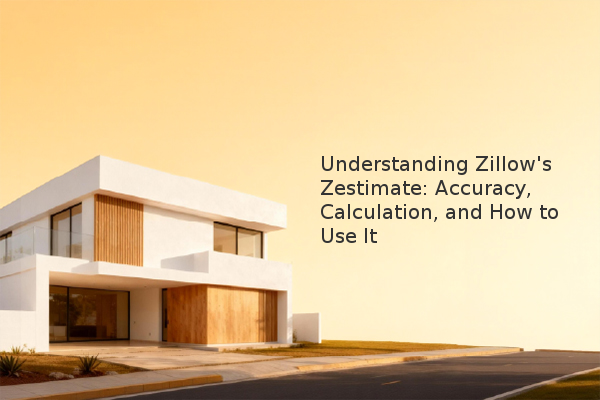
Online home value estimators, commonly known as Automated Valuation Models (AVMs), have become a fundamental first step for millions of Americans researching real estate. While these tools offer instant property valuations, understanding their mechanics, accuracy, and proper role in the home buying or selling process is critical. The core takeaway is that an online estimate is a useful starting point but should not be relied upon as a definitive valuation; it is a data point, not a substitute for a professional appraisal or comparative market analysis conducted by a real estate agent.
An Automated Valuation Model (AVM) is a computer-driven algorithm that estimates a property's market value. It analyzes vast amounts of data, including public records like recent sales of similar homes (comparables or "comps"), property tax assessments, and listing prices. The term "Zestimate" is a specific brand of AVM, but the underlying technology is used by many real estate platforms. These models are designed to provide a quick, free snapshot of a property's potential worth based on available data.
The accuracy of an AVM can vary significantly based on location, property type, and data availability. In homogeneous neighborhoods with many recent, similar sales, the estimate can be remarkably close to the final sale price. However, in rural areas, for unique properties, or in rapidly shifting markets, the margin of error can be substantial. AVMs cannot account for a home's interior condition, specific upgrades, or unique features that significantly impact value. For example, a recently renovated kitchen or a neglected roof will not be factored into the algorithm's calculation if that information is not in public records.
The following table illustrates typical factors influencing AVM accuracy:
| High Accuracy Scenarios | Lower Accuracy Scenarios |
|---|---|
| Standard subdivision homes | Unique or historic properties |
| Areas with high sales volume | Rural or low-transaction markets |
| Recent, reliable public data | Properties with recent major renovations |
| Stable market conditions | Rapidly appreciating or declining markets |
An AVM provides a number, but it lacks the nuance of a human evaluation. Critical elements that can dramatically alter a home's value are often missing from the calculation. These include:
For homeowners, an AVM is an excellent tool for gauging equity trends and deciding if a formal valuation might be worthwhile. For buyers, it can help quickly assess whether a listing price is in the general ballpark. The most effective strategy is to use the estimate as a conversation starter. Share the estimate with a licensed real estate agent who can provide a Comparative Market Analysis (CMA). A CMA is a more detailed report prepared by an agent that compares your home to recently sold properties, active listings, and expired listings, adjusting for the specific features and condition the AVM misses.
Ultimately, an online estimate is a powerful piece of technology, but it is not a crystal ball. Its value lies in providing a data-driven starting point for a more comprehensive, professional evaluation. Relying on it exclusively can lead to unrealistic expectations whether you are buying or selling.