Browse

Log in / Register
 Share
Share
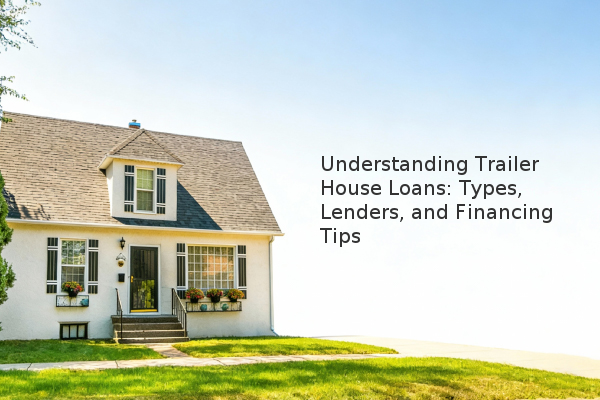
Securing financing for a manufactured or mobile home, commonly referred to as a trailer house, involves specialized loan products distinct from traditional mortgages. The most common financing methods are chattel loans, which are personal property loans, and FHA Title I loans for manufactured homes, which are government-backed programs. Successfully navigating this process requires understanding the specific requirements lenders have for the home's age, condition, and foundation type.
What is a Trailer House Loan? A trailer house loan is a type of financing used to purchase a manufactured or mobile home. The critical distinction lies in how the home is classified. If the home is not permanently affixed to land you own, it is considered personal property, similar to a vehicle. This classification leads to the most common loan type: a chattel loan. Chattel loans typically have shorter terms and higher interest rates compared to traditional mortgages because the lender views the loan as higher risk. Understanding this fundamental difference is the first step in evaluating your financing options.
Primary Types of Financing for Manufactured Homes There are three main avenues for financing a trailer house, each with distinct advantages and criteria. A chattel loan is the most prevalent option for homes placed in a leased lot within a manufactured home community. These loans are easier to qualify for but come with higher costs. For buyers who also own the land, a manufactured home mortgage is possible if the home is permanently attached to a foundation and classified as real property. This option offers longer terms and lower rates. Finally, government-backed FHA Title I loans are specifically designed for manufactured homes, offering competitive terms for both the home and the land.
How Do Lenders Evaluate a Loan Application? Lenders assess several key factors when considering a trailer house loan application. The age and condition of the home are paramount; most lenders have strict limits on the age of an existing home, often requiring it to be built after June 15, 1976, to meet HUD code standards. Your credit score and debt-to-income (DTI) ratio will be scrutinized closely. A higher credit score can significantly improve your loan terms. Additionally, the home's foundation is a major factor. A permanent foundation is often required to secure a mortgage-classified loan and can positively impact the appraisal value.
| Lender Consideration | Typical Requirement | Impact on Loan |
|---|---|---|
| Home Age | Built post-1976 (HUD Code) | Eligibility for most loans |
| Credit Score | 620+ for better terms | Interest rate and down payment |
| Foundation Type | Permanent attachment for mortgages | Access to lower-rate loans |
Practical Steps to Secure Your Financing Based on our experience assessment, a systematic approach increases your chances of success. First, check your credit report and address any inaccuracies. Next, get pre-approved to understand your budget and show sellers you are a serious buyer. It is also crucial to choose a HUD-certified home to ensure it meets federal safety and construction standards. When selecting a home, verify its data plate and HUD certification label. Finally, compare offers from multiple lenders who specialize in manufactured housing, as terms can vary widely.
Navigating trailer house loans requires careful planning and specialized knowledge. Understanding the difference between chattel loans and mortgages is critical for making an informed decision. Your creditworthiness and the home's condition are the primary factors lenders evaluate. Always seek pre-approval and compare multiple lender offers to secure the most favorable terms. By focusing on these key areas, you can effectively finance your manufactured home purchase.